If you’re coming to Hanoi and you’ve heard there’s a metro now, this guide will save you some confusion.
Yes, Hanoi has a metro. And it’s actually pretty decent.
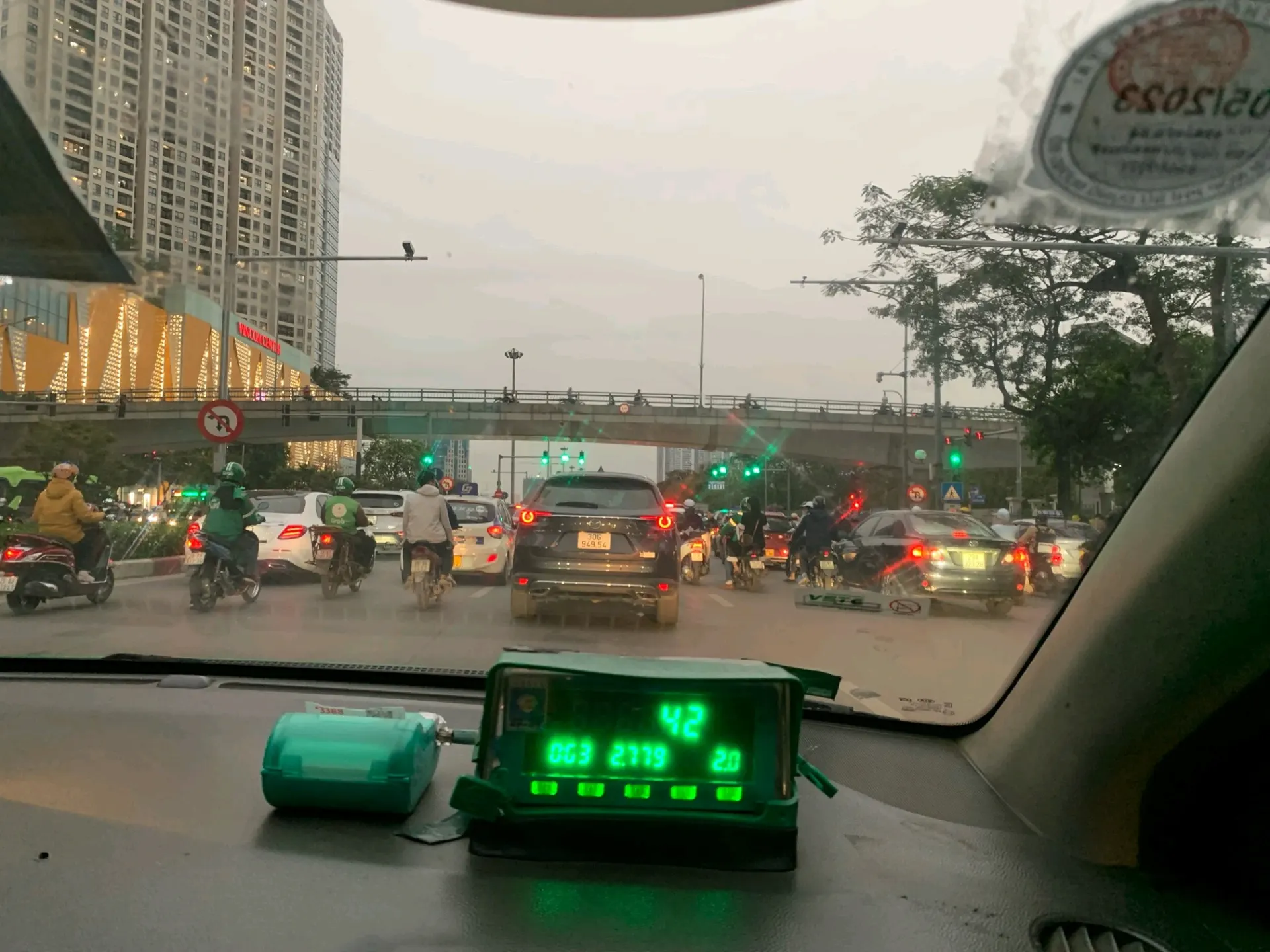
I’ve been on it many times. Sometimes just for fun. Sometimes because traffic in Hanoi feels like an endless motorbike parade and you simply cannot move.
But here is the useful part before we get carried away: the metro works well when it fits your route. It does not yet take you everywhere a first-time visitor wants to go. This guide covers the operating lines, fares, tickets and the little things I wish I had checked before confidently choosing the wrong platform.
Hanoi Metro overview: what visitors need to know
Hanoi’s metro is still small compared with systems in Bangkok or Singapore. As checked in November 2026, two passenger sections are operating: Line 2A between Cát Linh and Yên Nghĩa, and the elevated part of Line 3 between Nhổn and Cầu Giấy.
You will also see Line 3 described as “Nhổn–Hà Nội Station” or Line 3.1. That is the project name. It does not mean you can currently ride the metro to Hanoi Railway Station. The underground extension is not yet open to passengers.
- Old Quarter and Hoàn Kiếm Lake: no operating metro station directly in the main visitor area.
- Nội Bài Airport: no operating metro connection.
- Changing between the two lines: no operating station-to-station rail interchange; a separate street-level journey is needed.
For a first visit, think of it as another useful transport option rather than the backbone of every sightseeing day. You can also see the broader Hanoi Metro network overview, but check the operator’s information for current services rather than relying on a map of future lines.
Why use it?
- You avoid the traffic while you are on the train.
- The train carriages are air-conditioned.
- Single fares are inexpensive.
- The elevated lines give you a different view of the city.
That last one is part of the appeal for me. Sometimes it is nice to watch Hanoi move without being directly involved in the motorbike choreography.
Metro lines in Hanoi: which stations are open?
Line 2A: Cát Linh–Hà Đông, ending at Yên Nghĩa
Hanoi’s first metro line opened in November 2021. It runs above ground, so you get views of rooftops and busy roads below. It is commonly called the Cát Linh–Hà Đông line, but its final station is Yên Nghĩa. Hà Đông is also the name of an intermediate station, which is worth noticing when you buy your ticket.
Line 2A stations, in order from Cát Linh
- Cát Linh
- La Thành
- Thái Hà
- Láng
- Thượng Đình
- Vành Đai 3
- Phùng Khoang
- Văn Quán
- Hà Đông
- La Khê
- Văn Khê
- Yên Nghĩa
For a casual ride, choose a destination and check the return direction before boarding. For an actual journey, check the walk from the destination station too. “Near the metro” can sound much closer in a hotel description than it feels with a suitcase.
Line 3: Nhổn–Cầu Giấy, the operating elevated section
The elevated section opened in August 2024. It is useful for travel along the western corridor through areas around Cầu Giấy and towards Nhổn.
Open Line 3 stations, in order from Nhổn
- Nhổn
- Minh Khai
- Phú Diễn
- Cầu Diễn
- Lê Đức Thọ
- Đại học Quốc gia
- Chùa Hà
- Cầu Giấy
Use those station names when checking your route. Nguyễn Cơ Thạch and Hồ Tùng Mậu are street names in this part of Hanoi, not the sixth and seventh station names on the operating line.
Do not plan a through journey to Kim Mã, Cát Linh, Văn Miếu or Hanoi Railway Station on Line 3 yet. These are part of the underground extension. A line drawn on a future network map is not a train you can board today.
Hanoi Metro operating hours and frequency
The regular operating window for both lines is 5:30am–10pm daily. This is the overall service window, not a promise that a train will leave every station in every direction at exactly 10pm. Check the last departure for your station and direction, and leave some margin.
| When | Published interval |
|---|---|
| Monday–Friday, 6:30am–9am and 4:30pm–7:30pm | Every 6 minutes |
| Monday–Friday, 7:30pm–10pm | Every 15 minutes |
| Other weekday operating hours | Every 10 minutes |
| Weekends and public holidays | Every 10 minutes under the regular schedule |
Special-event schedules and service notices can change the pattern. Check Hanoi Metro’s passenger information before relying on the last train. The government’s February 2026 timetable announcement explains the current peak-hour pattern.
Hanoi Metro fares: single tickets and passes
Prices are budget-friendly, but older guides may still show the fares from before August 2025. The table below reflects the revised metro fare structure, checked in November 2026. All amounts are in Vietnamese đồng.
| Ticket | Price | What to know |
|---|---|---|
| Line 2A single journey, cash fare | 9,000–19,000 VND | Depends on the stations travelled between |
| Open Line 3 section, single journey, cash fare | 9,000–15,000 VND | Depends on distance |
| Metro day ticket | 40,000 VND | Unlimited journeys within the applicable day |
| Metro weekly ticket | 160,000 VND | For repeated travel over seven consecutive days |
| Standard one-month metro ticket | 280,000 VND | More relevant to regular commuters |
| Eligible discounted one-month ticket | 140,000 VND | Eligibility and registration required; not an automatic visitor discount |
Non-cash single fares can differ from cash fares. Check the amount shown for your payment method and route. Do not assume an old bank-card promotion is still running.
Hanoi also offers integrated public-transport ticket products. If you want buses included, ask specifically for a metro-and-bus product and confirm its coverage and price. Do not assume every ticket labelled “day pass” covers every service.
The official fare-change notice and city fare decision provide the underlying fare information.
Is a day ticket worth it?
Not automatically. Two cash-fare journeys at 9,000 VND each cost 18,000 VND; even two full-length Line 2A journeys at 19,000 VND each total 38,000 VND. Both are below a 40,000 VND day ticket. Add up the journeys you actually expect to make.
I tried a day pass on my second day in Hanoi. I hopped on at Cát Linh, rode a few stops, then got off and grabbed a fresh bánh mì.
There was a tiny street cart outside the station. I could not resist. I ate it leaning against the railing, then hopped back on without thinking about another individual fare. For that kind of wandering, I liked the freedom. For one return trip, I would do the maths first.
How to use the Hanoi Metro, step by step
The system is manageable once you know where you are going. But confidence is not a substitute for reading the platform sign. I have tested that theory for you.
- Check the whole route. Find your boarding station, destination station and the walk or connection at either end. Both operating sections are elevated.
- Buy the correct ticket. For a first ride, the staffed counter is a straightforward starting point. Show the station name on your phone if needed. Single tickets can be bought without completing app identity registration.
- Use the gate as instructed. Scan or tap the ticket or supported payment medium indicated by staff and the reader. Keep it available for your exit.
- Check the direction. On Line 2A, look for Cát Linh or Yên Nghĩa. On the open Line 3 section, look for Nhổn or Cầu Giấy. Confirm your destination appears along that direction.
- Wait behind the safety line. Platforms are above ground and should not be treated as air-conditioned waiting rooms. The train carriage is where you get the cooling break.
- Let passengers off first. Then board, move away from the doorway and hold a rail if standing.
- Exit using the same ticket or payment medium. If the gate rejects it, ask staff rather than buying another ticket immediately.
Do foreign visitors need the Hanoi Metro app?
No app registration is needed simply to buy a single ticket at a station. The operator does offer foreigner registration in its app using passport details and a portrait, with approval quoted at around three days. For a short visit or an immediate first ride, ask at the counter instead of spending your morning trying to complete account verification.
Carry some cash as a backup. If you want to use a bank card directly, check the supported card logos and ask staff before entering. Payment support and promotions are separate questions.
My first time on Hanoi Metro
So… my first ride? I bought a ticket to Hà Đông, stood on the wrong platform and watched my train leave.
In my confusion, I ended up tapping out and going back in. It cost me another 8,000 VND at the time. That was my little lesson in checking the direction before feeling pleased with myself.
It is not a rule that you must leave the paid area whenever you pick the wrong platform. Ask station staff how to reach the other direction first. My mistake does not need to become part of your travel budget.
Pros and cons of using the Hanoi Metro
What I like
- No road congestion during the rail part of the trip.
- Low single-ticket prices.
- Air-conditioned trains and a break from traffic noise.
- Elevated views that make an ordinary ride feel a little like sightseeing.
What to plan around
- Limited coverage of the main tourist sights.
- No direct airport service or operating rail interchange between the two lines.
- Walking, waiting and connecting transport can cancel out the time saved on a short journey.
- Regular service finishes around 10pm, so late-night plans need another way home.
Safety and etiquette tips
- Keep your belongings close, especially when boarding a busy train. There is no need to turn a relaxed ride into a claim that theft cannot happen.
- Finish your food before boarding and follow the posted food-and-drink rules. My bánh mì stop was outside the station.
- Give priority seats to passengers who need them, and keep bags out of the aisle.
- Stand clear of closing doors. Another train is a better plan than a trapped bag.
- Use escalators carefully and follow signs for lifts if you have a suitcase, stroller or mobility needs.
- Ask staff for help with gates, platform changes or accessibility. Do not assume every entrance gives the same step-free route.
Connecting the metro with the rest of Hanoi
The metro is not everywhere yet. You will often combine it with walking, a public bus or a booked car or motorbike ride.
If you are staying in the Old Quarter and want to try Line 2A, compare the trip to Cát Linh with going directly to your destination. Sometimes the combination makes sense. Sometimes it turns a simple journey into a small transport hobby. Both are fine, as long as you know which one you are doing.
For Line 3, Cầu Giấy is the operating eastern terminus. Plan your onward journey from there, rather than expecting the train to continue towards the railway station. Use current bus information and check the correct side of the road before waiting.
For any attraction, search its exact entrance and the station exit you will use. A nearby station on a map does not guarantee an easy road crossing or a short walk in midday heat.
Future lines: useful context, not a current route plan
Hanoi has further metro projects in development, including the underground continuation of Line 3. Construction targets can change, so I would not book a hotel or airport transfer around a proposed opening date.
The underground section has been targeted for completion in 2027 in government reporting from May 2026. A construction target is not a confirmed first day of passenger service.
An airport metro would be very welcome. For now, arrange an operating bus, taxi or booked transfer. Future me may enjoy that airport train; present-day me still needs to get to the terminal.
Common questions I get
Can I use the metro to reach the Old Quarter or Hoàn Kiếm Lake?
Not directly. There is no operating station in that main visitor area. Include the connecting journey when comparing routes.
Does the metro go to Hanoi Railway Station?
Not yet. Line 3’s full project name includes Hà Nội Station, but the passenger service currently ends at Cầu Giấy.
Can I change between Lines 2A and 3 at Cát Linh?
Not as an operating rail interchange. Line 3’s planned Cát Linh station is part of the unopened underground section.
Is it crowded?
My advice is to avoid commuter peaks if you are just riding for the experience. Midday can be more relaxed, but events and holidays can change that.
Can I take luggage?
Pack so you can manage your bags through gates and onto the train without blocking doors or aisles. For unusually large items or accessibility needs, check with the operator before travelling.
Will I manage without speaking Vietnamese?
Keep the Vietnamese spelling of your destination station on your phone and check the line diagram. Use the staffed counter if you are unsure. A saved station name is more useful than hoping your pronunciation of “that one near the hotel” works.
Would I recommend trying the Hanoi Metro?
If it fits your route, yes. It is inexpensive, offers a different angle on the city and gives you a welcome break from the endless motorbike horns.
Do not expect to explore all of Hanoi by metro. Choose a useful journey—or simply a ride for the experience—check the direction, and leave room for a bánh mì stop afterwards.
Also read: Hanoi Airport to Old Quarter.
Routes, fares and operating information checked in November 2026 against Hanoi Metro’s passenger guidance, city fare documents and official project updates. Check station notices and the operator’s latest information before travelling.