Cau Giay Hanoi Travel Guide: 10 Things to Do, Food & Hidden Gem
A First Memory of Cau Giay (Cau Giay Hanoi Travel Experience)
My first real memory of Cau Giay is embarrassing.
I was trying to find the Vietnam Museum of Ethnology in Cau Giay Hanoi, one of the most recommended places to visit in Cau Giay.
I had the address written on my hand — I do this, I write things on my hand, it’s a habit that’s survived three smartphones.
I still spent forty minutes going in circles on a rented scooter, stopping twice to show my hand to strangers who were kind about it but clearly puzzled by the foreigner’s palm-navigation system.
When I finally found the museum and locked the scooter.
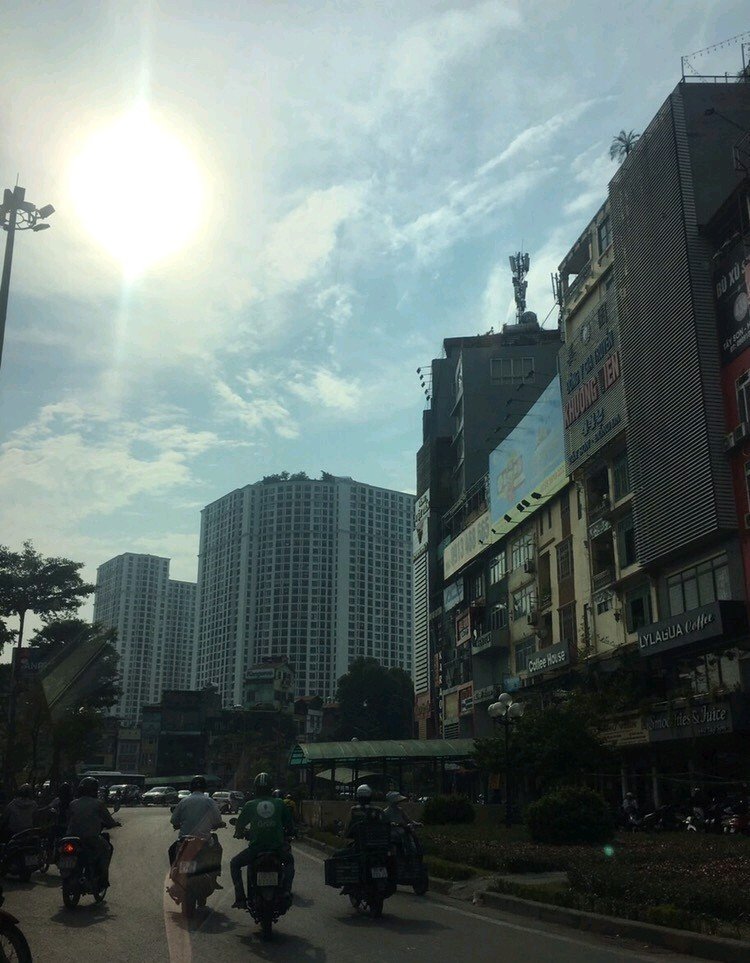
I was too hot and too tired to go in immediately. So I sat on a low wall across the street and drank a bottle of water and watched Nguyen Van Huyen Street do its thing for a while.
That’s when Cau Giay got me. Not the museum. Not the food, not the history, not the famous green rice.
I’d read about on three separate travel blogs about Cau Giay Hanoi tourism. Just — the street, in the afternoon, being a street.
A man was selling something from a cart and I couldn’t tell what it was from where I sat.
A woman walked past him talking into her phone with the focused irritation of someone receiving news they’d already half expected.
Two students were sitting on a step about 20 meters from me, sharing a phone screen, and one of them kept laughing and the other kept insisting whatever she’d just seen wasn’t funny.
A dog was sleeping next to a motorbike in a patch of shade that was getting smaller.
None of this was remarkable. That’s the thing. It wasn’t remarkable at all, and somehow that was what stuck.
What Cau Giay Means (History of Cau Giay Hanoi)
History of Hanoi: 6 Epic and Inspiring Events That Shaped Vietnam
I found out later, because I’m bad at doing research before I arrive places — that Cau Giay means Paper Bridge, a key part of Cau Giay Hanoi history.
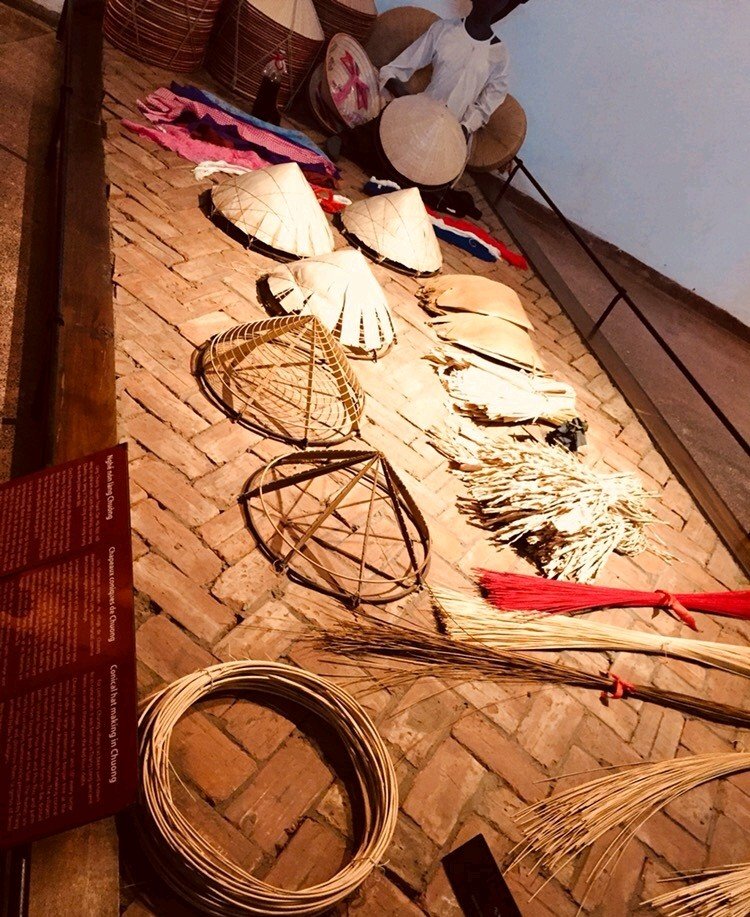
Cau is bridge. Giay is paper. This part of Hanoi’s western reach was, for generations, where paper got made..And they are off multiple kinds.
The villages here had a division of labor that strikes me now as almost monastic in its precision: Yen Hoa made raw do paper, An Thai made giay ban for ordinary people’s everyday use.
Nghia Do made giay sac phong – the high-stakes stuff, the paper used for royal certificates, for official titles, for documents that changed what someone was allowed to be called.
I think about that a lot, honestly. These weren’t wealthy villages. They were craftspeople on the western edge of a capital city.
They made the material that everyone else used to record power.
The imperial court needed their paper. And yet the district carries their name, not the name of anything written on it.
There’s something in that I find genuinely moving, in a way I couldn’t fully explain if pressed.
The intellectual tradition ran deep here too. Two small villages — Giay and Cot — produced 18 doctoral-level scholars in ancient Hanoi, back when that designation meant something extraordinarily rigorous.
The broader area put hundreds of degree-holders into the world. This wasn’t luck.
It was a culture that decided, collectively, that learning mattered, and then enforced that decision through generations without needing much external validation.
You can feel the inheritance on any weekday morning now. The sidewalks fill up with students.
The University of Languages and International Studies is here.
The Academy of Journalism and Communication. Vietnam National University.
These institutions didn’t settle here arbitrarily – they came to a place that had already been taking knowledge seriously for centuries, and the neighborhood absorbed them without much fuss, the way it absorbs most things.
Where is Cau Giay? (Location Guide for Cau Giay Hanoi)
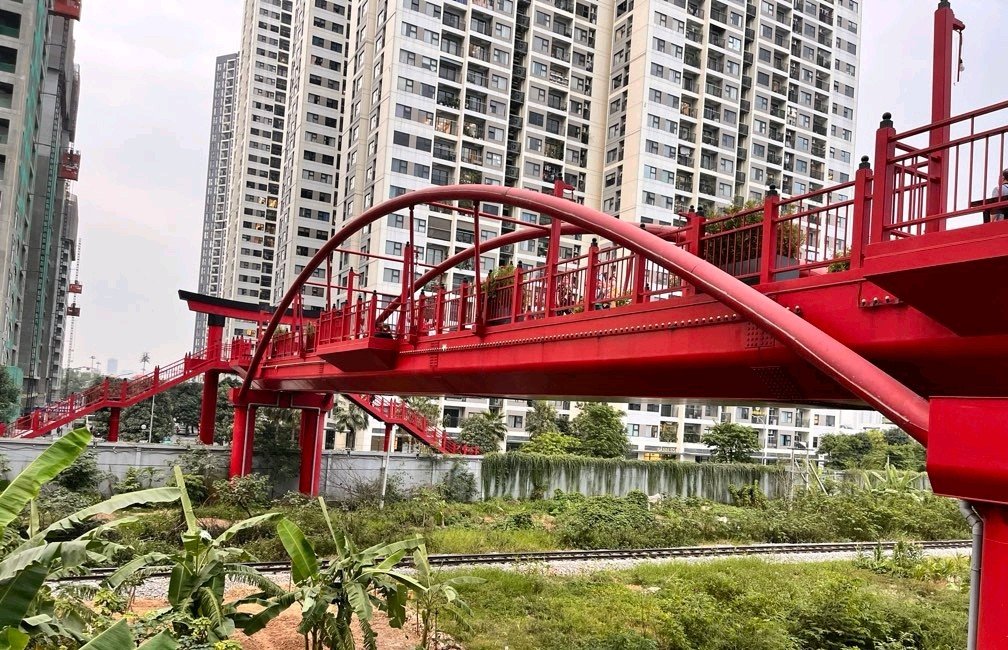
Cau Giay sits about 7 kilometers west of what most visitors think of as central Hanoi, making it an important area when exploring where is Cau Giay in Hanoi or planning a Hanoi travel itinerary beyond Old Quarter.
Not physically different — same noise, same heat, same impossible density of motorbikes at every intersection. But different in orientation.
In who it’s aimed at. The Old Quarter in Hoan Kiem exists now in a state of semi-performance, conscious of being watched, priced accordingly, arranged for consumption.
Tay Ho is comfortable in the way that comfortable places are comfortable — polished edges, reliable coffee, the quiet confidence of a neighborhood that knows its expats will keep renewing their leases.
Cau Giay doesn’t know you’re there. It’s not ignoring you rudely — it just has other things going on.
Three hundred thousand people in 8 wards doing the actual business of living: working, studying, raising children, eating lunch at 11:45 before the afternoon shift.
Buying incense for the altar at the front of the shop, arguing with someone on the phone, sleeping on a plastic chair behind a motorbike.
What the geography creates — that 7-kilometer remove from the tourist circuit — is a neighborhood that never learned to perform.
Its prices didn’t inflate for foreign wallets because not enough foreign wallets arrived to make inflation worthwhile.
Its restaurants don’t have English menus because the people eating in them don’t need English menus. Its parks aren’t manicured past the point of actual use.
I keep coming back to the word unoptimized. That’s what Cau Giay is. Unoptimized for visitors. And therefore, paradoxically, far more interesting to visit.
What to Eat in Cau Giay (Cau Giay Food Guide & Street Food Experience)
Hidden Street Foods in Hanoi That Locals Don’t Want You to Find
Here is the honest truth about cốm: the first time someone described it to me, I wasn’t that interested.
Young green sticky rice, harvested before it ripens, roasted over a low flame. Okay. I’d had sticky rice. I thought I understood the category.
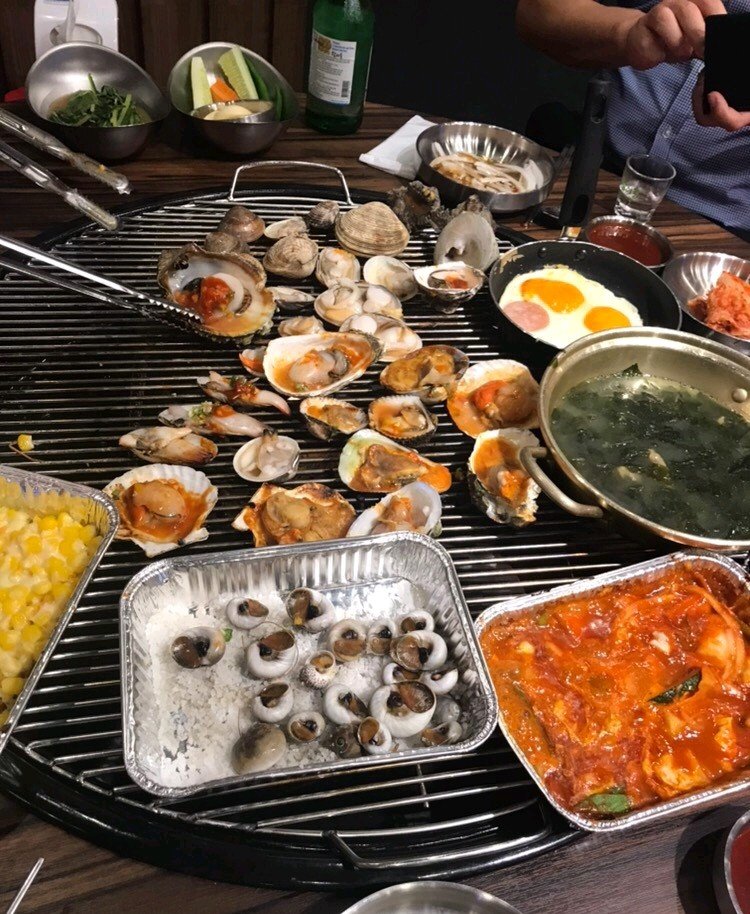
I was wrong about the category.
The story behind cốm matters to understanding why it tastes the way it does, which is to say: unlike anything you’ve had before, in a way that’s hard to describe without sounding like you’re overselling it.
Centuries ago, a flood came in just before harvest season and the rice fields around what is now the Dich Vong village cluster started going under.
The villagers cut the rice early — it wasn’t ready, it was still young and green and not yet formed properly — and roasted it over fire because that was the only way to keep it from rotting before they could eat it.
That was it. That was the origin. A natural disaster and a decision made under pressure.
The result was something that smelled like fresh-cut grass and toasted grain in the same breath.
Something that turned a particular shade of jade – not vivid, not decorative, but the deep and slightly dusty green of a rice paddy on an overcast day.
Something that you eat from a lotus-leaf wrap, pinching small amounts between your fingers, slowly, because rushing it is genuinely the wrong approach.
The Dich Vong village cluster still carries this. Known as Cốm Vòng village, it’s the heartland of the tradition.
The place where cốm becomes bánh cốm, sweet green cakes stuffed with mung bean paste and folded into banana leaves, and xôi cốm.
The sticky rice layered with coconut milk that arrives in a bowl and serve in front of you steaming and you don’t immediately touch it because it seems like it should be approached thoughtfully.
I had mine standing on a sidewalk in October, bought from a woman with a bicycle basket, wrapped in a lotus leaf that was already slightly wilted from the afternoon. It cost nothing significant.
It was one of the better things I’ve eaten in three years of traveling through Southeast Asia.
The other craft traditions in the district — incense in Gian Village, malt candy in Nghia Do — have mostly thinned out. Industrial production is cheaper and takes less skill and the market doesn’t much reward skill it can’t tell it’s receiving. But you still find traces.
A family still making incense the old way, not for commerce exactly, more from habit and inheritance.
An older woman at a festival stall selling candy using a method she learned without being formally taught, the way you learn things that live in the hands rather than the head.
Vietnam Museum of Ethnology (Best Things to Do in Cau Giay Hanoi)
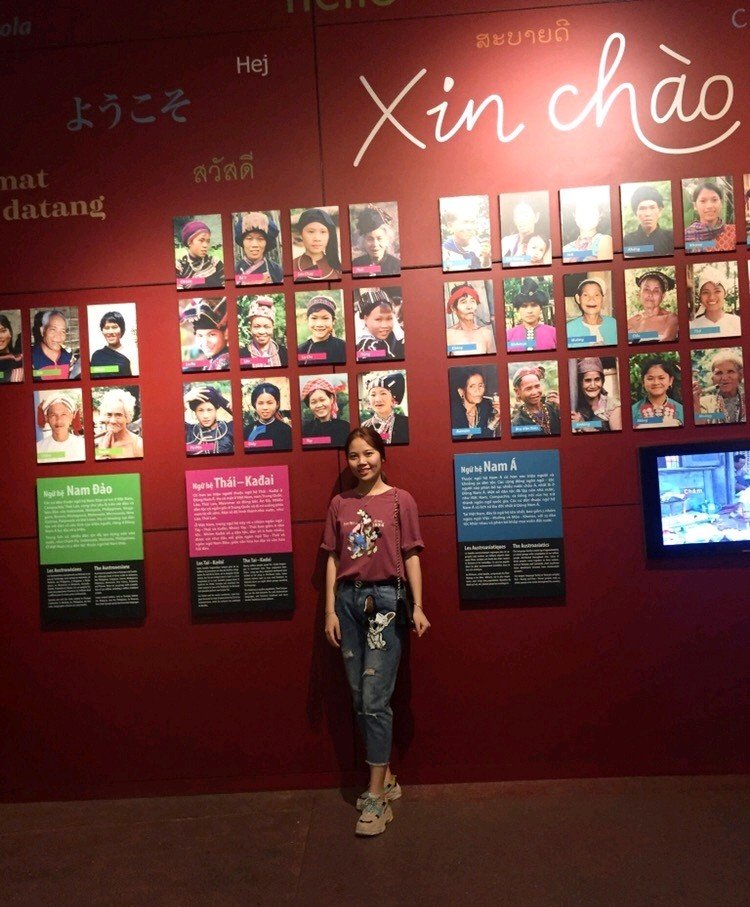
I went back to the Vietnam Museum of Ethnology, one of the best things to do in Cau Giay Hanoi, four times eventually.
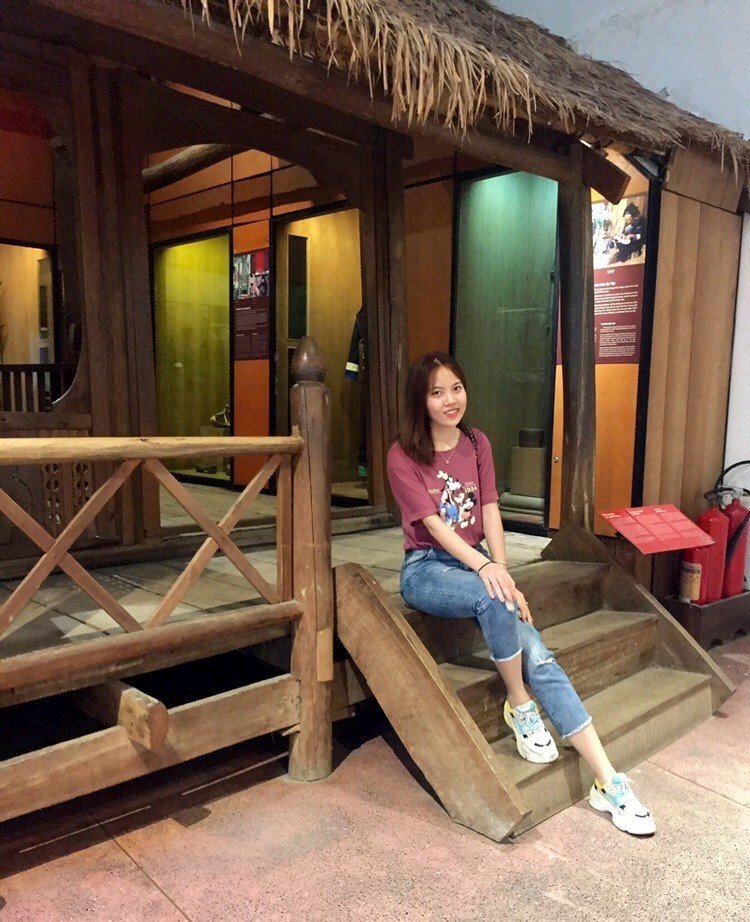
The first visit was the rushed one, the one I arrived at sweaty and late, saw the main building, walked through two rooms, took pictures of things I hadn’t fully read the labels of, and left feeling like I’d been somewhere.
The second visit I arrived at 9 a.m. on a Thursday, deliberately, with no plans until evening.
That’s the visit I’d recommend. Not the first kind. The second kind.
The building is worth a minute before you go in. Ha Duc Linh designed it — he was a Tày architect — and he shaped it like a Đông Sơn drum.
If you don’t know the Đông Sơn drum: bronze, ancient, more than 2,000 years old, found across Southeast Asia, one of the earliest and most persistent symbols of what became Vietnamese civilization.
The French architect Véronique Dollfus handled the interior. What they made together has a particular quality of feeling ceremonious without feeling cold, which is harder to achieve than it sounds.
But the outdoor section is where you should spend your time.
Full-scale reconstructed houses from across Vietnam’s 54 ethnic groups — a Tay stilt house, an Ede long house, a Yao house that’s half on stilts and half grounded in earth, an Hmong house, a Kinh tile-roofed house arranged across open land with small bridges and a meandering stream and paths that wind rather than lead directly, which means you end up looking at things because you’re not in a hurry to get somewhere.
On my second visit I sat on the steps of the Ede longhouse for somewhere between twenty and thirty minutes.
A group of elderly Vietnamese women were photographing each other in front of the Bahnar communal house nearby. They were laughing. Not at anything in particular that I could identify. Just that kind of laughter that happens when the day is fine and you’re with people you like and there’s no reason to stop.
I thought about trying to take a photo of that moment. I didn’t. You can’t photograph that kind of laughter from twenty meters away without ruining it, and anyway some things should just be witnessed.
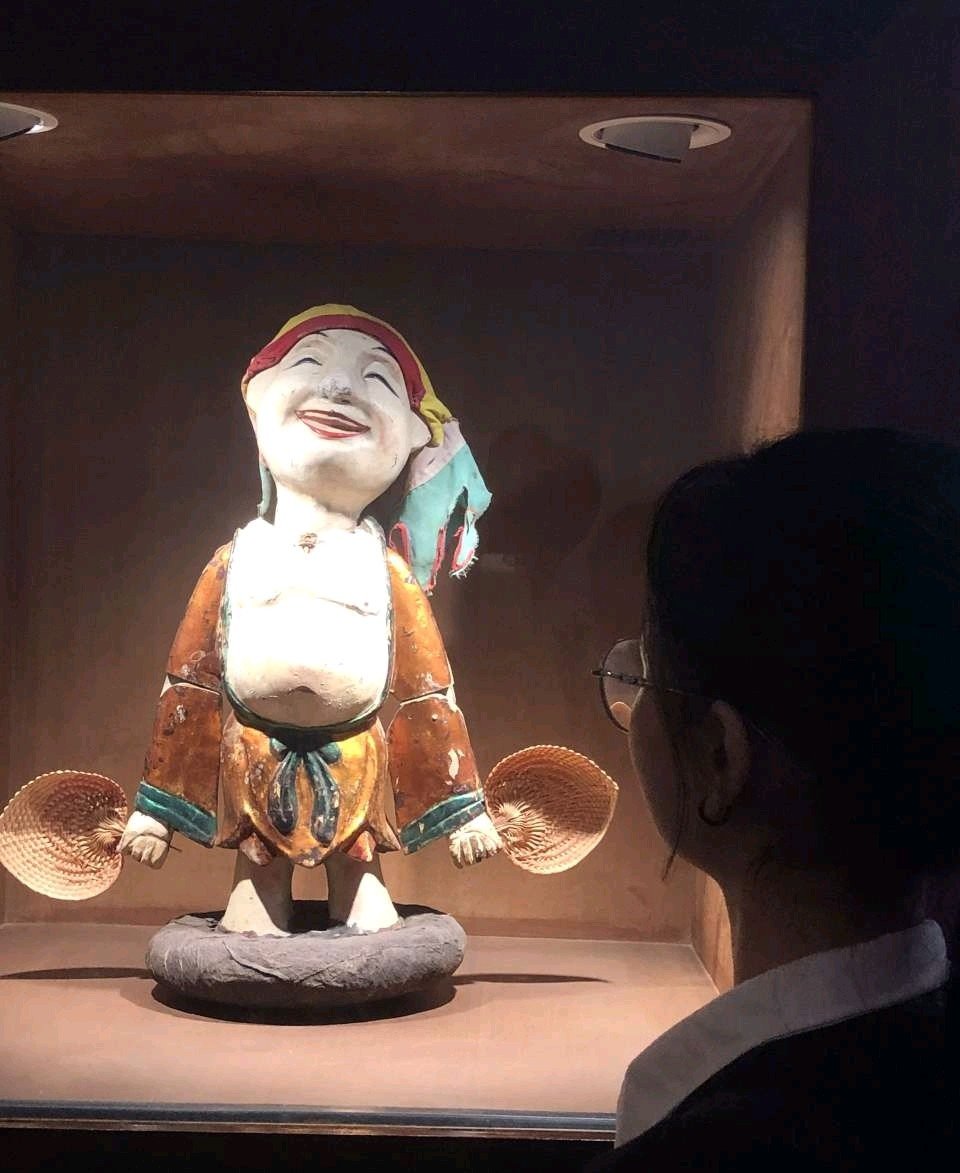
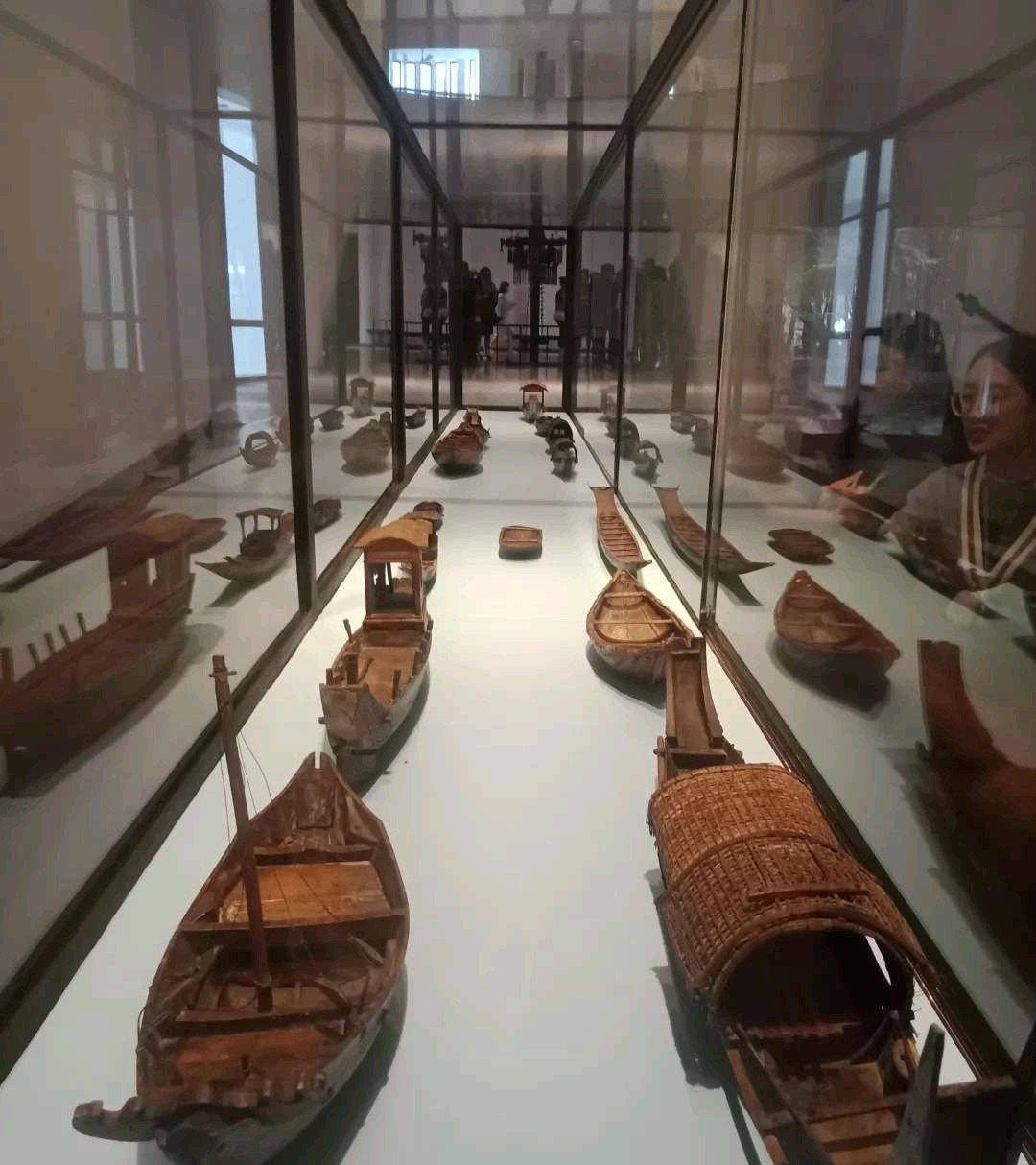
The museum holds 15,000 artifacts, 42,000 photographs, hundreds of recordings. It covers all 54 ethnic groups. You will not absorb all of this and you should not try. Find one room and read the labels properly.
Find one object outside and spend five minutes with it specifically. A bamboo fishing trap. A loom.
A ritual textile with a pattern that someone spent weeks on and whose meaning is probably not fully translatable. That’s enough. That’s the visit.
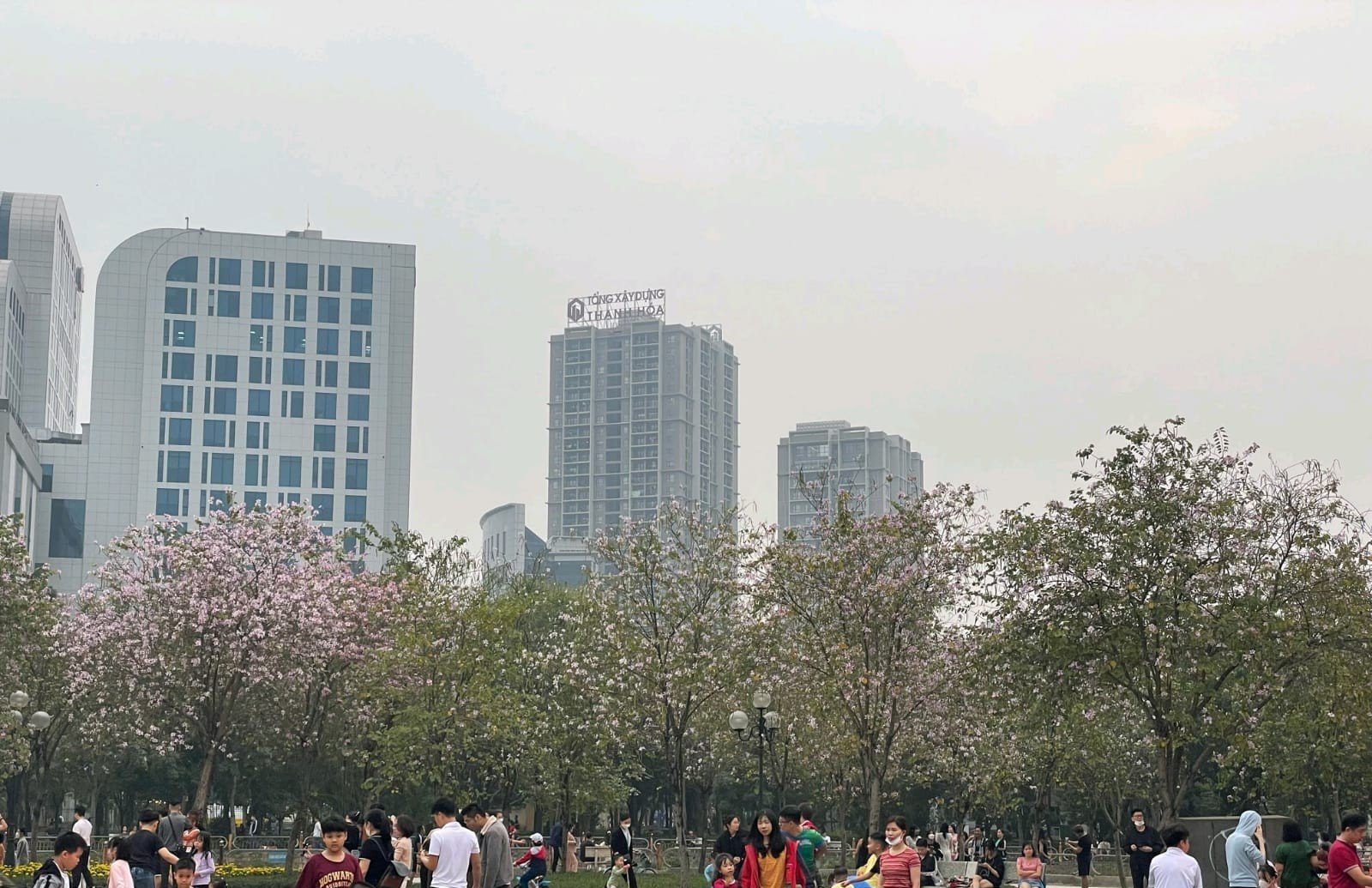
Parks in Cau Giay (Things to Do in Cau Giay Hanoi)
Cau Giay Park has a heart-shaped lake. This is not a design decision. It’s a geographic accident that the locals noticed at some point and accepted with the equanimity of people who have more pressing things to find remarkable.
Early mornings there belong to the old. Tai chi at dawn, circles near the water, movements that look slow until you try them. Men on benches with thermoses.
Couples walking laps in matching sportswear — this is a universal phenomenon across Asia and I find it endearing in a way I’ve never fully analyzed. By mid-morning the park fills differently.
By evening the children have taken it over entirely. The playground is loud. The grandparents nearby share fruit from plastic bags and do not intervene in anything.
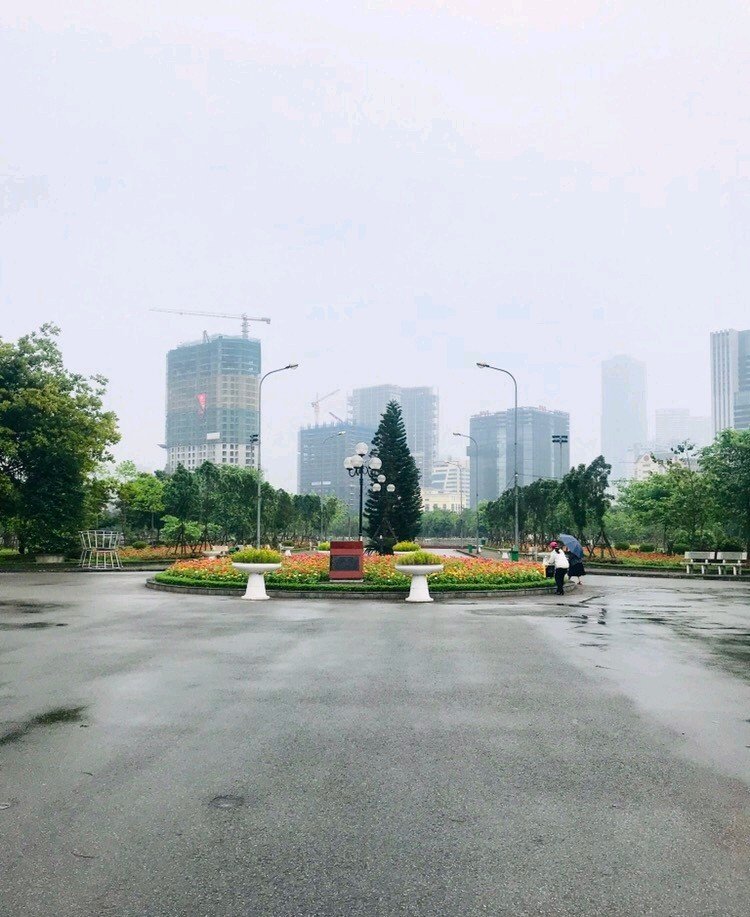
Nghia Do Park, directly across from the museum, is quieter and operates on a different emotional register. Shaded. Free. No particular attractions. The kind of low-key activity that signals a neighborhood in functioning health: stretching, dog-walking, sitting on a bench and apparently thinking about nothing specific.
I know parks can sound like filler in a piece about a city district. They’re not filler here. In 300,000 people in 12 square kilometers, parks are structural. They’re where the pressure goes.
A neighborhood without breathing room doesn’t breathe – and a neighborhood that doesn’t breathe becomes something else, something harder to spend time in. Cau Giay breathes. The parks are why.
Modern Cau Giay: Business and IT Hub in Hanoi
The first centralized IT Park in Hanoi is here. The office towers along Duy Tan Street and Tran Thai Tong could be transplanted to Singapore or Shenzhen or Kuala Lumpur and they’d fit without alteration.
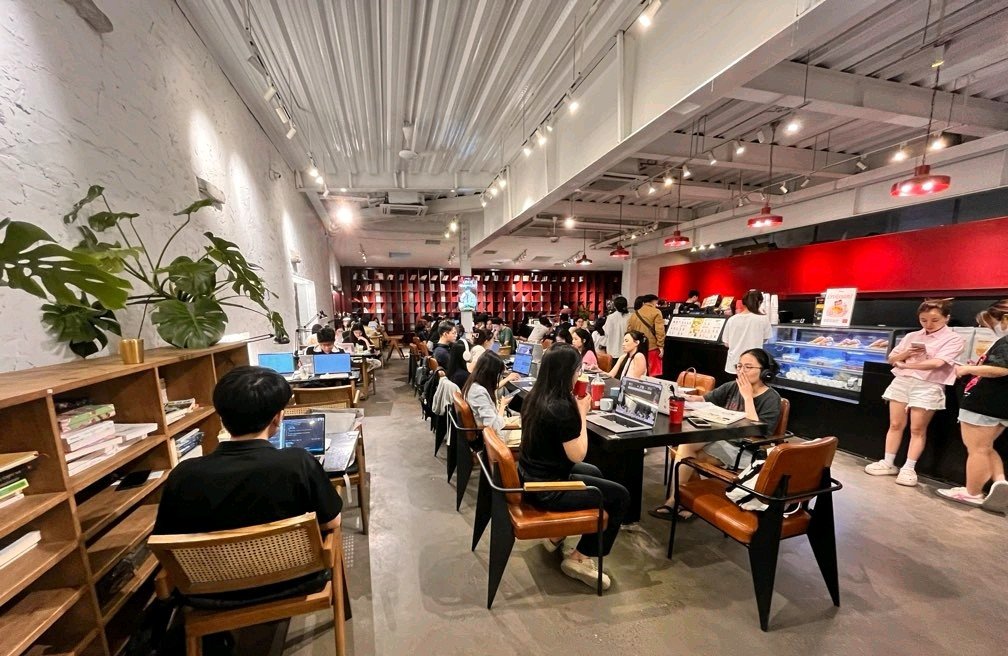
Two-thirds of Cau Giay’s income comes from services — mostly small businesses — with manufacturing making up the rest. What the statistics miss is that these two economies share sidewalk space without apparent conflict.
The software engineers eat at the same stalls as the guys fixing motorbike tires.
The glass lobbies of the corporate buildings have incense burning at small altars near the security desk, fresh flowers replaced on whatever schedule the office manager has decided is appropriate.
For every tower: a lane-house café where the Wi-Fi password is written in marker on a scrap of cardboard. A tailor shop that has been hemming the same kind of trousers, in the same way, since before anyone in the building next door was born.
An altar wedged into the corner of a garage, joss sticks in a cup, tangerines on a plate, the mundane sacred coexisting with the mundane mechanical.
The new and the old in Cau Giay aren’t having a conversation about which one wins. They’re not having a conversation at all. They’re just both there, equally present, equally uninterested in explaining themselves.
How to Visit Cau Giay (Cau Giay Hanoi Travel Tips)
Don’t arrive with a list. Or if you do — I know, the list is already made, you made it on the plane – be willing to abandon it for something that turns out to be the actual thing. Scooter if possible.
The main streets are wide enough that you’re not constantly negotiating your survival. The alleys are narrow but slow.
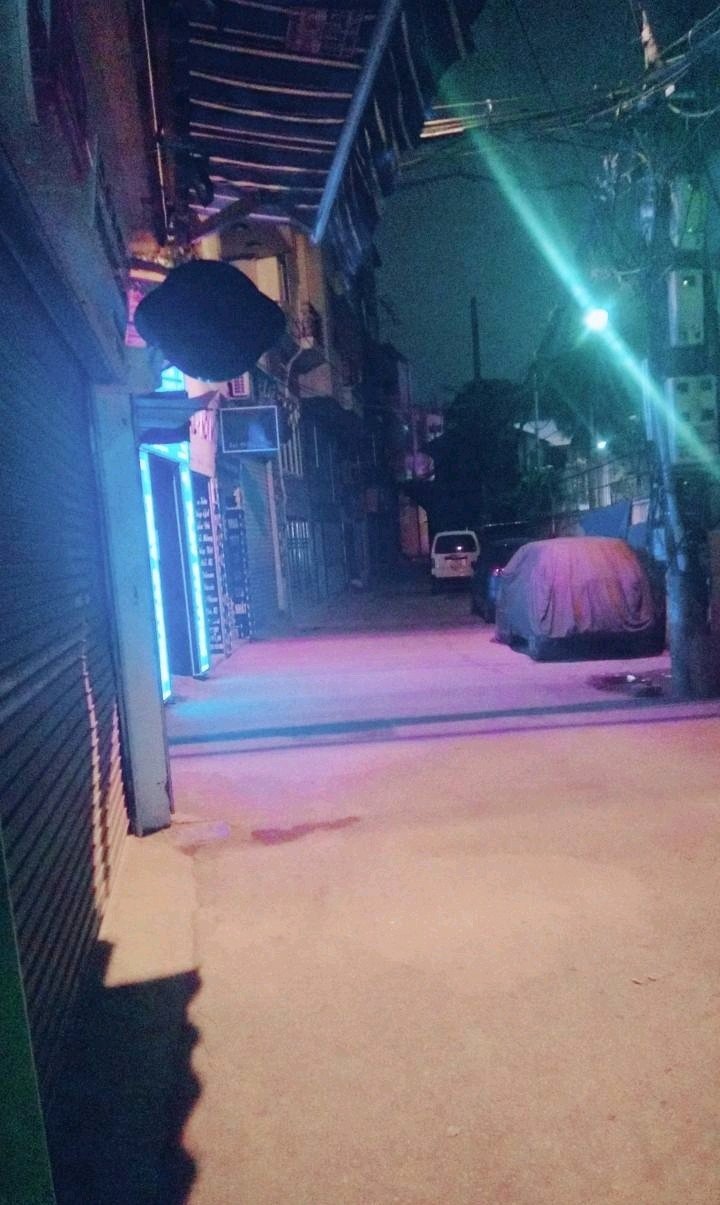
Go into the narrow alleys. The ones with buildings leaning toward each other and wires overhead in configurations that look structurally impossible but have apparently been fine since about 1989.
Someone will always be doing laundry. Something will always be cooking somewhere above you. You will not be able to identify the source and you will not need to.
Eat at Nghia Tan Market in the morning. Eat on To Hieu Street in the afternoon, at a stall without an English sign. Point at what the person next to you ordered. This works consistently better than trying to navigate a menu in a language you don’t have.
The museum: a Thursday morning, no afternoon plans, the outdoor section first.
October: the cốm season. The vendors on bicycles. The lotus-leaf packages. Eat it standing up on the sidewalk. Eat it slowly. This is non-negotiable.
10. Why Visit Cau Giay (Hidden Gem in Hanoi)
I keep going back to the women outside the museum. The laughing.
I’ve thought about why that stuck with me more than the food, more than the history, more than the green rice and its flood-survival origin story.
I think it’s because what I saw in that laughter was the fundamental thing Cau Giay has and most places that are worth visiting have lost: people being in a place without performing being in it.
The laugh wasn’t for anyone. It wasn’t an Instagram moment. It wasn’t even particularly picturesque from where I was standing — just three older women on a path outside a museum, laughing at something between themselves that I didn’t catch and didn’t need to.
That’s the district, I think. That quality of life happening without an audience.
In 2026, most places that appear on anyone’s recommendation list have made some version of a deal: they will make themselves legible, attractive, photographable, and in exchange they will receive visitors and the visitors’ money and the visitors’ five-star reviews.
Cau Giay hasn’t made that deal. Not because it’s principled about it — it just never had enough visitors to require the negotiation.
Which means you can go there now, before anything changes, and find a city district that is simply doing what it does. Papermaking, academically, now in the form of universities.
Cooking, carefully, now in the form of morning market stalls and afternoon sidewalk carts. Building its future without looking over its shoulder to see if anyone’s watching.
Come when you’re ready to be in a place that isn’t ready for you. Come hungry. Come without a schedule that can’t be broken.
Come find the woman on the bicycle with the lotus-leaf packages in October and eat cốm the way she tells you to.
That’s the whole thing, really. That’s Cau Giay.
Also read: Hanoi Travel Guide 2026