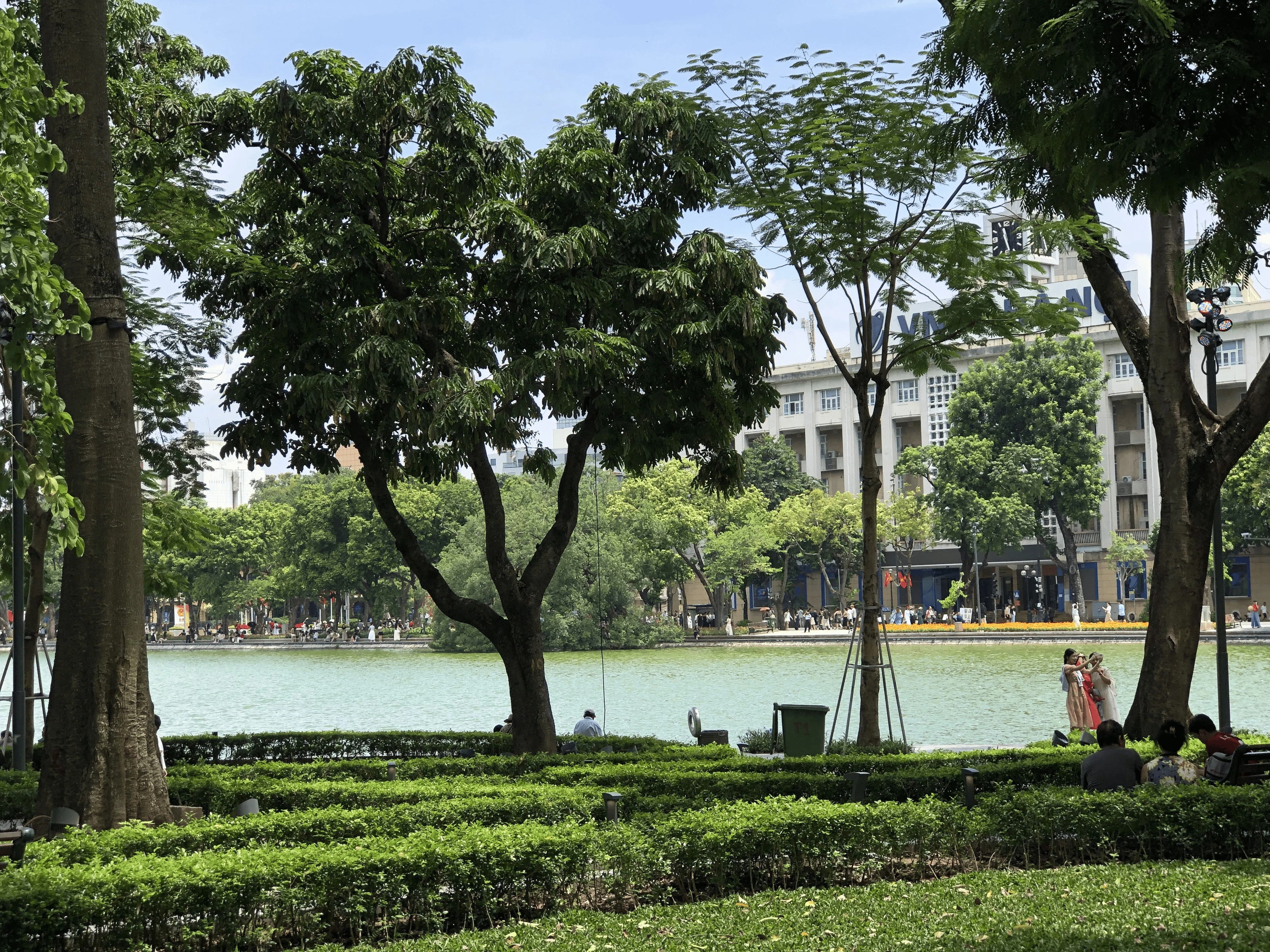
An older Vietnamese lady, probably in her seventies, approached me while I was sitting beside Hoan Kiem Lake. She held out a water bottle from the few she was carrying in a plastic bag. I already had one, but I bought hers anyway.
She walked away with a smile on her face. Maybe she thought I was silly, buying a smaller bottle when she had already seen a big one in my hand.
The whole thing lasted no more than a minute. But it made me notice something I would experience again and again in Hanoi.
I tell you this because the lake is not only a legend and a red bridge. It is also people like her, walking the same path every day. Keep that in mind as you read the practical details below.
Over the last few years, I have visited Hanoi about 27 times, and I still love sitting here and watching people practise tai chi. The place is familiar. The visit never feels exactly the same.
Hoan Kiem Lake: The Useful Details First
Coming for a short walk, the temple or a whole evening? Those are slightly different visits. Here is the distinction that makes planning easier.
| Question | Quick answer |
|---|---|
| Where is it? | In central Hanoi, beside the southern edge of the Old Quarter. Search for Hoan Kiem Lake or Hồ Gươm. |
| Is the lake free? | Walking around the public lakeside is free. Ngoc Son Temple is a separate ticketed visit. |
| How much time should I allow? | About 30–45 minutes for a continuous circuit at a comfortable pace; 60–90 minutes with photographs and sitting stops. Add time for the temple or a cafe. |
| When would I go? | Around 6 a.m. for morning routines, or an evening for the lights and busier atmosphere. |
| Can I visit Turtle Tower? | It is viewed from the shore; it is not the island reached by The Huc Bridge. |
| What changes at weekends? | The usual pedestrian programme changes road access and brings more street activity. Check temporary notices and your pickup point. |
Practical details checked on 15 November 2026. My stories describe my own visits; walking times and routes below are planning suggestions, not timed route tests.
Where Is Hoan Kiem Lake, and How Do You Get There?
The lake sits between the Old Quarter streets to the north and the wider streets around the Opera House area to the southeast. The Huc Bridge and Ngoc Son Temple entrance are on the northeastern side, along Dinh Tien Hoang.
Open Hoan Kiem Lake in Google Maps. Save your intended meeting point too. “I’m by the lake” is a beautiful message until two people discover they are standing on opposite sides.
- Walking: Practical from many central hotels, but check your actual route. Not every Old Quarter hotel is five minutes from the water.
- Car or taxi: Choose a reachable street near your preferred side of the lake. Weekend barriers can mean a final walk.
- Bus: Check a current route planner for the stop and direction you need. Weekend diversions may change the usual stop.
- From the airport: Choose a transfer to your hotel or a suitable central stop, then finish the journey to the lake. Do not assume every airport bus stop is directly beside your destination.
If you have luggage, I would settle into the hotel first where possible. A lakeside walk is much nicer when you are not dragging a suitcase over every change in pavement.
The Returned Sword: History and Legend
Hoan Kiem means “Returned Sword”; Hồ Gươm means “Sword Lake.” The name is linked to the story of Le Loi, who led resistance against Ming rule.
In the legend, a magical sword helped him achieve victory. Later, while he was on the lake, a golden turtle appeared to reclaim it. He returned the sword, and the turtle disappeared beneath the water.
That is folklore, not a documented account of a magical animal. Its meaning is what stays with people: victory followed by the return of the weapon, and a lake associated with peace. The Vietnam Government Portal explains the story and the temple’s background.

And not going to lie, knowing the story still changes how I look at the water. You can read the practical information and enjoy the legend. There is room for both.
A Lake That’s Seen It All
Hoan Kiem is also an everyday meeting place. People walk, exercise, meet friends and sit with nowhere urgent to go. That is the part I keep coming back to.
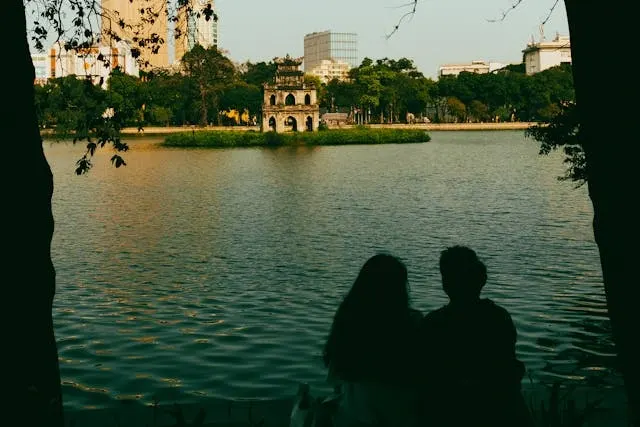
The history gives you a reason to visit. Sitting down for a while gives you a different view of the place. That one-minute encounter with the water seller has stayed with me longer than plenty of carefully planned sightseeing stops.
Walking Around Hoan Kiem Lake
You can make a circuit without buying a tour or a temple ticket. For a first visit, I would allow at least an hour rather than treat the lakeside as a route to complete as quickly as possible.
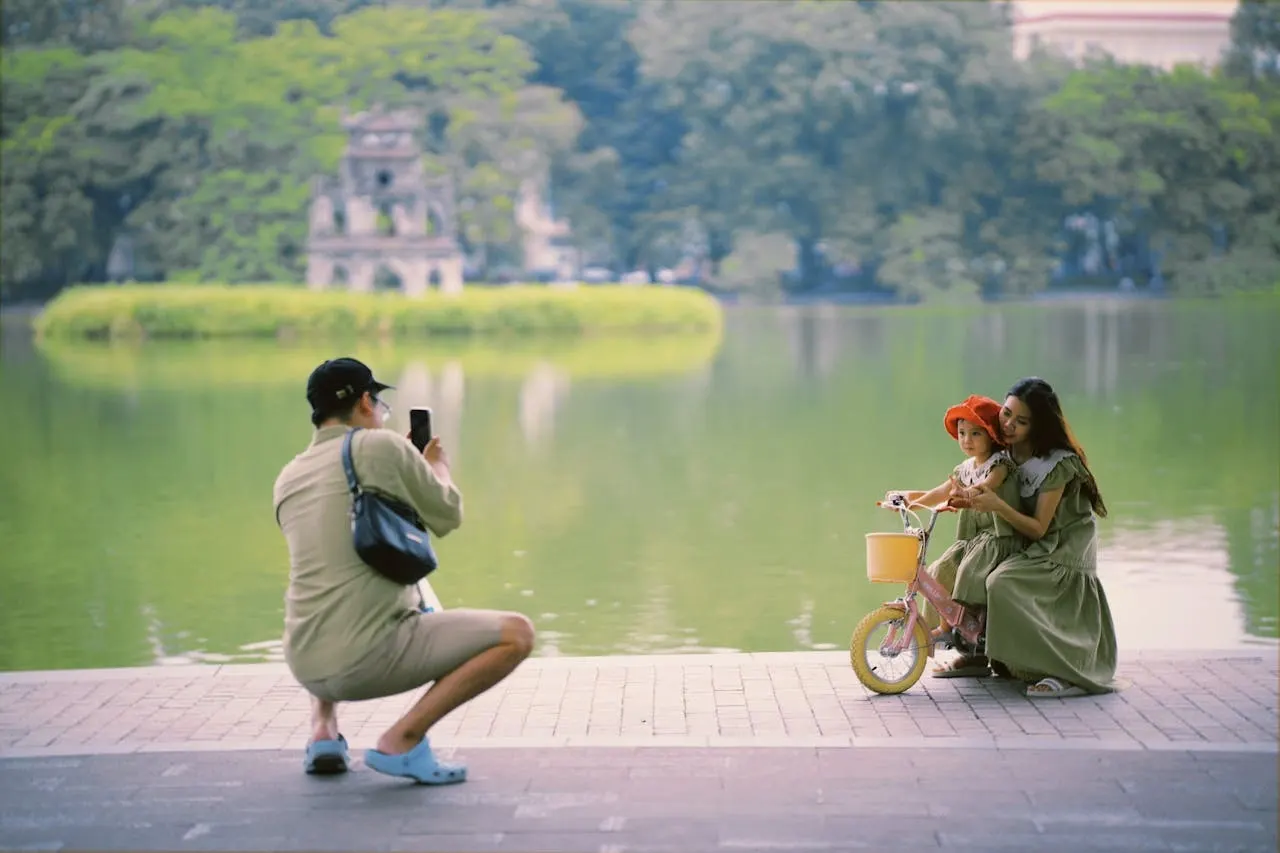
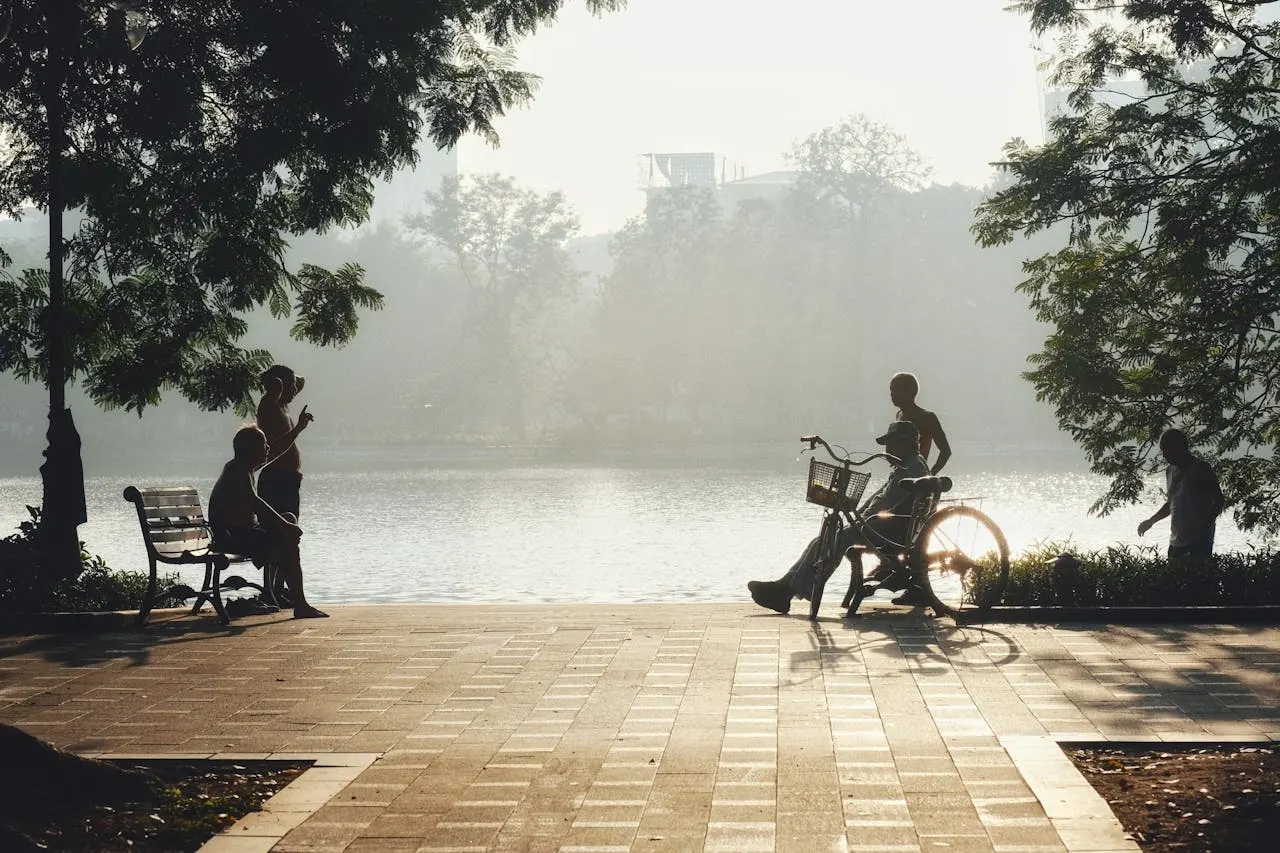
Early in the morning, I enjoy watching the exercise groups and people taking their regular walks. It is not silent—this is still central Hanoi—but it feels different from the evening crowds.
Later, you might see families taking photographs, couples on benches and visitors deciding whether the next stop is lunch or coffee. Both are respectable plans.
A Suggested First-Visit Walking Route
- Begin at the northern end: The square around Dong Kinh Nghia Thuc is a useful meeting point and connection to the Old Quarter.
- Walk toward The Huc Bridge: Look at the temple entrance area. Decide whether to buy a ticket rather than assuming the bridge is a separate public shortcut.
- Continue along the eastern shore: Take your time with the lake views and the area around Ly Thai To Garden.
- Follow the southern shore: Look back across the water toward Turtle Tower. It is on a separate island from the temple.
- Return along the western side: Finish the circuit on the Le Thai To side, then decide whether to continue into the Old Quarter or find a seat.
Allow roughly 60–90 minutes with stops, excluding a longer temple visit or meal. You can start anywhere and walk in either direction. This is a suggestion, not a compulsory procession.
Landmarks Around the Lake: What You Are Looking At
The Huc Bridge
The bright red bridge leads to Ngoc Son Temple. It is the obvious photograph, yes, but take a moment to look at the whole entrance rather than seeing everything through your phone.
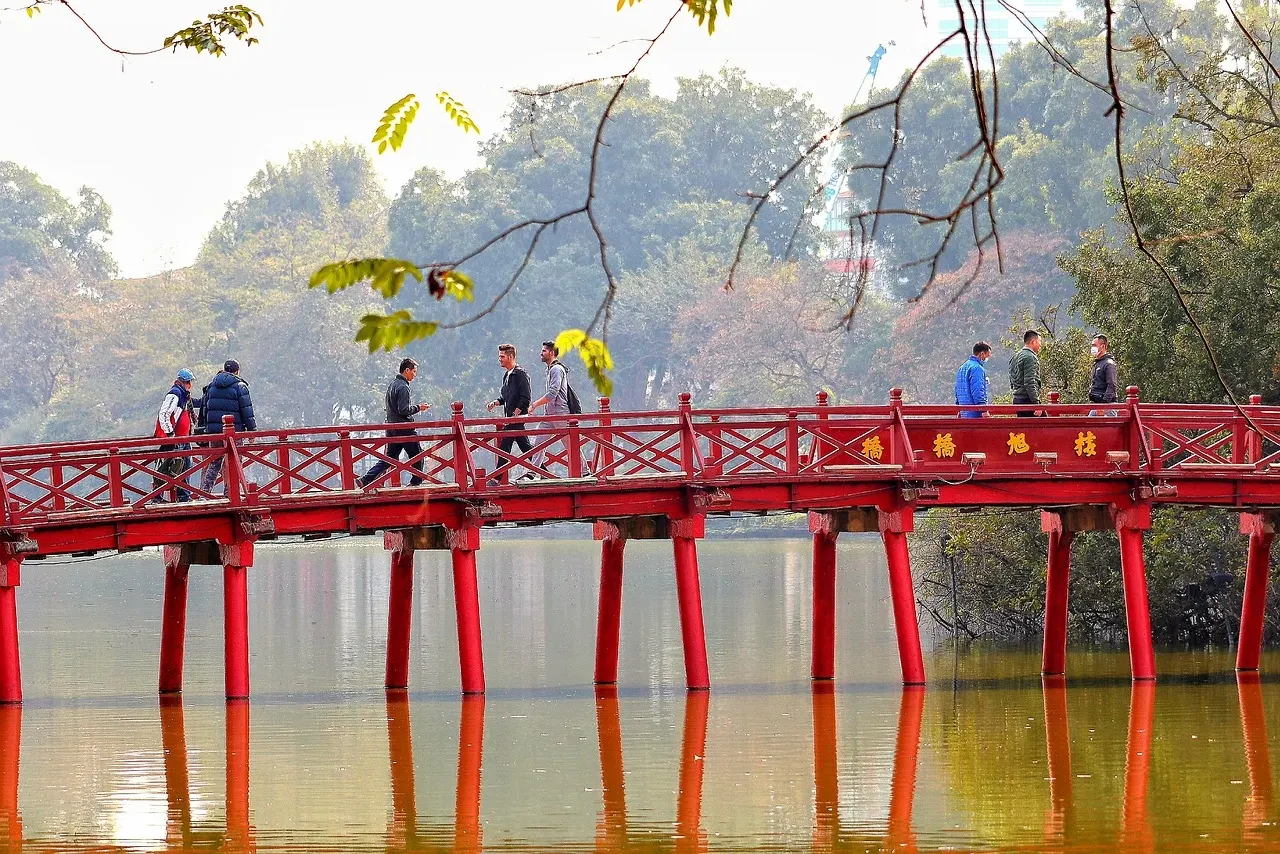
You can photograph the bridge from the public shore without entering the temple. Crossing it forms part of the ticketed temple visit. Leave room for others to pass, particularly when people stop for portraits.
Ngoc Son Temple: Tickets, Hours and Dress
I have crossed the bridge many times. The change from the busy street to the temple is one of the reasons I enjoy returning, though the atmosphere naturally depends on the crowd and what is happening that day.
The temple honours Tran Hung Dao and figures associated with learning and other religious traditions. It is a place of worship as well as a visitor attraction.
| Standard adult admission | 50,000 VND |
|---|---|
| Monday–Thursday | 7 a.m.–7 p.m. |
| Friday–Sunday and public holidays | 7 a.m.–10 p.m. |
| Suggested extra time | About 30–45 minutes, longer if you read displays or encounter queues. |
These are published opening hours, not confirmation of the final ticket-sale or admission time. Check the heritage management board’s visitor information and the entrance notice before a late visit. Ask about reduced or free admission if eligible; documentation may be required.
Dress respectfully, with shoulders and knees covered, and follow local instructions about photography and entering worship spaces. Keep your voice down around people praying.
The Pen Tower and Ink Slab
Near the approach to the temple, look for the stone Pen Tower and the Ink Slab. They are easy to pass while concentrating on the bridge. Their imagery connects the entrance with learning and scholarship.
Turtle Tower
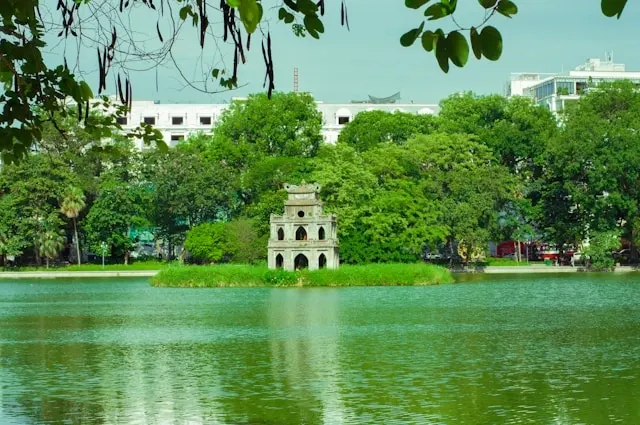
Tiny tower. Big presence. Turtle Tower, or Thap Rua, stands on its own islet. There is no visitor bridge from the lakeside, and it is not the tower you reach by walking across The Huc Bridge.
Enjoy it from the shore. Try more than one viewpoint as you walk: the trees, reflections and foreground change the photograph. At night, the lighting gives it a different feel again.
What About the Real Turtles?
The golden turtle in the sword story belongs to legend. Real giant softshell turtles are a separate part of the lake’s history.
The turtle known as Cu Rua died in 2016. A preserved specimen was prepared for display at Ngoc Son Temple, documented by the Asian Turtle Program. Do not plan your visit around the expectation of seeing that turtle swimming in the lake.
Evenings Here? A Different Visit.
As daylight fades, the lights begin to reflect on the water and more people come out for a walk. I like seeing the same place at both ends of the day. It saves you from thinking one hurried visit tells the whole story.
Weekend Walking Streets: What Changes?
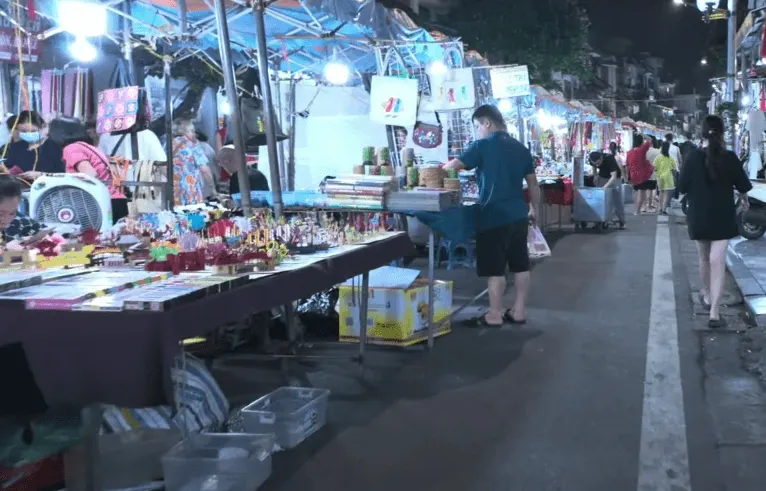
The established Hoan Kiem pedestrian programme runs from Friday evening to Sunday night, commonly published as 7 p.m. Friday to midnight Sunday. The Vietnam tourism authority’s announcement describes that schedule.
Temporary suspensions, events and traffic arrangements can change access. Check current local notices or ask your hotel for the day’s situation, especially around major holidays.
When the programme is operating, it brings room for walking and street activity, but it does not mean every surrounding road becomes safe to cross without looking. Barriers also affect taxi pickups. Arrange a meeting point outside the closure area.
Music, games and performances are things you may encounter, not a fixed show timetable. Leave yourself time to stop when something interests you.
The Night Market Is a Separate Stop
The Old Quarter weekend night market is not another name for the lake path. The shopping route heads north through streets such as Hang Dao toward Dong Xuan. Check current operating evenings before planning around it.
Likewise, Dong Xuan’s indoor market and the evening stalls are different visits. Do not arrive late expecting every indoor shop to be open because you read “night market.”
If you want the lake, dinner and shopping, allow a whole evening rather than assuming it all fits into a quick lap.
Food and Coffee Around Hoan Kiem Lake
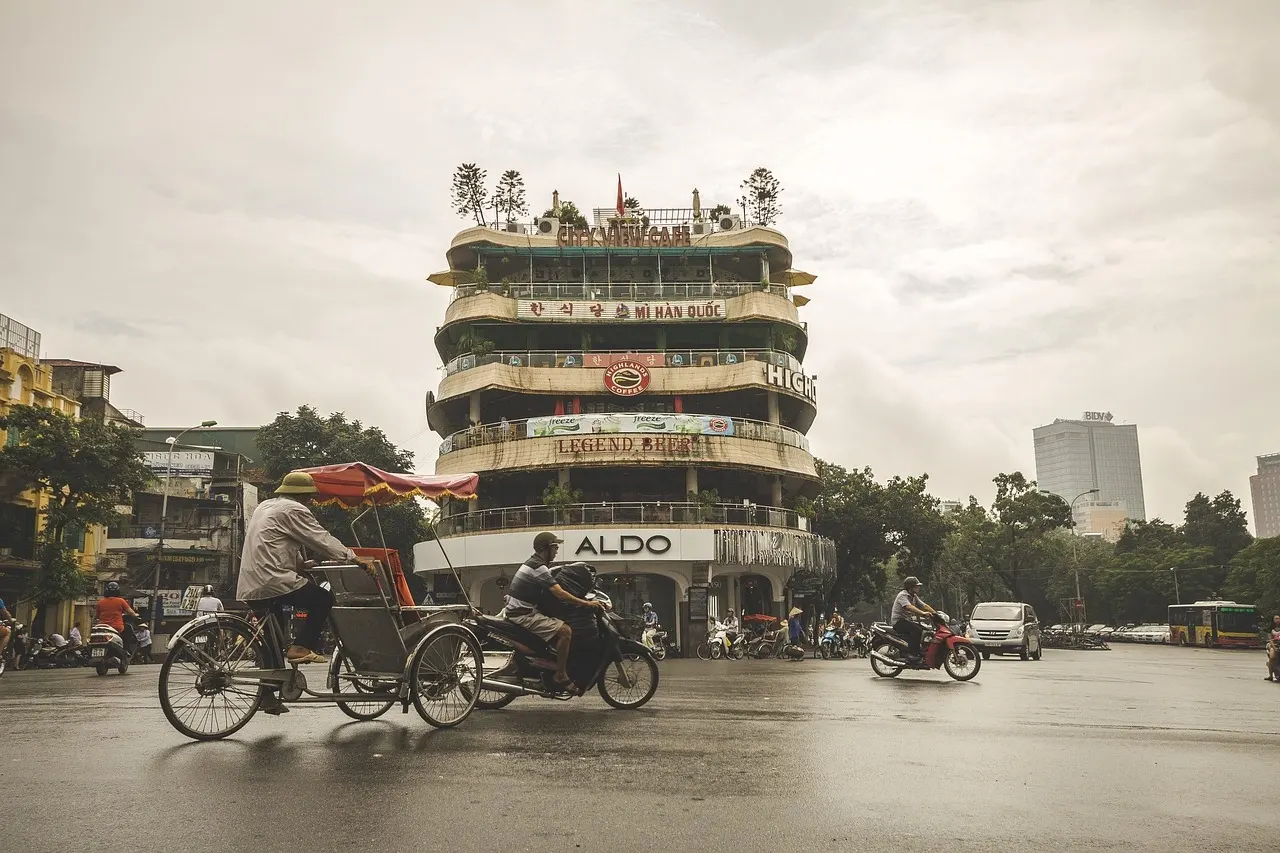
You will find food in the streets around the lake and into the Old Quarter. You do not have to insist on a water view for every meal. Sometimes the meal you want is a few streets away.
What to Order
Pho, banh mi and bun cha are useful starting points when browsing nearby menus. Ask what a serving includes and check the price before adding drinks or sides. A crowded stall is not automatically the right choice for your taste, budget or dietary needs.
If you avoid particular ingredients, ask about sauces and stock as well as the obvious meat. Carrying a written explanation in Vietnamese can help.
Choosing a Lakeside Cafe
I understand the appeal of a balcony. A drink, a chair, the lake below. A very convincing argument for doing nothing for a while.
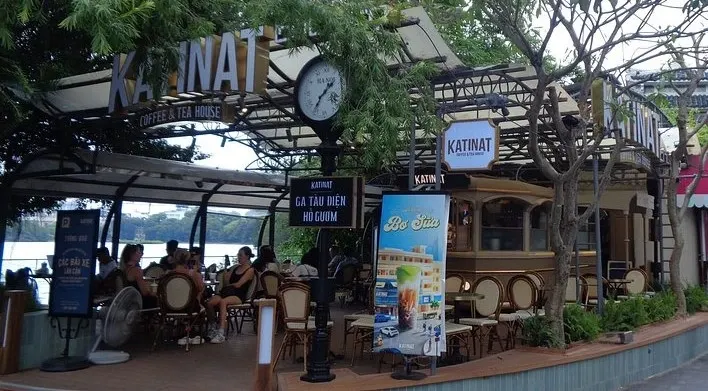
Before climbing up, check the menu, whether seats with a view are available and whether there is a minimum order. Ask about stairs or lift access if that matters to you. A photograph of a balcony does not guarantee an empty table when you arrive.
Egg coffee is an option if you enjoy a rich, sweet drink; it contains egg and commonly dairy. Check ingredients if needed. The lake will look just as good with a drink you actually like.
Best Time to Visit Hoan Kiem Lake
October and November are my favourite months for walking here. Cooler conditions suit me because I sweat easily. March and April can be pleasant too, although drizzle may join your plans without asking.
| What you want | When I would plan it | What to remember |
|---|---|---|
| Morning exercise and a slower start | Around 6 a.m. | Watch respectfully and ask before joining a group or photographing someone closely. |
| Temple and daylight photographs | During confirmed temple hours, with time before closing. | Lake access and temple admission are separate. |
| Lights and street activity | An evening, particularly during the weekend pedestrian programme. | Expect more people and check transport access. |
| Less summer heat | Early morning or later in the day. | Check rain, heat and air-quality conditions; shade is not continuous. |
In cooler months, bring a layer rather than assuming Hanoi will feel like a tropical beach. Around Tet or a major event, expect the usual pattern to change. Decorations are lovely; a flexible plan is useful too.
Three Easy Ways to Plan Your Visit
A Short Stop: About 30–45 Minutes
Choose the northern and northeastern shore, see the bridge from outside and enjoy a stretch of the lakeside. You do not need to complete the circuit to have a worthwhile visit.
A First Visit: About Two Hours
Walk part or all of the circuit, add Ngoc Son Temple if open, then sit for a drink. Give the temple its own time rather than counting it inside a brisk walking estimate.
A Weekend Evening
Arrive before dinner, walk by the water and see what is happening in the pedestrian area. Eat nearby, then continue toward the night market if it is operating and you still feel like shopping. Confirm your journey back before your phone battery becomes the evening’s main concern.
These are suggested combinations, not timed tours. Crowds, heat, rain and your interest in photographs will change the pace.
What Can You Combine with the Lake?
- The Old Quarter: Continue north for food and a street walk. Choose a few streets rather than trying to cover the entire area.
- Thang Long Water Puppet Theatre: An option by the northeastern side. Confirm current tickets and performance times before fixing your dinner plan.
- St Joseph’s Cathedral area: A possible extension west of the lake if you want more walking and a cafe stop. Check visitor access separately if you want to enter.
- Opera House area: Continue southeast if that fits your itinerary. Interior access depends on current performances or offered visits.
You do not need to do all four. Pick one extension and leave time to enjoy it. My broader Hanoi travel guide helps connect the lake with the rest of the city.
Small Practical Details That Make the Visit Easier
- Budget: A lakeside walk can cost nothing. A standard adult temple visit adds 50,000 VND; food, transport and performances are separate. Check current menus rather than relying on one fixed “lake budget.”
- Comfort: Bring water and wear shoes suitable for a longer walk than you originally intended.
- Weather: In heavy rain or thunder, find proper shelter and change the plan. Sitting under a lakeside tree is not a reason to ignore worsening conditions.
- Access: Pavements, crowded sections and temple steps can affect the visit. Ask the management office about the specific access you need rather than assuming the whole route is step-free.
- Toilets and breaks: Ask at the temple, a staffed facility or a cafe you use. Do not assume every stretch of the lake has the same facilities.
- Belongings: Keep your phone and bag secure, especially in crowds and near active roads.
- Vendors: You can decline politely. If you buy something, agree on the price first. My water-bottle story was my choice, not a suggestion that every visitor should buy something.
- Photography: Ask before close portraits, especially of children or people exercising. Follow temple restrictions and avoid blocking the path for a photograph.
Questions I Would Answer Before You Go
Do I need a guide?
No guide is needed for an independent lakeside walk. A guide may help if you want more historical explanation; check what the tour includes before paying.
Do I need a ticket just to see the red bridge?
You can view it from the public shore. Entering across the bridge is part of the Ngoc Son Temple visit, with its own ticket and hours.
Is the lake only worth visiting at weekends?
No. Weekdays can suit a walk, temple visit or sitting break. The weekend pedestrian programme offers a different, often busier experience.
Is the lake open at night?
The public lakeside is normally accessible in the evening. It is not governed by the temple’s ticket hours, but events, maintenance or local restrictions can affect particular areas.
Why It Stays With Me
I have seen plenty of Vietnam—mountains, beaches and busy cities. Still, I keep coming back to this patch of water in Hanoi.
Sometimes it is the morning exercise. Sometimes the red bridge after dark. And sometimes it is a woman carrying water bottles who makes a familiar place feel personal again.
The useful details help you plan. Leave a little room for the visit itself.
Final Thoughts
Walk it. Sit for a while. Have something to eat nearby. You do not have to fit a temple, a full circuit, a performance and a shopping trip into one visit.
If your schedule allows, come once in the morning and once in the evening. The landmarks remain, but the people and pace change. That is what keeps it interesting for me.
More from HanoiGuides: Hanoi Travel Guide: Planning the Rest of Your Stay