The bit of Đường Lâm I’d plan first is the walk from Mông Phụ gate to the communal house. You get a village entrance, lanes lined with old walls and a place to stop and look at how the settlement is laid out. If the doors of the old houses are closed, you still have a worthwhile visit. Add Mía Pagoda if you have time and want a second stop. Arrange transport back before you go in, so you can spend the morning looking at the village instead of watching the ride app.
This is a short route through a village where people live. It’s for a reader who wants to go on their own, see some of the architecture from public lanes and decide on the spot whether to go farther. A meal in a home, a conversation with a host or a tour of an old house can become the centre of the trip. Make that a separate arrangement if it’s the reason you’re going.
Start at Mông Phụ gate
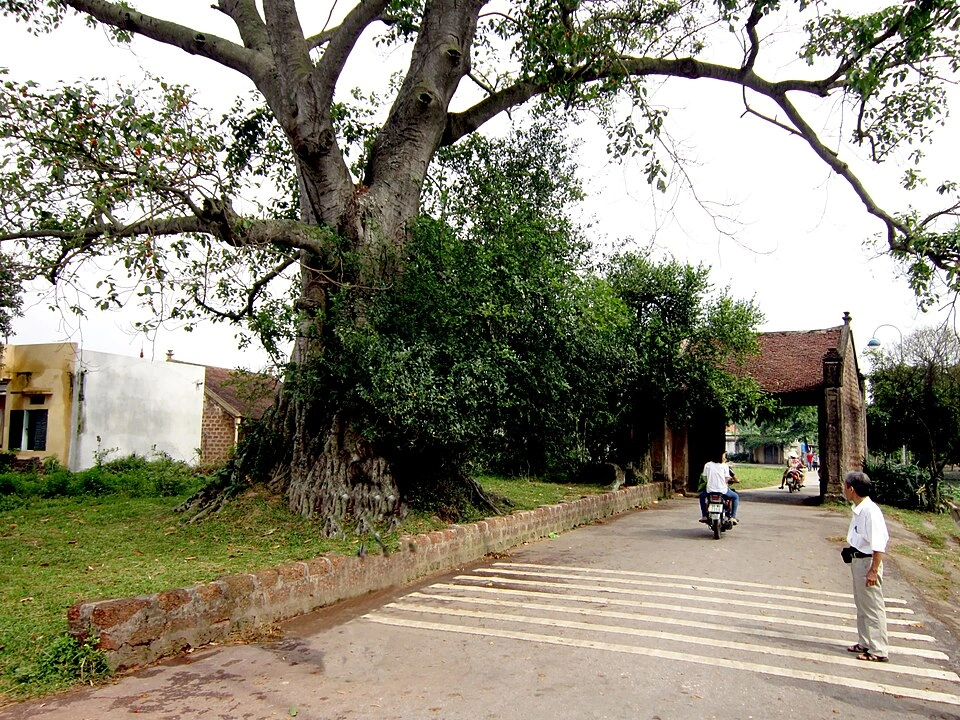
Save Cổng làng Mông Phụ for your first stop. If you give a driver only the name Đường Lâm, their map may set a destination elsewhere in the area. The Hanoi culture department’s description places the old gate and communal house in Mông Phụ, one of several hamlets in the heritage area. Save the gate for orientation and agree on a separate place to meet your driver if the car can’t stop there.
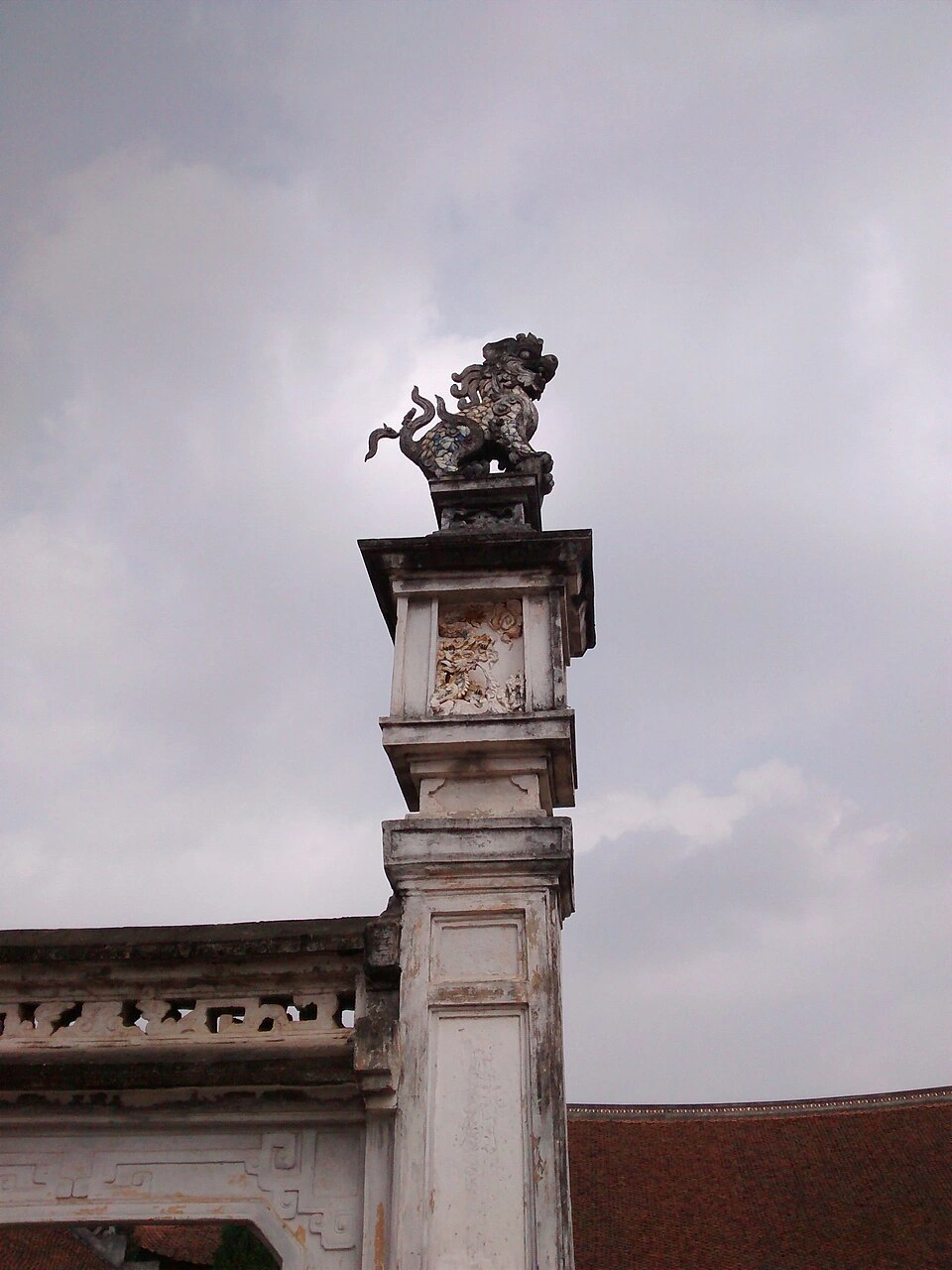
Before passing under the gate, look at it with the trees and the approach in the same view. From up close you can look at the roof tiles. From farther back you can see how the entrance narrows the way into the village. Both are worth noticing. If you’re walking with someone, have them point out the first thing they saw when you arrived. I suspect one of you will see the gate and the other will see the tree.
Ask locally about visitor arrangements and any admission that applies on your date. If your plans depend on access to a particular house, confirm that separately. A general village visit and permission to enter someone’s home are different things. If a sign mentions a historic house or a meal, ask who receives visitors there, what the visit includes and whether it’s open now.
Follow the lanes to the communal house
Use Đình Mông Phụ as your next pin. The city’s account of Đường Lâm’s heritage highlights the village gate, communal courtyard, wells and laterite houses. Save the communal house as a destination rather than relying on the smallest lane a map suggests. Stay on public lanes and turn back if a route leads into a private courtyard.
Once you get to the communal house, compare it with the entrance gate. One marks the approach into Mông Phụ. The other sits in an open space inside the village. Look for the way the roof meets the courtyard and how the space in front lets you see the building from farther away. If the interior is receiving visitors, follow the instructions about where to stand, what to wear and where photography is allowed. If it is closed, you can look from the public approach and carry on.
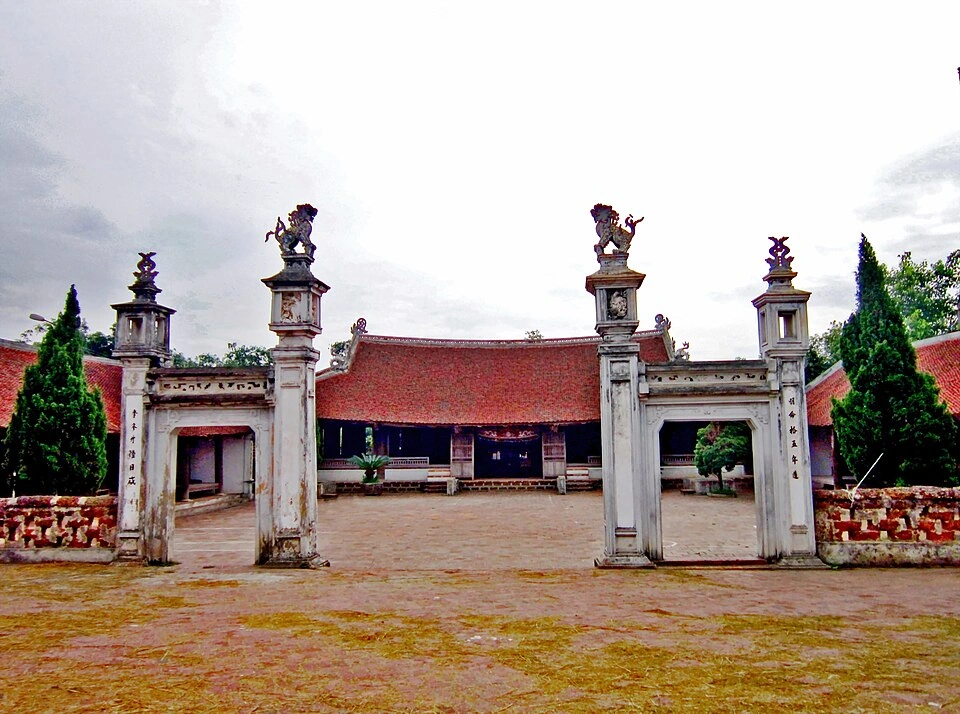
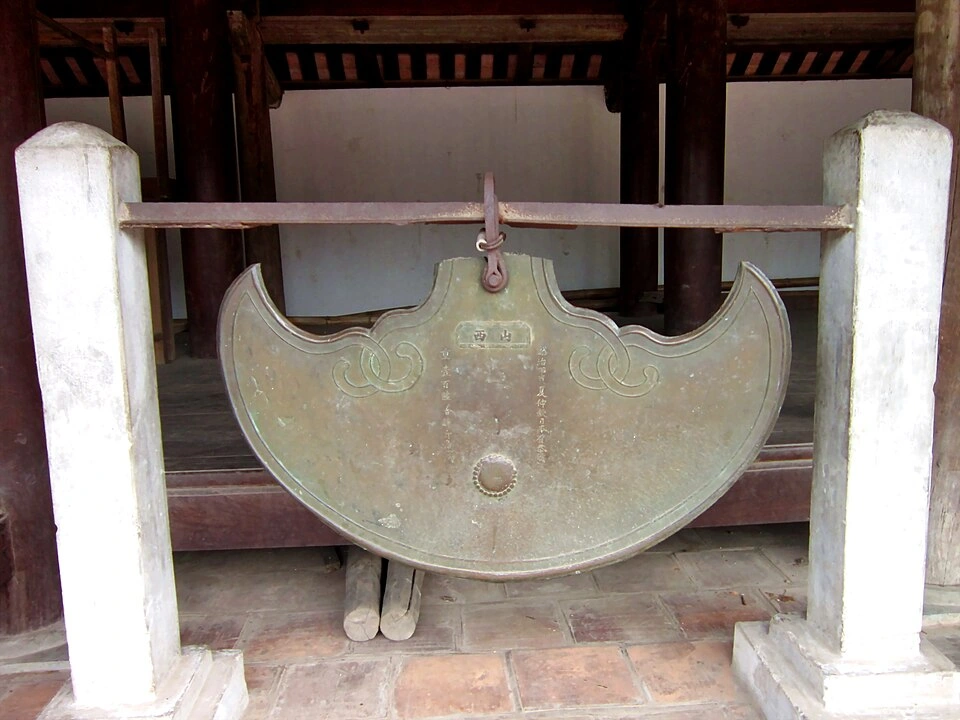
I’d use the communal house as the point where you decide how much more walking you want. A short visit can go back to the gate from here, with a pause in the lanes to look at what you passed on the way in. If you’re going to Mía Pagoda, check the route and agree where you will finish before setting out. That’s especially useful if a driver will collect you at the other end.
Look at the laterite walls without turning a home into an exhibit
The heritage department describes older houses built with laterite, a material you can look for in the village walls. Look at the colour and texture alongside the timber or brick at a doorway. Pay attention to where an old wall meets a newer repair. You don’t have to identify the date of each building to notice how those materials sit together. If you’re taking a photo, give people room to use their doorways and avoid photographing into a home without permission.
A house can have a heritage sign and still be used by a family. If someone invites you inside, check whether it is a brief look, a hosted visit or something they expect you to pay for. Ask before photographing family objects or people. If no one is receiving visitors, let the closed door be your signal to keep walking. There’s enough to look at without needing to see what’s behind every wall.
Add Mía Pagoda when you want a second stop
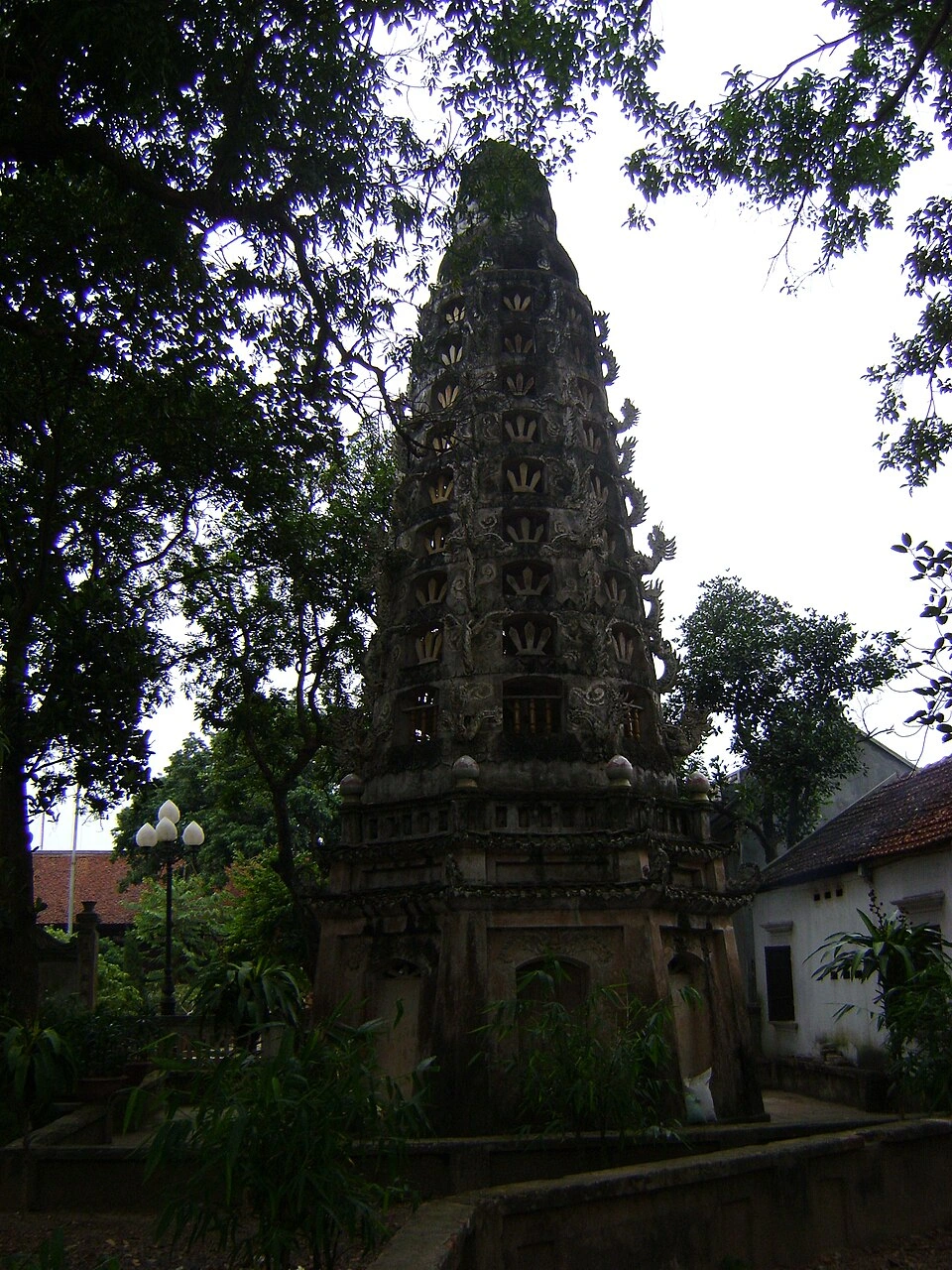
Search for Chùa Mía, Đường Lâm. The city’s heritage account associates the pagoda with Đông Sàng and describes it along with other sites in that hamlet. Treat it as a new pin after Mông Phụ rather than assuming you’ll come across it by taking the next interesting lane. If you’re short on time, make the communal house your last stop. If you’re interested in the difference between a village communal building and a pagoda, give Mía its own time.
Dress respectfully and check any signs about footwear and photography. If there is worship taking place, wait until you can move through without getting in the way. Look for what you can see from the areas open to visitors. A building you can approach is enough reason to make the stop when you’re interested in the setting. If your visit depends on seeing a certain interior or object, ask about access before you leave Hanoi.
Choose transport by the trip back
Arrange a car if your time is fixed
If you need to be back in Hanoi for a booking, I’d ask for a round-trip quote to Mông Phụ rather than building the day around getting a new car on demand. Give the driver the gate pin, ask where they can drop you, then agree on the return time and meeting point. Confirm whether waiting time is included. If you want to finish at Mía Pagoda, ask whether they can collect you from there or prefer you to return to the first point.
Compare the total for the group. A car that can add a second pickup point may give you more usable time than a cheaper ride that leaves you looking for another vehicle. If travelling with a folding stroller, a mobility aid or several bags, confirm space in the vehicle before booking. Share the driver’s meeting instructions with another person in your group so everyone knows where the walk ends.
Take the bus via Sơn Tây if you can allow for a transfer
The Vietnam National Authority of Tourism’s bus directory lists route 71 between Mỹ Đình and Sơn Tây bus stations. Check the current service, boarding point and return time before relying on it. Sơn Tây bus station is an intermediate destination for this plan. You still need to arrange a last leg to Mông Phụ and a way back to a confirmed stop for your Hanoi-bound bus.
Work out the whole journey before choosing it. Add the time to reach Mỹ Đình from your accommodation, the wait for the bus, and the transfer from Sơn Tây to the village. Confirm when the last bus you can realistically catch leaves on the return. If you’re also planning lunch or a pagoda visit, give yourself enough time for that local ride without leaving it until the last minute. This makes more sense when the village is your main outing and you have a flexible evening.
Build the day around one or two things you want to see
| Your plan | Where to go | What to arrange in advance |
|---|---|---|
| A short public-lane walk | Mông Phụ gate, the lanes and the communal house exterior | The exact pickup point and enough time to return to it. |
| A walk with a pagoda stop | Mông Phụ, then Mía Pagoda | Confirm visitor access if the pagoda is your priority, and decide if you will return to Mông Phụ or finish there. |
| A hosted meal or house visit | Meet your host at the address they give you and walk around Mông Phụ before or afterwards. | The time, price, what access is included and any dietary needs. |
If you only have a morning, keep the short walk as the default. You can add the pagoda if it fits without losing your return buffer. If you’re taking a bus via Sơn Tây, think of the transport as part of the outing. A short visit in the village still takes a substantial part of the day once you count both connections. I’d keep the next Hanoi plan flexible so a wait at the station doesn’t decide how long you have at the communal house.
Ask for a meal before you arrive if the meal matters
For a lunch in a historic house, contact a host or book through someone who can confirm the address and what is served. Ask whether you’ll be able to see the house itself, whether the lunch price is for each person or for the table and what adjustments the kitchen can make. If somebody is vegetarian, ask about the soup base and dipping sauces as well as the main dish. Getting those questions answered while you’re in Hanoi leaves more time to sit and eat once you’re there.
If lunch is optional, carry water and decide at the communal house. You can find out whether there is a place receiving visitors nearby, or head back and eat in Hanoi. Don’t promise the group a meal at a specific home unless you’ve arranged it. If you’re interested in a local sweet or other product as a souvenir, ask how it is made and how long it will keep before you buy it.
What to say when you need directions or permission
Showing the Vietnamese names can save time at a junction. If you’re asking for the communal house, point to Đình Mông Phụ. If you’re meeting a driver at the pagoda, send Chùa Mía and the exact pin. When asking a resident, keep the question about one place. The directions to the gate and the location of the nearest place where a car can stop may be different.
- Đình Mông Phụ ở đâu ạ? Where is the Mông Phụ communal house?
- Tôi có thể vào tham quan được không ạ? May I come in to look around?
- Tôi có thể chụp ảnh ở đây được không ạ? May I take a photograph here?
- Xe có thể đón tôi ở đâu? Where can the car pick me up?
If you’re arranging a visit by message, ask for a pin rather than relying on a house name alone. Save it with the time and what was agreed. If you’re asking about the price, check whether it covers admission, a guided visit or a meal. Those can be separate arrangements even if all three happen at the same address.
Make the visit shorter if the lanes or the weather call for it
In wet weather, use the route you can comfortably retrace. Leave time for slower walking on poor surfaces, and check whether a host or venue is open before you set out expecting shelter. If the group needs regular rests or step-free access, ask about the actual approach from the drop-off as well as the entrances to individual sites. I wouldn’t assume a public lane or an old courtyard is continuously step-free. Agree on the shortest version and add time only if the route works for everyone.
Before you go, save the pin for the gate, the communal house and your ride home. Leave Mía on the map if you want a second stop. If you’d rather spend the day making something with your hands, our Bát Tràng pottery guide is the better fit for that trip. In Đường Lâm, give yourself time to notice how the lanes, roofs and walls fit together. You can do that on the walk you already came for.
Photo credits
- Mông Phụ gate by Bùi Thụy Đào Nguyên, CC BY-SA 3.0. Resized.
- Mông Phụ communal house by Bùi Thụy Đào Nguyên, CC BY-SA 3.0. Resized.
- Bronze khánh by Bùi Thụy Đào Nguyên, CC BY-SA 3.0. Resized.
- Nghê at Mông Phụ by Northern Vietnam, CC BY-SA 4.0. Resized.
- Mía Pagoda detail by SiriusBlack, CC BY 3.0. Resized.