At your first check-in desk, ask one question about the bag disappearing down the belt: “Do I collect it in Hanoi?” The answer changes the shape of your connection. It decides whether you can follow the transfer signs, or whether you need to clear arrivals, find a baggage carousel and take your suitcase to a second check-in desk.
At Hanoi’s Nội Bài International Airport (HAN), T1 is for domestic flights and T2 is for international flights. A free airport shuttle links the buildings from their public arrivals areas. The bus ride is one part of the transfer. What takes longer can be getting out of your first terminal and completing the procedures for your next flight.
Find the free shuttle at the correct terminal
At T1, the airport lists the shuttle stop on the ground-floor arrivals level at Hall A. At T2, look for the marked stop on the arrivals level outside the terminal. The airport and aviation authority have published stop notices at different times, so use the current airport signs and confirm the pickup location at the information desk, especially if work around the terminal has diverted traffic.
Look for Free Shuttle Bus or Xe buýt nối chuyến miễn phí. The airport shuttle takes passengers between T1 and T2. If a driver approaches you offering a transfer, ask airport staff to point you to the marked free stop before agreeing to a fare. The airport’s interterminal transport page is the best place to check operating arrangements. For an overnight arrival, confirm service for your specific hour in advance and have a paid backup if you need to change buildings while the shuttle is out of service.
When you get on, keep your passport, phone and the onward booking with you. If you stow luggage on the bus, count your bags as you get off. Once you enter the next terminal, check the departures board using the flight number. Two airlines can be flying to the same city at nearly the same time.

International arrival at T2, domestic departure at T1
Clear international arrivals before going to the bus
After landing from abroad, follow your airline’s instructions and the signs for the international-to-domestic transfer. The domestic flight leaves from a different building. Plan for Vietnamese entry formalities and follow staff instructions about where to collect your bags and clear customs. Check entry requirements for your passport and itinerary before the trip if your connection requires entering Vietnam. The Vietnam Immigration Department portal is the official source for e-visa applications.
For a bag that has to be collected, find the carousel using the inbound flight number. Keep the baggage receipt until you have it. If the belt stops and your bag has not arrived, talk to the baggage desk in the reclaim area before leaving. Tell staff when your onward flight leaves. Ask what paperwork you will need and who can update you after you leave the terminal.
After you exit into the public arrivals area, locate the shuttle and take it to T1. Once there, find your domestic airline’s check-in or bag-drop desk if you need to use it. Have your identification and booking accessible for check-in and security. A boarding pass on your phone saves a desk visit only if the airline accepts it for that journey and you have no bag or document check to complete at the counter.
Domestic arrival at T1, international departure at T2
Ask what needs to happen at the international counter
Follow the signs from your arriving domestic flight and collect any bags your airline tells you to reclaim. Outside T1, follow the terminal-transfer signs to the free shuttle. At T2, check the departure screens using the operating flight number. Keep the airline’s instructions handy in case you need an international transfer or check-in counter to complete the handoff.
If you are checking a bag at T2, the useful deadline is when that desk stops accepting luggage. A boarding time or departure time on your screen comes later. The airline may also need to check your passport, visa or onward documents at the desk even if you checked in online. Allow time for the counter, security and departure immigration before you head to the gate. See Nội Bài’s official transit guide for the airport procedures by direction.
Keep the Gate screen open if you are moving between levels. Once you pass the last checkpoint, check the gate again and walk there before making time for a meal or shopping. This is especially helpful if your inbound flight was late and your original plan had more room between flights.
What to ask if both flights appear on one booking
At the first desk, show the onward flight and ask staff to confirm where your checked bag goes, whether you must reclaim it at HAN and where to get the next boarding pass if they cannot issue it there. Look at the destination printed on the bag receipt, but use it together with the airline’s instructions. The destination code alone does not explain the customs procedure or whether you need to present the bag during the connection.
Also ask whom to contact if your inbound flight is delayed. If the connection is protected, go to the carrier or its transfer desk for the applicable options. Keep the flight numbers, booking reference and baggage receipts together. If another airline operates the second flight, save its name as well as the name of the company that sold the ticket.
Separate tickets need their own plan
If you bought two tickets separately, build in time for the full arrivals and departures process. Assume you may have to leave arrivals, collect and recheck your bags, and move to the other building unless the carriers confirm a different arrangement. Check the onward ticket’s change conditions ahead of time. If a delay threatens the next flight, contact the airline before its check-in cutoff if you can. Ask about options while the booking is still active rather than waiting until you get to the counter.
When choosing between a tighter connection and a later flight, compare what happens if arrivals takes longer than expected. With children, large suitcases or a mobility aid, count the time you will spend getting everyone through the terminal and onto the vehicle. If you need assistance, tell both airlines that your journey crosses between T1 and T2 and ask who will help with the public-area transfer. Check the meeting point and whether any assistance you book ends at the baggage hall.
How much connection time do you need?
Work backwards from the next airline’s check-in or bag-drop cutoff, or its required arrival time if that is earlier. Before that point, budget for reaching the desk, the shuttle wait and ride, getting off the first aircraft, and any entry checks, bag reclaim and customs. After reaching the right terminal you may still need security, departure immigration and the walk to the gate. Use your airline’s deadlines and add enough margin for the steps you actually need.
Suppose your first flight is due in at 11:10 and your onward bag drop closes at 13:00. The connection gives you 110 minutes to get from the aircraft’s scheduled arrival to the second counter. If you reach public arrivals at 12:20, you have 40 minutes left to find the shuttle, cross to the other building and reach that desk. These are example times, not an airport timetable. Running those numbers against your own booking is more useful than treating the shuttle journey as the full connection.
If you are already running late, tell the staff at the first practical point rather than assuming they will know which flight you are catching. If the shuttle is unavailable, ask the airport’s information desk about the quickest official option. If you decide on a paid ride, confirm the destination terminal and fare before you leave.
Keep the terminal names handy
If you need to ask directions, ga quốc nội means domestic terminal and ga quốc tế means international terminal. Show the corresponding T1 or T2 on your booking if the conversation is difficult. If a family member is meeting you between flights, send them the terminal and the public arrivals meeting point before flying. Make sure the stop still leaves enough time to get to the next check-in desk. A meeting at the wrong terminal can mean another shuttle journey for one of you.
When you can stay in the same terminal
Domestic-to-domestic connections generally stay at T1 and international-to-international at T2. Follow the dedicated transit signs and check whether your carrier can process you without leaving the secure area. Passengers with separate tickets or baggage to collect can still need to leave the transit area and check in again. For an international connection, decide whether entry formalities apply before you step into an immigration queue.
Save the onward booking and a screenshot of the airport’s transfer page before you fly. On arrival, check your bag, your terminal and the next deadline in that order. If Hanoi is where your flight journey ends, use the airport-to-Old Quarter transfer guide for the ride into town or the full Nội Bài airport guide for arrivals and facilities.
Photo credits
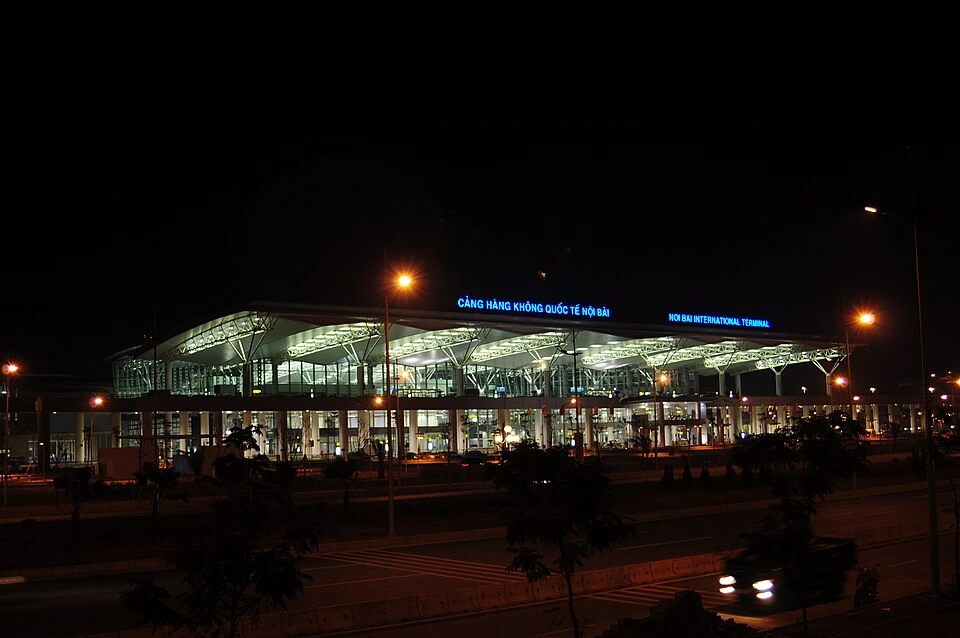
- Photo: Nội Bài international Terminal 2 illuminated at night by Christakis Mina, Wikimedia Commons, licensed under CC BY-SA 4.0. Resized and converted to WebP for the site.
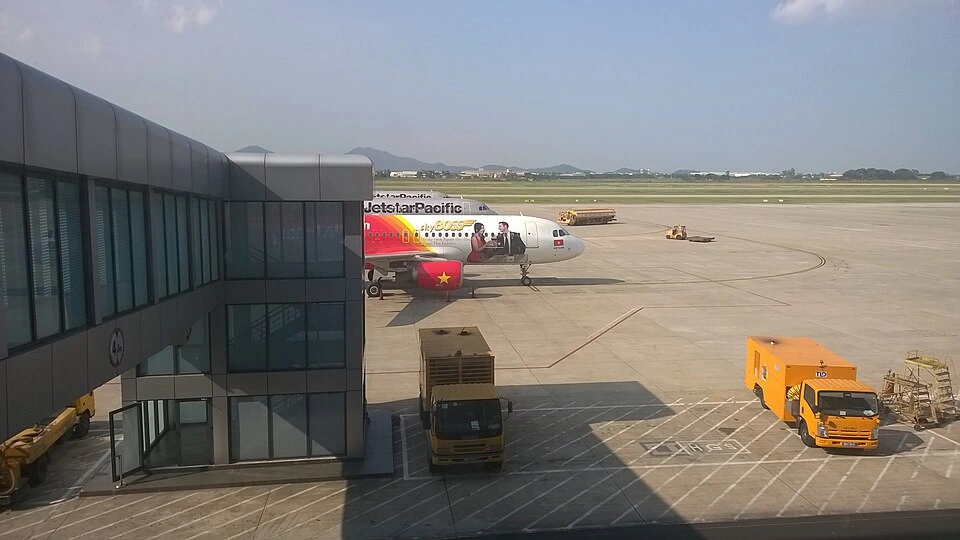
- Photo: Archival view of Nội Bài’s domestic terminal in 2015 by Vuong Tri Binh, Wikimedia Commons, licensed under CC BY-SA 4.0. Resized and converted to WebP for the site.
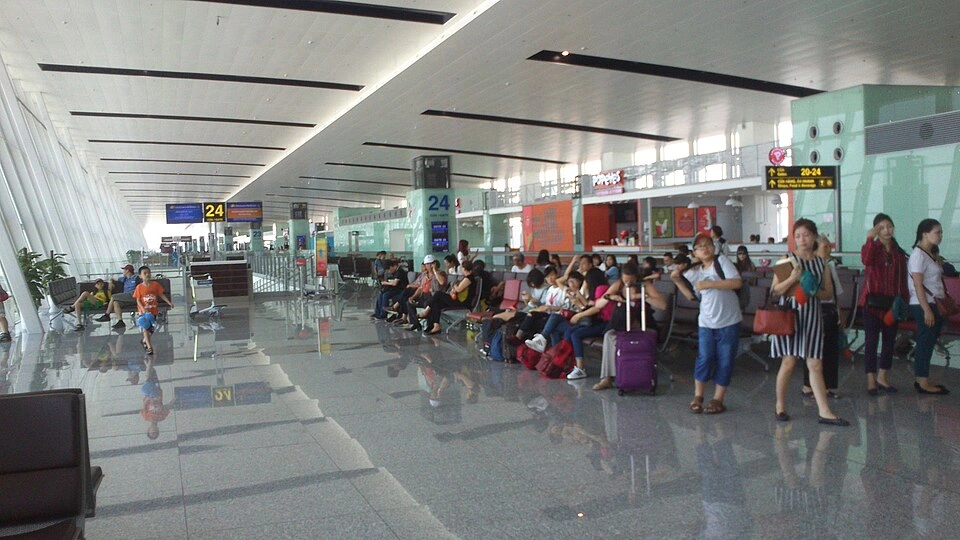
- Photo: Waiting area inside Nội Bài Terminal 2 by Sky 269, Wikimedia Commons, licensed under CC BY-SA 4.0. Resized and converted to WebP for the site.
- Photo: Another view of Nội Bài’s domestic terminal in 2015 by Vuong Tri Binh, Wikimedia Commons, licensed under CC BY-SA 4.0. Resized and converted to WebP for the site.
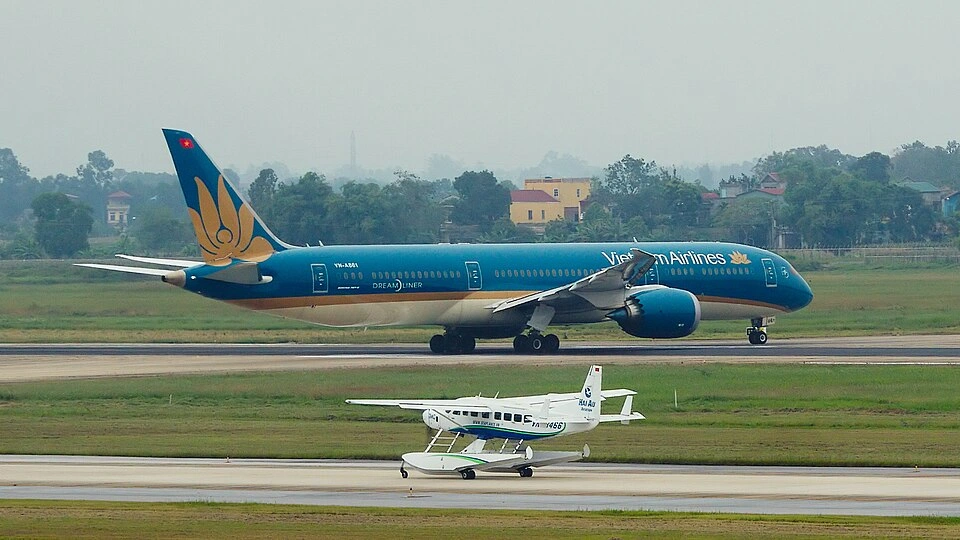
- Photo: Aircraft operations at Nội Bài International Airport by [Tycho], Wikimedia Commons, licensed under CC BY-SA 3.0. Resized and converted to WebP for the site.