
The time to notice there are two sides to Hanoi Railway Station is before you get into the car. If you type “Hanoi train station” into a ride app, the map will happily offer a pin. Your sleeper voucher might give you a different street. Both can be right, and that is a small thing that feels much bigger when you have a suitcase and a train to catch.
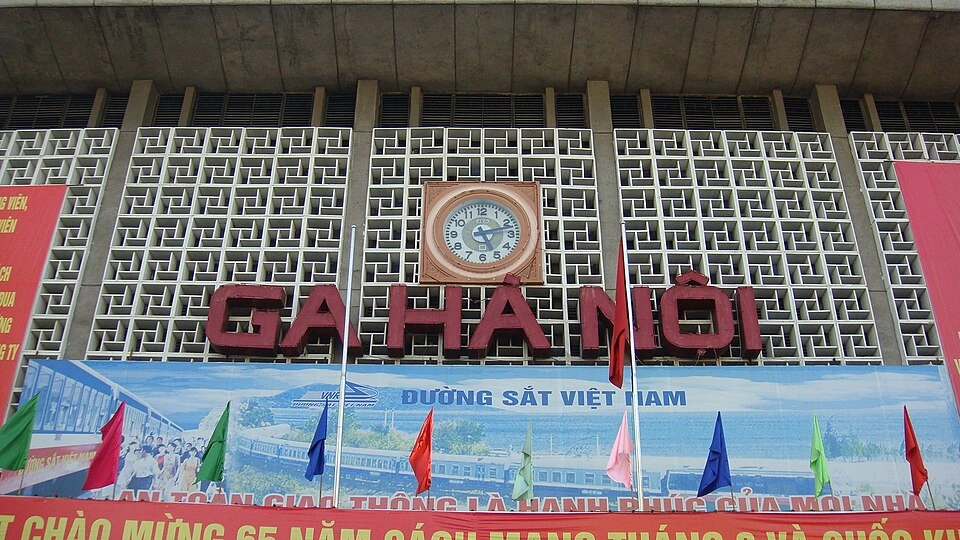
Start with the departure station on your ticket, then find any check-in instructions that came with it. If the departure station says Hà Nội and you have a standard railway ticket with no separate directions, use the main entrance at 120 Lê Duẩn. If your provider tells you to meet on Trần Quý Cáp, give your driver that street and the exact address on the voucher. And if the ticket says Long Biên or Gia Lâm, go to the station it names. Those are separate stations. Vietnam Railways station directory.
Which address should you use?
| What your confirmation says | Where to go | Check before leaving |
|---|---|---|
| Departure from Hà Nội, with no separate meeting address | Main entrance, Ga Hà Nội, 120 Lê Duẩn | Confirm your train number and station on the actual ticket. |
| Check in on Trần Quý Cáp | Use the street and address specified by the provider | Check whether this is a desk, a meeting point or the station-side entrance. |
| Check in at a numbered gate at 120 Lê Duẩn | Go to Lê Duẩn and locate the numbered gate there | Keep the street address with the gate number when showing directions. |
| Long Biên or Gia Lâm in the departure field | Go to the separately named station | Use the timetable and ticket to check your train actually stops there on your date. |
The simple rule is to put the street address in your map and keep the instructions open. A street can resolve an ambiguity that a label like “Gate B” cannot. Private carriage operators can set a meeting point or ticket exchange desk that is separate from the platform. A numbered doorway on Lê Duẩn is also different from an instruction to go to the Trần Quý Cáp side. When a confirmation gives you both a street and a gate, keep them together.
Read the two documents before you choose a pin
Find the actual departure station on the ticket
Look for Ga đi, the departure station, or the line that says “From.” The train number is useful, but any one train can call at several stations. A trip title might say “Hanoi to Sapa” because that is what visitors recognise, while the booking itself gives a specific station at either end. Use the details on the ticket to choose where to board. Check the date and time as well, particularly if you bought the ticket or booked the hotel for a late evening departure.
If a map shows two places with similar names, look again at the station field and the street. Ga Hà Nội is the main railway station. Ga Long Biên and Ga Gia Lâm refer to other railway stations. A bus stop called Long Biên, a bridge pin and the railway station are also different things to show a driver. Keep the word ga in your search and confirm you are looking at the railway station. Vietnam Railways booking and station search.
Read any check-in email or carriage voucher separately
If you booked a sleeper through a carriage company, hotel or agent, open the latest confirmation. Look for a street address, the deadline and any note about exchanging a voucher. A booking marked confirmed can still have instructions to collect a boarding document. If all you have is a receipt or itinerary, ask the seller whether it is also your boarding ticket. A clear question is “Where exactly should I check in for train [number] on [date], and do I have to exchange this voucher?” Ask them to send the address in writing so you can show it to the driver.
A screenshot of the ticket and another of the check-in instructions will spare you from trying to load an email at the roadside. Include the train number, date, departure time and meeting address in the screenshots. Have the original ID used in the booking with you. If you notice a mismatch between the booking name and the document, raise it with the seller before going to the station, when there is more time to sort it out. Vietnam Railways support contacts.
Two examples before you book the car
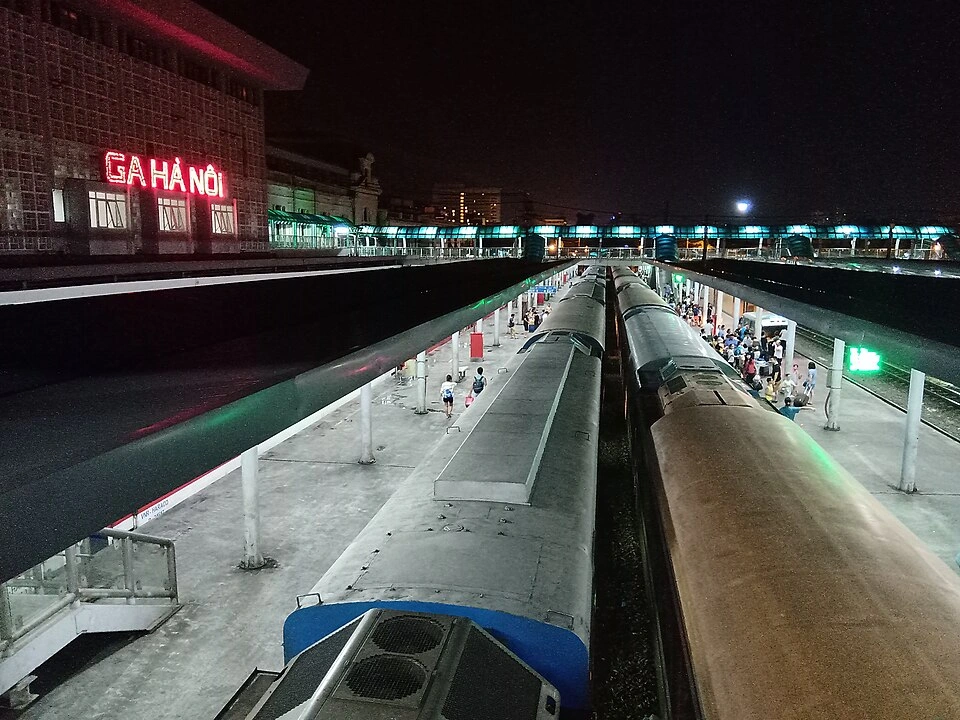
If a standard ticket says Hà Nội and there is no other check-in address, save 120 Lê Duẩn. If a sleeper confirmation gives you a Trần Quý Cáp meeting desk, use that address for drop-off and ask the desk where boarding takes place. In either case, save the train number separately so a member of staff can help even if you lose your data connection.
From the Old Quarter to Ga Hà Nội
When walking makes sense
Start the route from the front door of your hotel, using the correct station-side pin. The Old Quarter covers a number of streets, so the walk will feel different from different hotels. Walking is reasonable if you have one light bag, a dry evening and enough room in your schedule to take the long way around a busy junction. Check the final approach on the map before setting off. A path that looks short between the two station sides can still require a detour by public streets.
If you do walk, keep the departure time and your check-in deadline separate. Work backwards from the earlier one. I would build in time to find the right counter or gate and to ask someone for directions. You can always spend a few extra minutes at the station with a bottle of water. Turning a station walk into a race because you counted only the map time is a poor start to an overnight train.
When a car is the easier choice
Use a car if you’re carrying a large suitcase, travelling with children, arriving after an unscheduled delay or leaving during a downpour. Put the actual street address in the booking. At departure time, hotel staff can help confirm that the driver has it, especially if the car is collecting you on a busy street with similar pins nearby. If the app takes you to the main hall but your voucher names Trần Quý Cáp, change the pin before starting the ride rather than trying to explain it at the last junction.
For the main hall, show Ga Hà Nội, 120 Lê Duẩn. If the confirmation gives the other side, show the complete address on Trần Quý Cáp. The useful phrase when speaking to a driver is Cho tôi đến địa chỉ này, ở ga Hà Nội, or “Please take me to this address at Hanoi Station.” Show the screen while you say it. For someone travelling from another part of town, the same principle applies. Use a named drop-off and budget for the whole journey to the gate.
Can you use the metro?
The project name “Nhổn–Hà Nội Station” can give the wrong impression. As checked in November 2026, passenger service on that line runs between Nhổn and Cầu Giấy. Take that into account when planning a connection across town with luggage. See the Hanoi Metro guide for working lines and fares. If you are coming from the airport, plan from the terminal with enough room for the journey into Hanoi and any station-side transfer. A shared word in the names of two transport services does not make them a single connection. Hanoi Metro operator.
What to do when you get to the station
- Check the entrance against your confirmation. If you were dropped at an unfamiliar side, show the exact street address to staff before walking away.
- Find your train number. Use the number on the ticket when looking at the board or asking a member of staff. Town names alone can be ambiguous if several departures show overlapping stops.
- Complete any separate check-in first. If a carriage company has given you a meeting desk, follow its deadline and ask where to go afterwards.
- Keep the ticket and ID reachable. Put them somewhere easy to reach while you have your bags. For a sleeper, keep essentials such as a charger and water in a smaller bag.
- Confirm the coach and platform. Follow current announcements or directions from staff. Older photos and platform maps are useful for orientation but won’t tell you where your train is boarding.
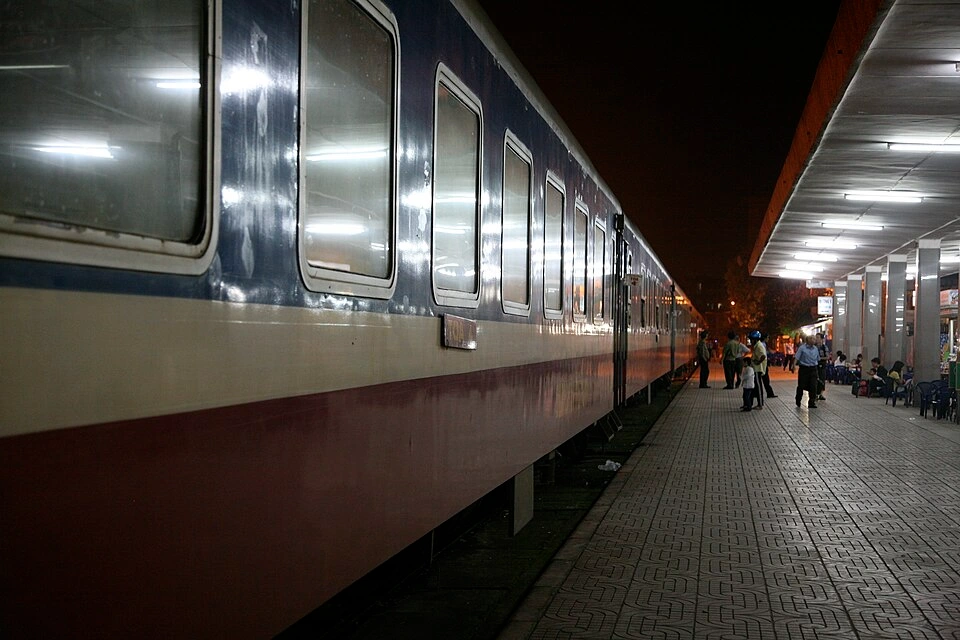
How early should you arrive? For a first visit, I would aim to be at the correct side around 45 minutes before the train if the itinerary is straightforward. Build in more time for a check-in desk with an earlier deadline, a group, mobility needs or a transfer across town. This is a personal planning buffer. Follow the actual check-in deadline on your confirmation. If you need step-free boarding or help with bags, ask the operator about your specific train and boarding route in advance. A photo of an overbridge or platform is no assurance that an alternative route will be available.
Which station for Sapa, Hải Phòng or the south?
Lào Cai for Sapa
The rail destination for Sapa is Lào Cai. You still need a road transfer to reach Sapa after you get off. For the Hanoi end, look first at the actual boarding station and then at the seller’s meeting point. Keep a copy of your onward transfer plan too, since that is the next decision you need to make when you wake up. The Hanoi to Sapa by train guide goes into the journey and how to book it.
Hải Phòng and services through Long Biên or Gia Lâm
Look up your exact service and date. If the timetable shows several Hanoi-area stops, confirm that your ticket is valid for the station where you intend to board. If you want to join the train at a different station from the one booked, get the operator’s answer before travelling. For an international booking, follow the operator’s instructions for the departure station and documentation. Vietnam Railways publishes separate guidance for the Gia Lâm–Nanning service. Official train timetable and Vietnam Railways international ticket guidance.
Ninh Bình, Huế, Đà Nẵng and other southbound stops
If your ticket starts at Hà Nội, the Lê Duẩn entrance is the usual starting point unless you are directed elsewhere. Look up your exact departure rather than borrowing a time from a trip report. For the arrival end, check whether the station is close enough to walk to your accommodation or whether you need a pickup. In Ninh Bình, for example, you also have to consider the drive from town to the specific boat dock or area on your itinerary. If you’re putting together a short outing from Hanoi, choose your first stop before you compare how to get there. Vietnam Railways timetable.
If the driver drops you on the wrong side
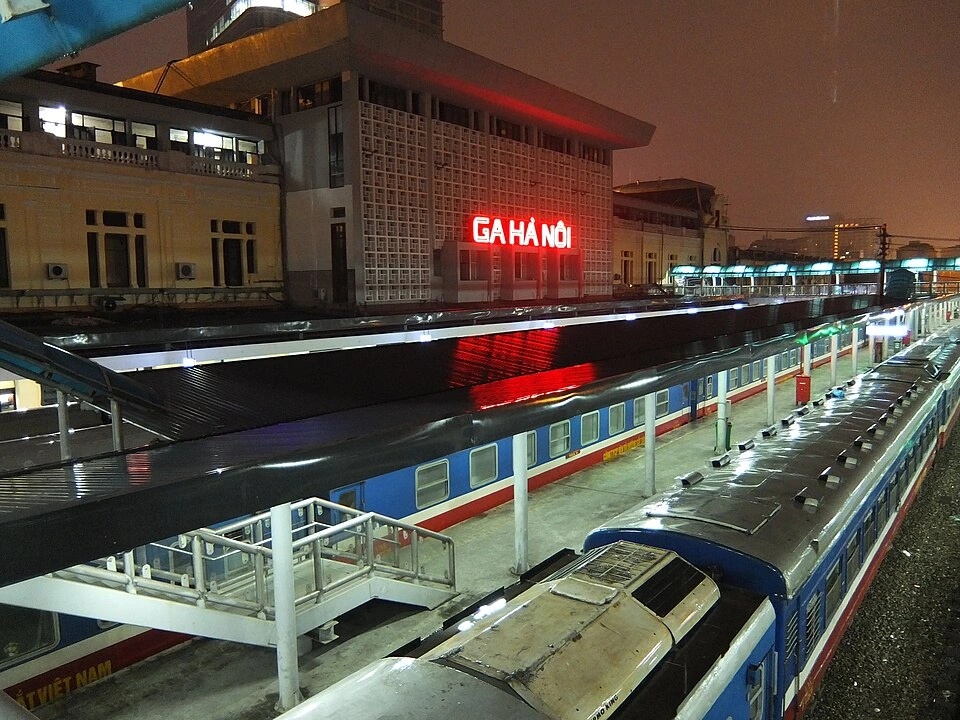
Stop at the entrance long enough to check your instructions. Show the full voucher to staff and ask whether you can board from where you are or need to get to a separate check-in point. If you have time to spare, ask for a public walking route. If the train is soon or there is an earlier check-in deadline, contact the seller or operator right away and ask where to go first. Stick to public streets and authorised paths. A short distance on a map is no reason to cut across tracks.
When meeting somebody arriving by train, agree the pickup street as well as the station name. Send them the exact pin once you know the side they can reach. The traveller with luggage should have one clear place to stand and wait. This matters more on a wet evening or when one phone has poor reception.
Before you close the hotel door, take one last look at three things: boarding station, check-in street and deadline. If you can point to all three, getting to the train becomes the easy part.
Photo credits
- Photo: Ga Ha Noi 01.jpg by David McKelvey, Wikimedia Commons, licensed under CC BY 2.0. Resized and converted to WebP.
- Photo: Ga Ha Noi 02.jpg by David McKelvey, Wikimedia Commons, licensed under CC BY 2.0. Resized and converted to WebP.
- Photo: Hanoi station in 2019.jpg by Handyhuy, Wikimedia Commons, licensed under CC BY-SA 4.0. Resized and converted to WebP.
- Photo: Platform of Hanoi Station 01.jpg by Kelcey Kinjo, Wikimedia Commons, licensed under CC BY 2.0. Resized and converted to WebP.
- Photo: Hanoi train station from trackside.jpg by shankar s., Wikimedia Commons, licensed under CC BY 2.0. Resized and converted to WebP.