You can walk straight through the Temple of Literature and still come away wondering what you’ve just seen. There’s a gate, then another gate, then a little pavilion that seems to be the one everyone is photographing. Keep going and the place changes character. Stone tablets sit on carved tortoises, a ceremonial hall closes in around you, and the last courtyard takes you into the story of the imperial academy. Give yourself one thing to look for at each stop and the order starts to make sense.
If I had 45 minutes inside, I’d spend most of it around Khuê Văn Các and the stone stelae, with a quick look at the halls beyond. With 90 minutes, I’d take the same route more slowly and leave time for the academy courtyard and the interpretation on site. Both plans start at 58 Quốc Tử Giám Street. The times are suggested budgets for the visit itself, so allow extra time to get there, buy a ticket and meet your ride afterwards.
Choose your Temple of Literature route
| Time inside | Where to slow down | What to leave for another visit |
|---|---|---|
| 45 minutes | Khuê Văn Các, the well and the doctoral stelae. Keep enough time to reach the exit. | Long audio stops, a separate trip to Văn Lake, or a second attraction immediately afterwards. |
| 90 minutes | The main courtyards, the stelae on both sides of the well, Đại Thành Hall and the Thái Học courtyard. | Extra garden or exhibition time if you have a fixed plan afterwards. |
The route follows the sequence on the heritage site’s visitor map. Save that page as well as the street address. The street pin helps you find the correct entrance. The site map helps once you’re deciding which gate to walk through or where to come out.
Tickets, hours and the entrance to give your driver
The venue lists daytime opening from 8 a.m. to 5 p.m. daily and a standard daytime adult ticket of 70,000 VND. The published reduced fare is 35,000 VND for eligible visitors, with proof required for listed categories. The venue lists free admission for children under 16. Its student concession specifies students at schools in Vietnam, so ask what documents qualify if you’re visiting from abroad. These are the published daytime details checked in November 2026. Confirm current admission and last entry before planning a late visit. Closing time tells you when the site shuts, which can be later than when it admits its last visitors.
Use 58 Quốc Tử Giám Street for arrival. The site lists an exit at 19–21 Văn Miếu Street and a path to Giám Garden opposite 40 Tôn Đức Thắng Street. If someone is picking you up, tell them where you came out after you’ve checked the street sign. Agreeing on the entrance as the pickup point can mean walking back around the grounds.
For public transport, the site lists route 38 at 58 Quốc Tử Giám and routes 02, 41, E08 and E09 opposite 40 Tôn Đức Thắng. Check live service from your own starting point. If taking a bus adds a long wait, weigh that against how much time you want inside. For a broader comparison of Hanoi transport options, see the guide to getting around Hanoi.
The 45-minute route through the courtyards
Minutes 0–10: Find the main axis
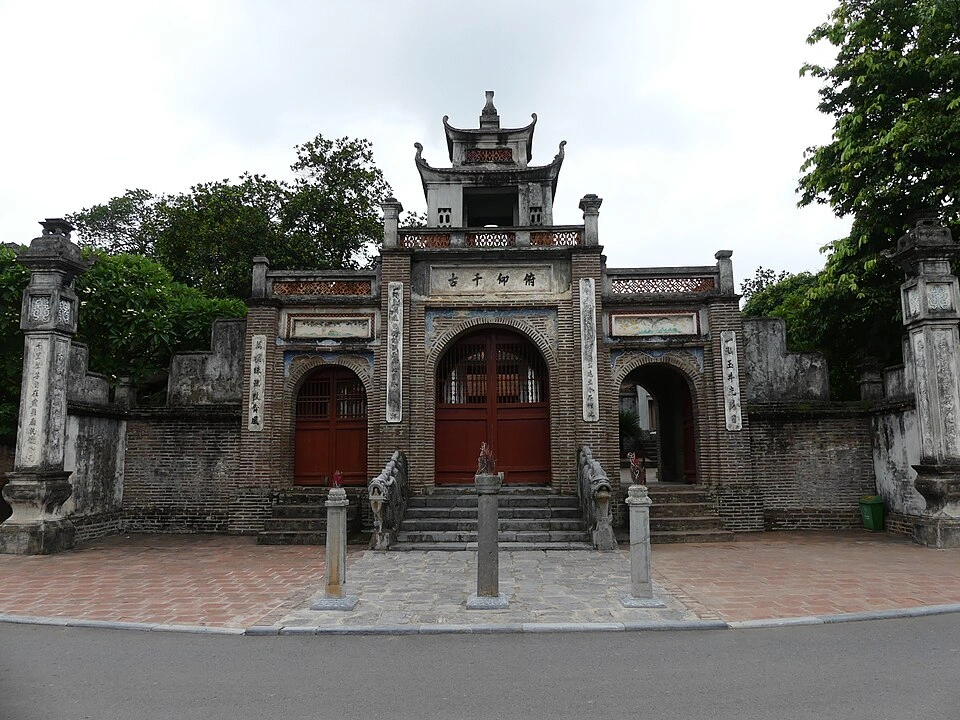
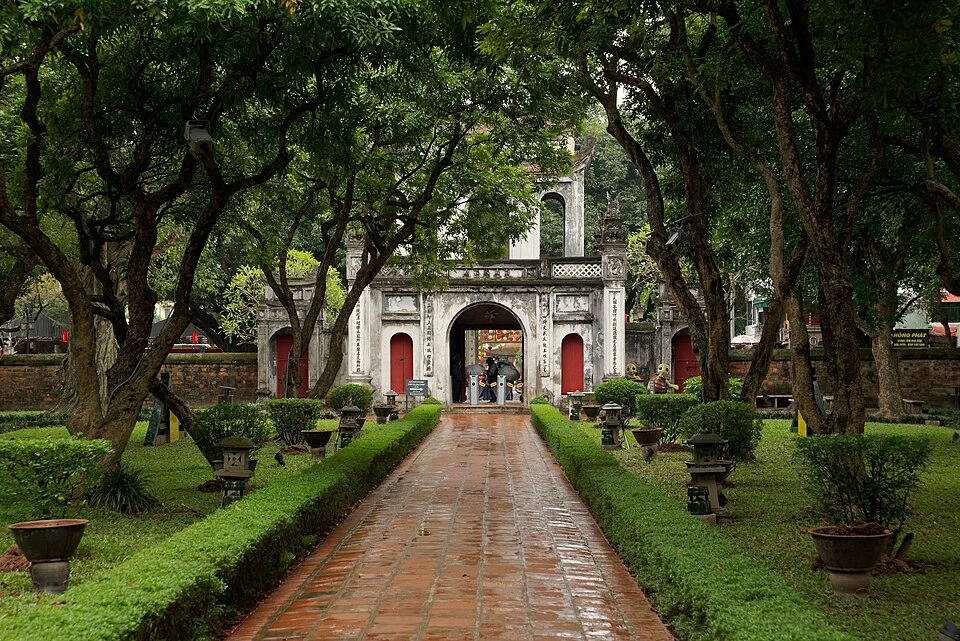
Enter from Quốc Tử Giám and follow signs for the inner grounds. Take a moment at the first gate to look ahead through the openings. That straight line is your guide. The official map places Đại Trung Gate before Khuê Văn Các. If you have a short window, keep moving through the first stretch and save most of your looking time for what comes after it. The point of these first minutes is to get your bearings while still giving yourself time to see the inscriptions.
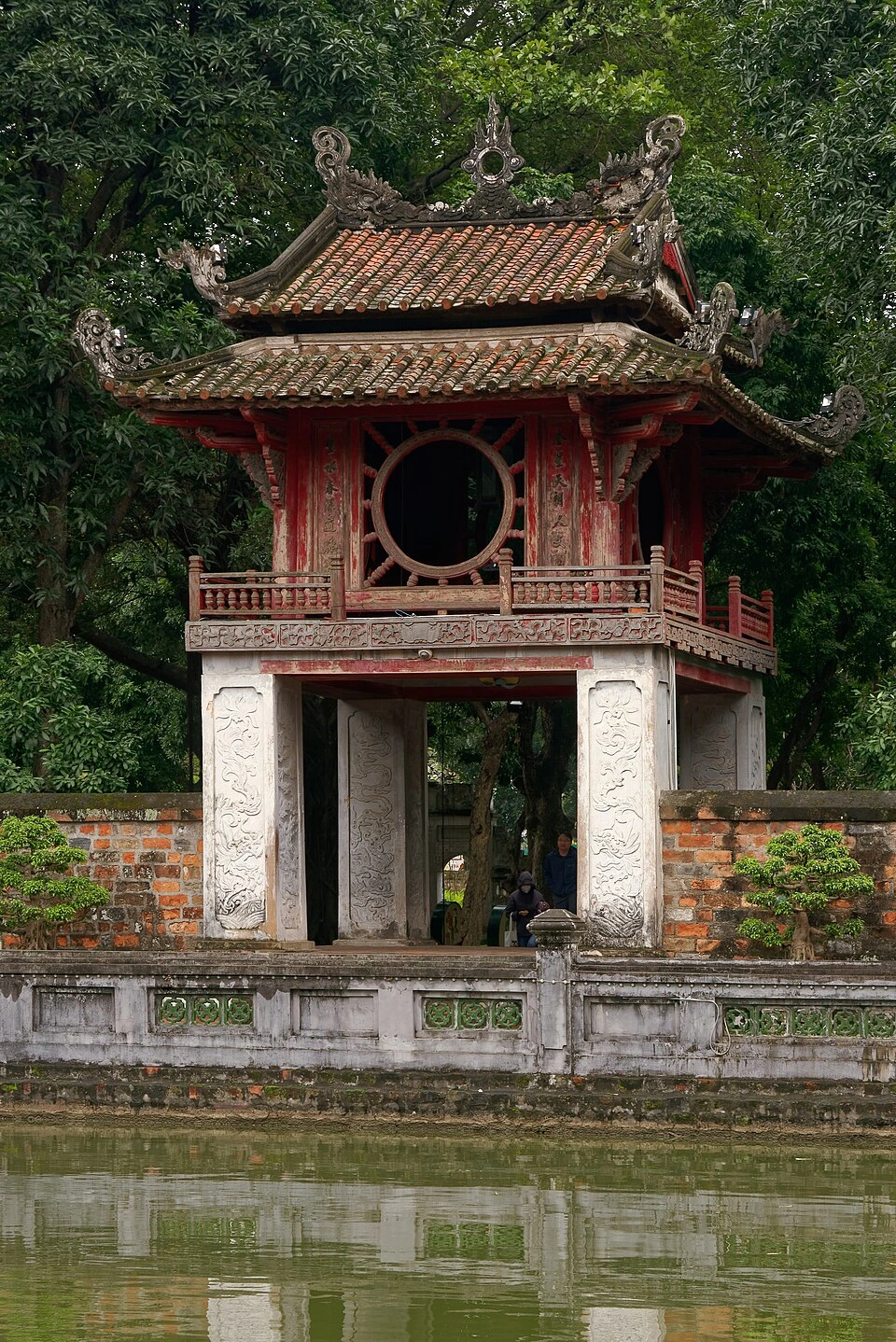
Minutes 10–20: Look up at Khuê Văn Các
The small pavilion with round openings is Khuê Văn Các, the Pavilion of the Constellation of Literature. Look at how the upper structure sits above the open passage. If you’re taking photos, take one that includes the structure and the path through it. You’ll remember why it matters to the route as well as how the building looks. The venue’s pavilion notes explain the name and describe the plaque above. Read them either here or later if the passage is busy.
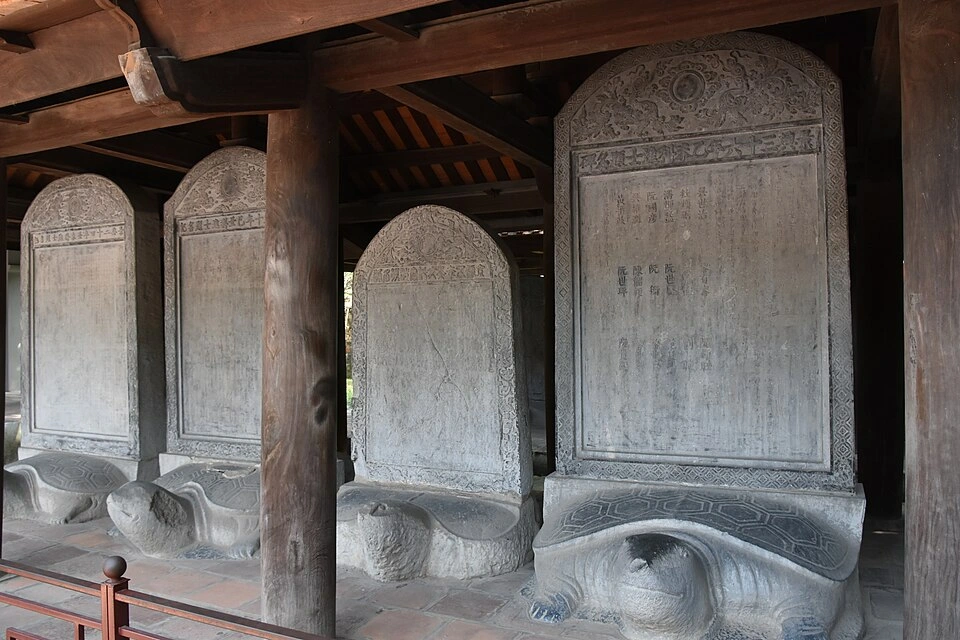
Minutes 20–32: Find the stelae around Thiên Quang Well
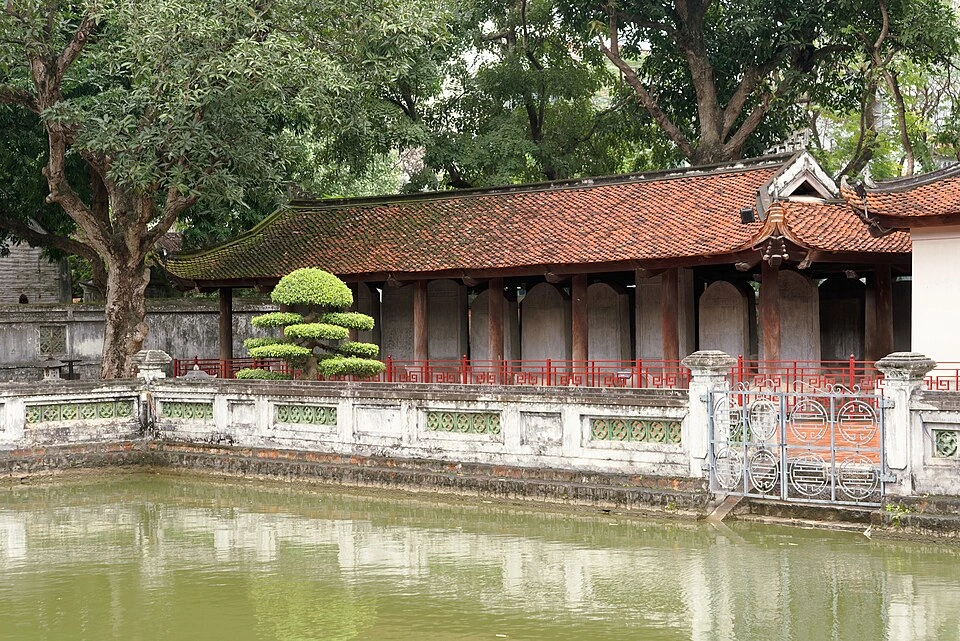
As you enter the courtyard around the rectangular well, look to the sides instead of continuing straight ahead. This is where the doctoral stelae are displayed. Each is a stone inscription supported by a carved tortoise. The UNESCO Memory of the World record treats them as records of royal examinations. That makes them a good place to connect the architecture to the people who passed through the education system it commemorates. Start with one stone, then look across the row and compare the size and details you can see from the visitor area.
Read a display panel here if you only have time for one. It’s easy to photograph the tortoises and keep moving, but an explanation of what was recorded gives the rest of the visit more meaning. Stay behind the barriers and keep your hands off the stone, as the visitor rules request.
Minutes 32–45: Look into the rear courtyards and exit
Continue through Đại Thành Gate towards the ceremonial hall and on towards Thái Học if visitor access and your pace allow. At the entrance to a shrine, put away the urge to rush straight in for a photo. Follow the signs, keep voices low and see which areas are open. If you are behind schedule by this point, ask staff which way takes you out and leave the longer exhibition stops for the 90-minute visit. The window only works if it includes time to finish the route and leave the grounds.
What the extra 45 minutes buys you
The 90-minute visit gives you time to stop in each courtyard without watching the clock at every gate. I’d split it into four blocks. Give about 15 minutes to the entrance and first gates, 25 to Khuê Văn Các and the stelae, 25 to Đại Thành and Thái Học, then leave the last 25 for whichever display caught your attention, a break and the exit. If you’re using an audio guide, play the stops that help you understand what’s in front of you. You can pick a few and still get something out of it.
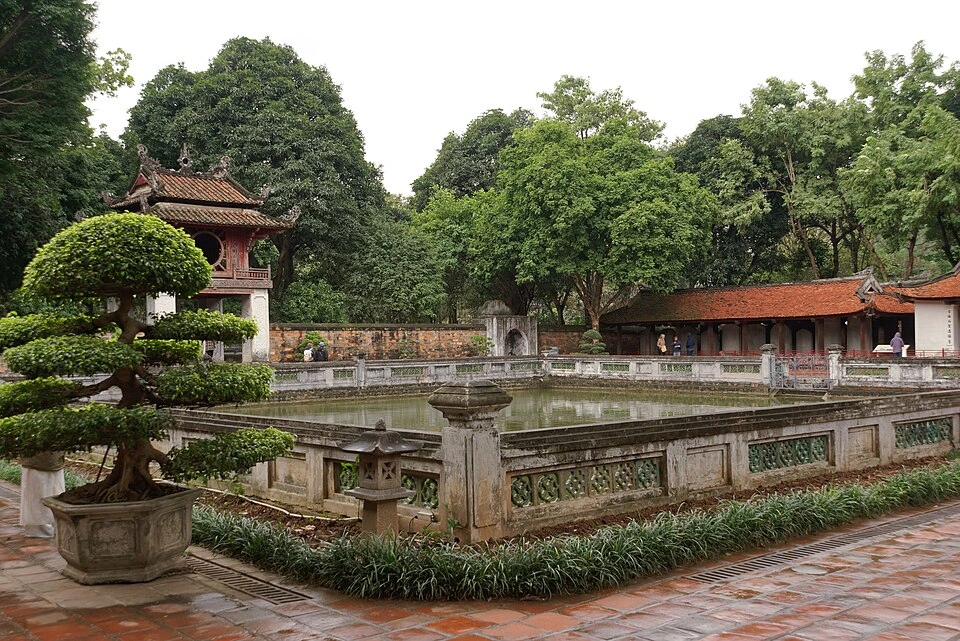
At the well, spend time on both sides
Approach a shelter, get your bearings with a label, and then compare it with what you see across the water. The well separates the viewing areas, so it’s easy to see only the side that looks less busy. With more time, a slow pass along both sides gives you a better sense of the number of stones and the place they occupy in the complex. If you are reading with children, give them a detail to find in the carving without touching it. Let them take a break when you stop to read a longer panel.
At the back, distinguish worship from education
Use the gates as chapter breaks. Đại Thành leads into the ceremonial part of the grounds. Continue beyond it to find the Thái Học area associated on the venue map with the imperial academy. Give yourself time to read the displays that explain who is being commemorated and why. Seeing these spaces in order helps when the English names are unfamiliar. The city’s broader story is in the Hanoi history guide, while the building signs tell you what is in the room you’re standing in.
Should you use the audio guide or walk on your own?
The visitor page lists both audio guidance and on-site commentary. If you’re interested in how the academy worked or what the inscriptions say, ask the information desk which option covers those questions in your language. Check the cost, what equipment you need and where to return it before you start. If you only have 45 minutes, use the on-site signs first and spend any listening time at the pavilion or stelae. Setting up the guide and listening to every stop would take time away from the parts you came to see.
If you’re visiting with someone who likes to read every sign, choose a place to meet in each courtyard. The person who likes to move can look at the architecture while the reader finishes a panel, and you can start the next section together. Agree to meet beside a named feature outside the main flow of foot traffic. Never make the next gate an automatic meeting point if you haven’t checked whether everyone can comfortably reach it.
If I were choosing one thing to read before the visit, I’d start with the short UNESCO description of the examination records. It gives the rows of stelae an immediate purpose. You can save the longer architectural reading for the pavilion or for a coffee afterwards, when you have time to look back at the details in your photos.
When to choose the daytime visit or night programme
Choose daytime if your priority is seeing the courtyards and looking closely at the architecture. The two routes here are paced for ordinary daytime entry. The venue also advertises a night visit and lists an evening window of 6–10 p.m. on Wednesdays, Saturdays and Sundays on its English visitor page. Check the specific programme for your date, ticket price, meeting time and areas included. The published daytime admission and the format of an evening event serve different plans, so confirm what you are buying before you arrange your dinner or ride.
For an afternoon itinerary, pick an arrival time by working back from closing and your planned time inside. For example, arriving near closing leaves little room for a ticket queue and a leisurely walk past the stelae. If there’s an event or a group ahead of you, ask at the desk whether the exit or parts of the route have changed that day. A shorter but unrushed visit is easier to manage than trying to make up time at every stop.
What to wear and how to plan for your group
The heritage site calls for respectful clothes when entering shrines and quiet in sacred areas. I’d bring a light layer that covers the shoulders and choose clothes that cover the knees if going into the halls. Check any photography instructions at the door to the particular area you’re entering. A good courtyard photo can usually wait until the path is clear.
The venue lists restrooms, an information desk and audio guide services. If you need a stroller route or continuous step-free access, ask about thresholds, the path between the five courtyards and which exit you should use. The fact that a courtyard is open does not tell you how to enter the hall beside it. Ask about the route from street drop-off to the ticket desk as well as what is possible once you’re inside. Leave extra time for changing direction or waiting for the rest of your party at a gate.
How to make it fit your Hanoi itinerary
Put the temple first if closing time is the constraint. If you want a second visit afterwards, consider the Vietnam National Fine Arts Museum on Nguyễn Thái Học and check its separate hours before you go. Decide at the temple exit whether you still have the energy for another ticketed stop. If the afternoon is meant to be relaxed, finish with food or a coffee and leave the second place for another day.
If you’re following the one-day Hanoi itinerary, the 45-minute version lets you give the temple a definite place in a day that also includes the Old Quarter. If this is one of the places you’ve come to Hanoi specifically to see, give it 90 minutes and plan one fewer stop elsewhere. The extra time is most valuable when you use it to read or linger in the parts you’re curious about. The gate will still be there when you’re ready to move on.
Photo credits
- Main gate by Jakub Hałun, CC BY 4.0. Resized.
- Temple grounds by Jakub Hałun, CC BY 4.0. Resized.
- Khuê Văn Các by Jakub Hałun, CC BY 4.0. Resized.
- Tortoise stelae by Richard Mortel, CC BY 2.0. Resized.
- Third courtyard by Jakub Hałun, CC BY 4.0. Resized.