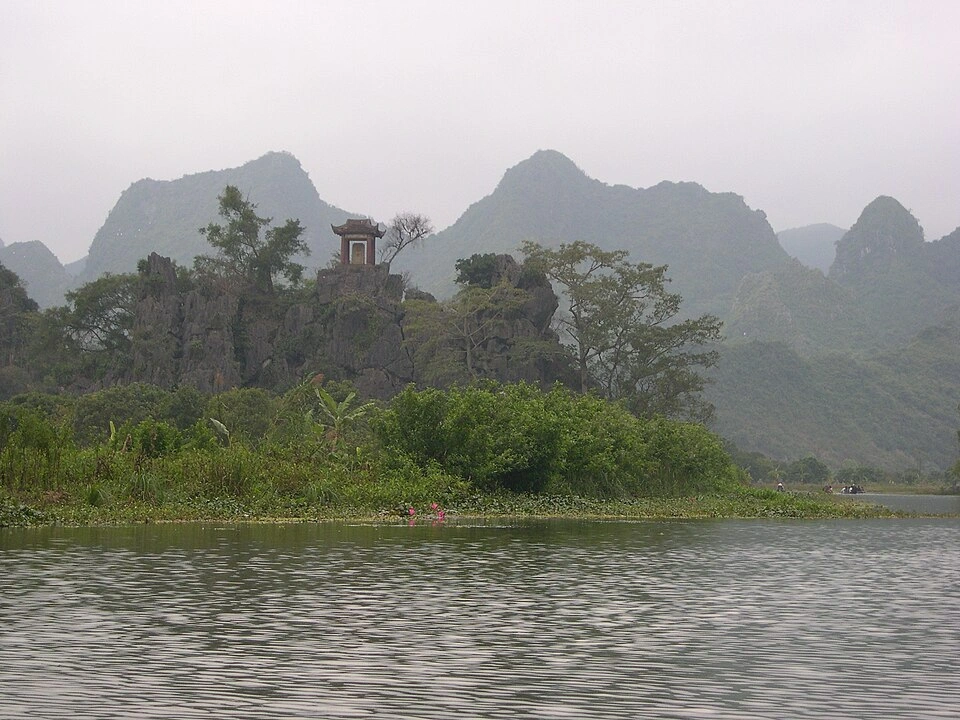
At Đục Wharf, the car part of the trip is over. The next leg is a boat along the Yến stream, with limestone hills rising on either side. When you step off at the other end, you still have a decision to make. The lower pagoda at Thiên Trù can be the main visit. To see Hương Tích Cave as well, you’ll need to go uphill on foot or take the cable car and finish the approach on foot.
Decide how much you want to do once you’ve reached Thiên Trù and can judge the weather, the time and your group’s energy. Arrange the car and the return boat in advance so that you can make that choice without wondering how you’ll get back to Hanoi. The boat ride, the lower pagoda and the cave are different parts of a pilgrimage complex. A shorter visit can still give you a good day out.
Start in Hanoi with an agreement about the return
Save Bến Đục, or Đục Wharf, in Hương Sơn as the starting point for the standard route. If you’re booking a car, send the pin to the driver or dispatcher before agreeing on the trip. Ask where the car can drop you near ticketing and how far you may have to walk to board. Then agree whether the driver waits or returns to collect you, how you’ll contact each other and what happens if the boat back is late. A round trip has more moving parts than the morning pickup suggests. Hanoi’s Hương Sơn visitor listing.
If you want to visit independently, a hired round-trip car is one way to leave the pace of the visit up to your group. Ask for the price of both legs and waiting time together. If you go by scheduled transport, verify the current stop and last practical return with the operator, and build in time between there and the boat landing. Leave enough time for a missed connection. Avoid planning the day around a ride you can only request after your boat returns.
A tour can help if you’d rather have one person coordinate transport, boat and timings. Ask what the itinerary includes and how much flexibility there is once you get to Thiên Trù. Some people in your group might want the cave while others would rather stay near the lower pagoda. Before booking, confirm whether you can split up, where you’ll meet, whether the cable car is included and which expenses are paid separately. Ask about time for a quiet visit if that matters more to you than fitting in several stops.
At Đục Wharf: Sort the boat before you get on
The standard approach is along the Yến stream from Đục Wharf to the Thiên Trù landing. Use the designated ticketing point and check the route name before boarding. Establish what each ticket covers. Ask whether the boat ticket includes the return, whether you need to meet the same boat or use an assigned queue, and where staff want you to wait later. Take a picture of the instructions or save the details somebody gives you. The outward trip is easier to remember than a hurried handoff when many boats are waiting. Vietnam Airlines’ description of the boat and walking routes.
Check current admission, boat and cable-car prices separately before committing to the whole trip. Festival arrangements and dated notices can change, so use the price you’re shown for your visit. If you’re taking a tour, compare that list with what the package actually includes. For a mixed group, it can help to make the cave or cable-car decision after the boat if ticketing allows it. Ask where you would buy the extra ticket later and how to show any ticket you’ve already bought.
On the water, a seat gives you time to see the landscape change before you get to the temple. Bring a layer or sun protection according to the forecast, and keep a small bag close rather than spreading things across the boat. Ask staff about boarding assistance and life jackets if you need them. The step down to a boat and the step up at the far landing matter to anyone who can walk on level ground but needs a hand on uneven surfaces. If the group has an access requirement, ask about both ends before starting.
Thiên Trù: The first place to decide how far to go

From the landing, follow current signs toward Thiên Trù. The roofs, steps and courtyards give the boat journey a destination of its own. Take some time to look around before you decide whether to head uphill. This is a working religious site. Dress respectfully, pay attention to signs, keep voices down inside halls and give people space to pray. If you’re taking pictures, check whether they’re permitted and step out of the flow of visitors before stopping.
For the shorter visit, make Thiên Trù the main stop. Spend time on the approach, look at the roofs and courtyards, and pause before turning back towards the landing. You’ll already have spent time on the water and visited part of the complex. This is a sensible plan if the hill is wet, someone is tired, or your return time is tighter than you expected. It also works for people interested in the landscape and the lower pagoda who would rather skip the cave steps.
If you want to continue, check the time with the return boat in mind. Count the climb or ride, any queue, the approach to the cave, a visit inside and the time to retrace your route. In a mixed group, agree on a meeting point that everyone can find again, such as a named area near the lower landing. Give each person the return-ticket information and a time to turn back. If one route begins to take longer, that gives the other people a plan for what to do while they wait.
Choose a lunch stop that works for both routes
Make one person in the group responsible for confirming the return boat before you sit down. If you’re staying near Thiên Trù, look at meal options on the lower part of the route and ask what can be served in the time you have. If you’re going to the cave, take water and a small snack and leave the meal for after you come down. You’ll have a better idea then of whether there’s time for a sit-down lunch or whether it’s easier to eat after the boat. Bring something you can eat if the kitchens you pass are closed outside the festival.
For anyone travelling with relatives who walk at different speeds, agree on the shorter route first. Do the boat and lower pagoda together, then decide who wants to continue. Someone waiting near Thiên Trù should know where the others will come back to, how long they’re willing to wait, and what to do if the path or queues delay the group. This also helps a group with children, since the person who stays below can follow a shorter plan without feeling that they have missed the whole outing.
If your return is on a fixed schedule, work back from the time you must be at Đục Wharf. First leave time for the return boat and boarding. Then set the latest time you want everyone back at the lower landing. Compare that with your route uphill before paying for the cable car. A return deadline belongs in the plan before you reach the cave.
To Hương Tích Cave: Choose the climb that suits the day
Walk up if you want the journey between the shrines

Walking makes sense if the climb is part of what you’re here to do. It gives you time between the lower pagoda and the cave and a reason to notice the small shrines along the way. Check the condition of the path before starting. Steps and uneven surfaces are part of the route, and wet stone changes how it feels on the way down. If you’re already watching the clock or sharing the visit with someone who finds descents hard, favour the shorter plan or check the cable-car option first.
Start slowly and decide early on which point would make you turn back. A time limit can be clearer than judging progress against somebody else’s walking estimate. If you are thinking of walking one way and taking the cable car the other, confirm how one-way tickets work on the day, where you buy them and when service ends. Do that before committing to the direction you’d prefer to walk. If the route is wet and the cable car is unavailable, keep Thiên Trù as the main visit.
Take the cable car to cut out part of the climb

The cable car is a practical choice if you want to see the cave without doing the full uphill walk. The ride takes out part of the ascent. You still need to reach the station, walk from the upper end and deal with the approach and steps at Hương Tích Cave. If you need to avoid stairs, ask staff about the exact conditions from the upper station to the cave before buying a ticket. The lower pagoda and boat may suit the group better.
Check whether the cable car is operating, the direction covered by the ticket and the latest return time. During a busy period, the time you spend getting to the station and waiting can matter as much as the ride. Build the visit around the option you actually have when you arrive. If the queue would take up your margin for the return boat, turn back at Thiên Trù. That leaves the ride back along the water unhurried.
At the cave, give the steps and worshippers room

The entrance to Hương Tích opens into rock, with stairs forming part of the final approach. Stop somewhere out of the way to look before moving down. Use handrails where available, leave space between people and follow local instructions. Inside, let worshippers move through and turn back if you’re uncomfortable with the steps or the crowd. A photo of the entrance can wait until you can stop without blocking the passage.
Before leaving the upper part of the complex, check how you’re getting downhill and where the group is meeting. If it’s been raining, allow more time for the descent. The boat you’re catching next matters more than the urge to add one last shrine. Once you’re back near the lower landing, find the designated place to wait before getting food or settling in somewhere farther away.
Plan the season and the trip back as carefully as the climb
The Chùa Hương festival is part of the site’s life, with dates tied to the lunar calendar. During the festival, the ways people pass through ticketing, boat queues and the lower complex can differ from a quieter day. Hanoi’s Department of Culture and Sports publishes dated festival announcements. Use the year and specific date on the notice to judge whether it applies to you. If you’re visiting outside the main festival, verify boat and cable-car operations for your own date instead of assuming the festival timetable still applies. Hanoi’s 2026 festival announcement.
Give the perfume pagoda day space on both ends. It works better when you can leave early, stay a little longer if you want and get back to Hanoi without racing to a train or airport. Save the location where your car is collecting you before you board the return boat. If you lose phone signal, the arrangement you made at the start of the day still gives you a place and time to meet. Back in Hanoi, dinner near your accommodation is a good finish after several changes of transport.
If the day you want is mainly about scenery from a boat, compare the route with a Ninh Bình day trip before you book. If the temple and pilgrimage setting are the point, the Perfume Pagoda has a shape of its own. The practical choice is how much of it to do after the boat. Save the cave for a day when the steps, weather and return are all working in your favour. See more options on the Hanoi day trips page.
Photo credits
Photos sourced from Wikimedia Commons and displayed at reduced resolution where available. The featured photo was converted to WebP.
- Rowboats on the Yến stream beneath misty hills on the approach to the Perfume Pagoda by Danny Fay (Farpost2). CC BY-SA 2.5.
- The stone approach and tiled roofs of Thiên Trù Pagoda by Bùi Thụy Đào Nguyên. CC BY-SA 4.0.
- A shrine on the mountain route to the Perfume Pagoda cave by upyernoz. CC BY 2.0.
- The cableway through the hills above the Perfume Pagoda complex by audrey_sel. CC BY-SA 2.0.
- The rocky entrance to Hương Tích Cave at the Perfume Pagoda by Richard Mortel. CC BY 2.0.