The first time I went looking for Hanoi’s Vietnam Museum of Ethnology, I wrote the address on my hand and still got lost on a rented scooter. I told that story in the Cầu Giấy guide. Here I’d make the next part easier. Once you get through the gate, go to the Architectural Garden with one question in mind: what can you learn from a building before you set foot inside it?
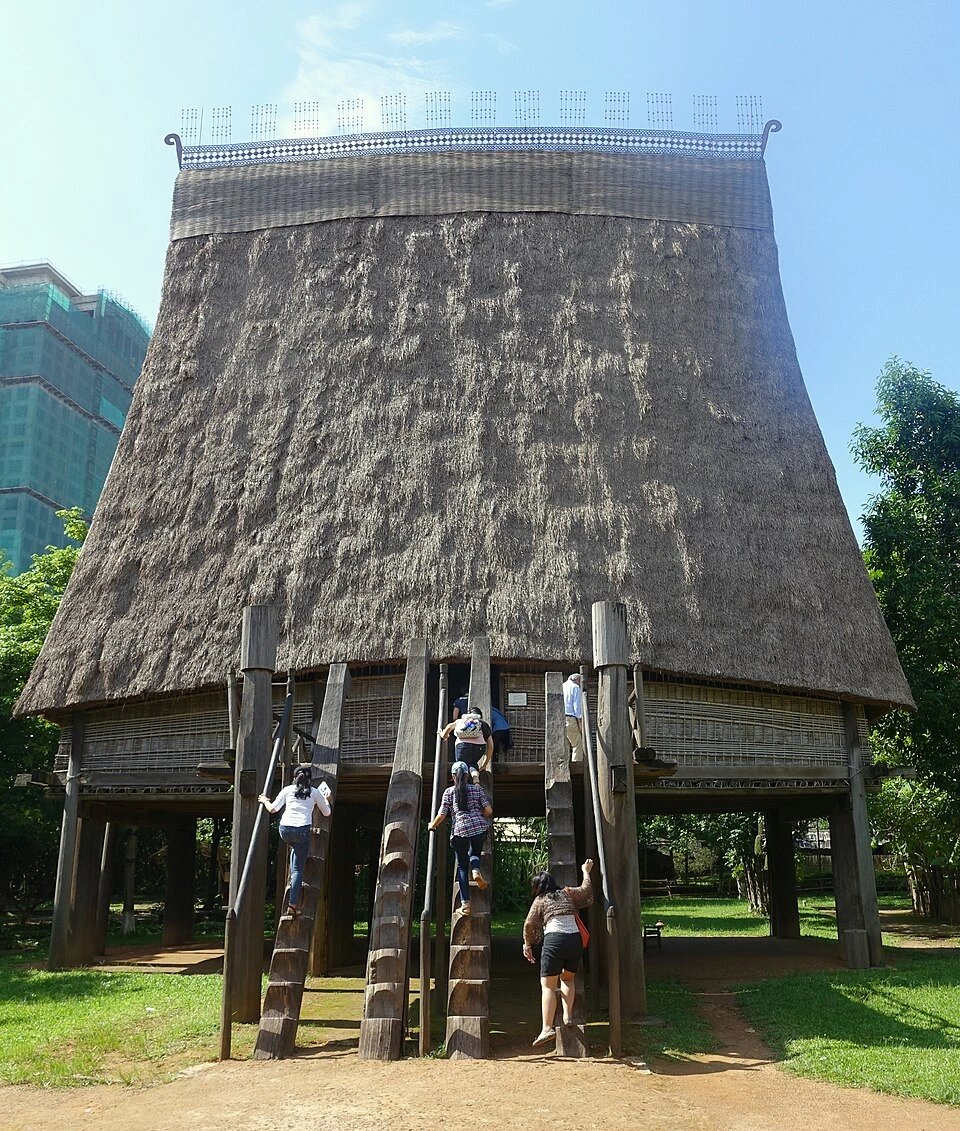
Quite a bit, as it turns out. Start with the roof of the Bahnar communal house, then look along the length of the Ê Đê house, and finish with the walls of the Hà Nhì house. You can make those three comparisons from outside where the museum’s paths and current access allow. If you’re visiting with someone who would rather skip the stairs, you can give the whole group something to look at together.
Start with three outdoor stops
| Stop on the garden map | What to look for outside | What to check on arrival |
|---|---|---|
| Bahnar communal house | The steep roof, how high it sits and what the structure does at ground level. | Which sides you can approach from the path, and whether the stairs are open if anyone wants to use them. |
| Ê Đê longhouse | The building’s length, the space below the floor and the relationship between the approach and the rest of the house. | Whether you can walk along the side open to visitors and how to rejoin the route. |
| Hà Nhì house | The earthen walls and how the building sits on the ground. | Whether the exterior approach is open and what the display label says about this house. |
The order is a suggestion. Use the museum’s English visitor brochure to locate each stop, then follow the paths and signs in use that day. The museum presents the garden as one of three permanent exhibition areas, alongside its indoor displays on Vietnam and on Southeast Asia and other cultures. Decide whether the garden or the galleries will be your main visit. You can see all three areas on a longer visit if you want to, but you’ll get more from making time for the part you’re curious about.
Getting to the Vietnam Museum of Ethnology
Save Bảo tàng Dân tộc học Việt Nam on Nguyễn Văn Huyên Street. The museum’s visitor page lists the address in Nghĩa Đô, Hanoi. Use the museum name and street together if taking a ride. The older Cầu Giấy district name appears in some listings and in my neighbourhood guide, so the name of the place alone is more useful when paired with the exact street.
The same official page lists regular opening from 8:30 a.m. to 5:30 p.m., except Mondays and the New Year holiday, and a standard ticket of 40,000 VND. Check the admission page for published concessions and any extra services you want. Confirm last entry if you’re arriving late and check holiday notices before travelling. The opening hours tell you when the museum is open as a whole. Individual houses can have different access on the day.
At the entrance, ask which garden paths are in use and whether any of the three stops is temporarily closed. If the forecast is unsettled, ask where you’ll enter the main indoor building from the garden so you already know how to move inside if it starts raining. If you need a lift, seating or a particular toilet, ask where to find it before choosing which part of the museum to visit first.
The Bahnar communal house: start with the roof
The tallest-looking roof on your route may tempt you to walk right up to the steps. Keep a little distance first. Look at the whole structure from a position you can reach on the public path. Take in where the roof starts, where the main floor sits and how much of the building is taken up by what you see above that floor. Once you’re beside the stairs, you lose some of that perspective.
The museum’s garden catalogue identifies it as a Bahnar communal house. The word communal is worth holding onto as you move on. You’ll see a longhouse elsewhere in the garden and might notice similarities in having a raised floor. The point of looking at both is to see how different their purposes and overall shapes are. Use the museum’s label to understand this particular building and the community it represents.
If you are with children, ask them to sketch the roof with one line for each slope, then look for what supports it. A quick sketch or a wide photo can be more memorable than a set of close-ups. If some people in your group take the stairs, agree on a point at ground level where you’ll meet again. You can still carry on comparing the shape while they look inside if the museum is allowing visitors to enter.
The Ê Đê longhouse: follow its length
At the Ê Đê house, find a view from the side if the path allows. The roofline and raised floor are easier to compare with the communal house when you can see the long side. Look at the space beneath the floor, then look for how the entrance connects that raised level with the ground. From the front alone, you get a good view of an approach but can miss the length that gives the building its name.
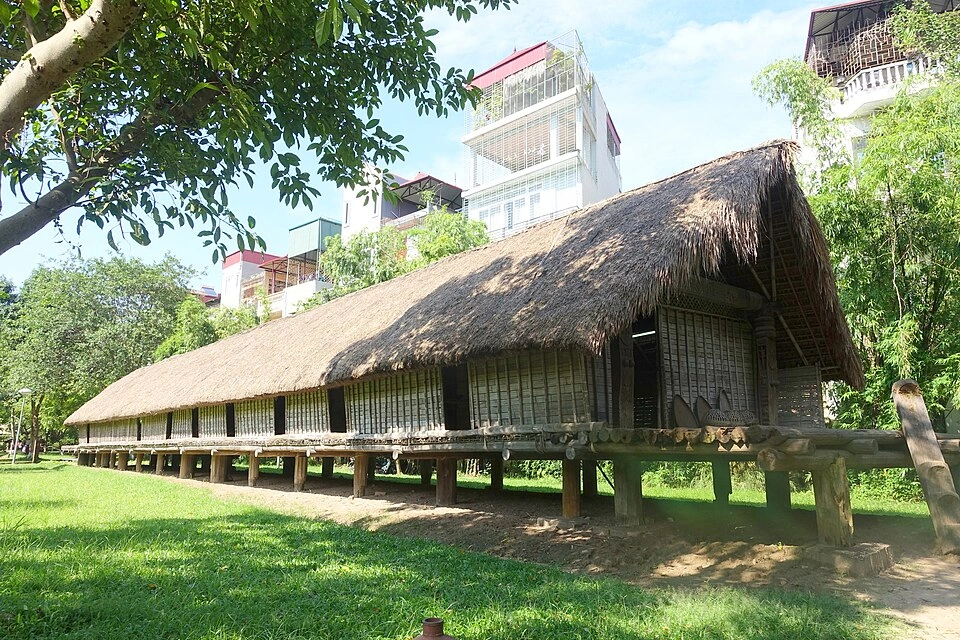
If you can walk farther along the outside, look back at the approach from there. The building will be easier to remember once you’ve seen it from two angles. Save questions about the use of the rooms and stairs for the museum label or a guide. A detail can be clearly visible without its meaning being obvious. If you choose to go indoors, follow the signs about footwear, photography and whether the entrance is in use. Wet steps are a good reason to keep this as an exterior stop.
The Hà Nhì house: compare the walls and the ground
The Hà Nhì house is the change of pace on this route. The museum describes a rammed-earth house among the outdoor structures. After looking at raised floors, notice the way this building meets the ground. Look for the thickness and texture you can see from the visitor area, the openings in the walls and the way the roof covers them. These visible differences give you something concrete to compare without having to enter any of the houses.
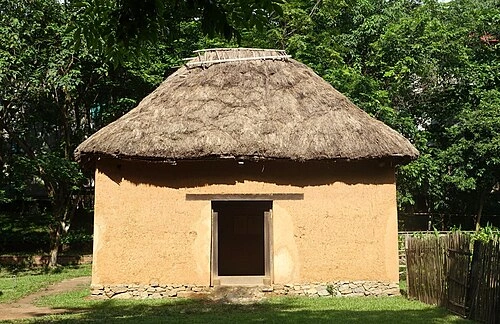
Read the label for details about the particular house and the people who built it. It’s easy to jump from a photograph to an explanation about why everyone in a region built in one way. The garden shows specific examples. Treat what you see as a starting point for asking how materials, climate, building skills and everyday needs relate to one another, and look to the museum for the documented context.
What if you want to see more than three houses?
Look for the Tày house on the museum map and compare it with the raised buildings you’ve already seen. If you’re interested in the shape of a raised house, do this stop before leaving the garden. If the contrast between earth walls and timber is what interested you, ask at the desk which additional structures are accessible and which labels or indoor displays explain materials. Use one extra stop to explore a question, then decide whether you want another.
The museum’s collection also includes funerary structures. Visit those as exhibits with a specific cultural context, and read the interpretation before photographing figures or details. The wording in the labels is more informative than trying to make every building fit a category of house. If you are visiting with children, explain that the garden includes buildings for different parts of community life and keep the group together around sensitive exhibits.
How to see the garden without climbing into the houses
Ground-level viewing is an approach to the exhibits. If your group needs a continuous step-free route, ask the museum about the surface and slope from the street to the admissions desk, then from the desk to each garden stop. Ask whether there are thresholds at the entrances to the indoor buildings and which toilets are accessible. The size of the garden and the presence of a path don’t tell you how easy the whole visit will be for a particular person.
When you arrive, choose a shorter route with room for a break. Make the Bahnar roof your priority if you only want one outside stop. If you can add another easily, choose the Hà Nhì walls for contrast or the Ê Đê house if you’re mostly curious about raised buildings. If the group splits up to visit interiors, name the place where you’ll meet from outside. A clear landmark at the level everyone can reach works better than instructions to meet at the top of a staircase.
Allow time for one indoor section too
For a short visit, I’d allow about an hour for the outside comparisons and pauses, with extra time for entry and getting to and from the museum. If you have a couple of hours on site, choose an indoor section to match the garden. The museum identifies its Bronze Drum Building with displays on Vietnam’s ethnic groups, and the Kite Building with displays on Southeast Asia and other cultures. For an outing built around the houses, begin with the Bronze Drum Building if you want more context about communities represented in the garden. Ask which rooms are open when you arrive.
In a light shower, decide whether the paths are comfortable before continuing outside. If it’s raining steadily, keep the time you’ve set aside for the museum and use it indoors first. Take a look at the garden when conditions improve, but don’t pack all three outdoor stops into the last few minutes before closing. If you’re deciding whether to cross the city in the rain at all, the rainy-day Hanoi guide has central alternatives.
Questions to take from the garden into the galleries
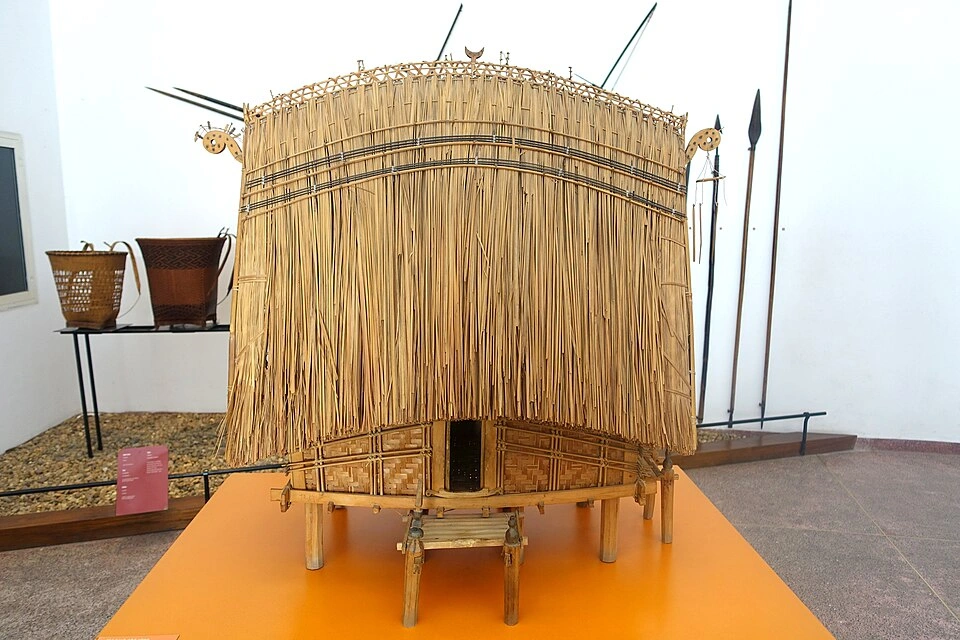
Pick one thing you saw outside and look for a related object or model indoors. If it was the Bahnar roof, find a model or photograph that lets you compare the shape with other buildings. If it was an entrance, see whether the displays explain how people moved through or used the space. Ask staff to point you to the relevant label or display. You don’t have to visit every room in order to make a connection between the structure outside and an object inside.
For children, a short comparison works better than a list of names to remember. Ask which building they could recognise from its outline alone, or which one seemed to sit most differently on the ground. Read the label together after they’ve told you what they noticed. If your group is using a printed map, let someone choose one more stop and find it on the map before everyone starts walking.
If a house is closed, pick a different comparison rather than spending the visit trying to find another way round. Ask for the closest open exhibit that still answers your question. There may be something to notice across the path or in a model indoors. A route built around looking and comparing is easy to change when one stop is unavailable.
Give the museum its own place in your Hanoi day
Make it the main stop for one part of the day if you’re coming from Hoàn Kiếm. Check travel time for the going and return legs separately. When you’ve left the grounds, use the actual street and side you’re standing on to request a ride. If you’ve had enough museums, look at the neighbourhood options in the Cầu Giấy guide for a park or something to eat nearby.
If you leave with one difference you could describe to someone else, the garden has done a lot already. A roof designed for a communal building, a raised house whose length changes how you see it, and walls that meet the earth differently are three things you can notice from outside. You can save the rest of the museum for whatever you’d most like to understand next.