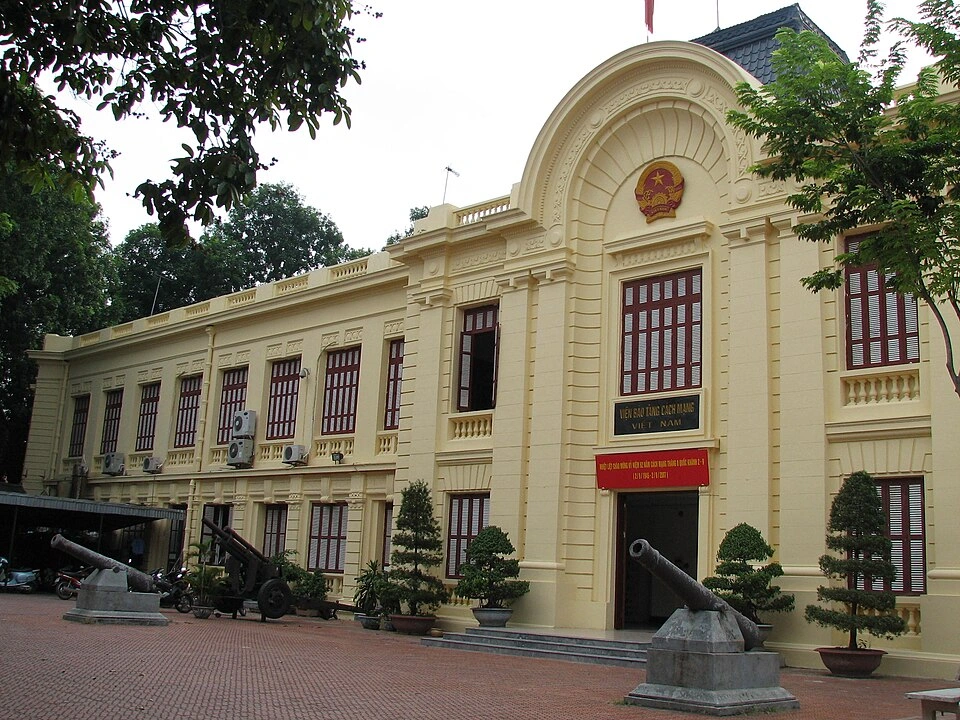
Put 216 Trần Quang Khải into your map for the Vietnam National Museum of History in Hanoi. If you search by museum name alone, you may be sent to the building at 1 Tràng Tiền, near the Opera House. Both addresses belong to the museum. The difference matters today: the museum announced that the permanent galleries at 1 Tràng Tiền would close for renovation from 15 December 2025, while the modern-history exhibition at 216 Trần Quang Khải would remain open.
That means the visit begins with a choice about what you came to see. Go to Trần Quang Khải for Vietnamese history from the mid-19th century onward. If your main interest is ancient Vietnam or the Nguyễn dynasty collection formerly on display at Tràng Tiền, check for a reopening or exhibition notice before making the museum the centre of your day. The museum’s dated closure notice and the operating hours were checked on 21 November 2026. The closure notice leaves the reopening date to be announced. Museum closure announcement.
Which address should you use?
| Museum site | What to plan for | Address |
|---|---|---|
| Facility 2, the former Museum of the Vietnamese Revolution | Use this address for the modern-history exhibition. The museum confirmed it was receiving visitors here in its 2026 National Day notice. | 216 Trần Quang Khải |
| Facility 1, the historic building near the Opera House | The permanent exhibition is temporarily closed for renovation. Check for a dated notice before assuming you can enter. | 1 Tràng Tiền |
The museum’s usual hours are 08:00–12:00 and 13:30–17:00. It normally closes on the first Monday of each month. Check for a dated announcement around a public holiday or if your visit depends on a particular gallery. The regular adult admission listed by the museum is 40,000 VND per person. Ask at the desk about current concessions, photography rules and last admission. Museum opening hours · Museum ticket prices · 2026 visitor announcement for Trần Quang Khải.
Start with the right map pin
If you’re coming by car, use the street address when you book, and keep the name of the museum as a second piece of information. With a walking app, check the last part of the route before you start following it. The large road by the museum can make an approach look easier on a map than it feels at street level. Give yourself time to find a marked crossing and to follow any visitor signs around the building. If you need a step-free approach or a place to leave a stroller, ask the museum which gate and entrance staff recommend on the day.
On foot from the lake, there are two ways to use the same part of town. If the museum is your main stop, go straight there and save the Opera House for afterwards. If you’ve set off for a longer architecture walk and happen to reach Tràng Tiền first, use the historic museum exterior as a landmark if the pavement and current barriers allow it. Then continue to the open site with the correct address in your map. They are close enough to confuse in a list of map results, so it pays to save the addresses before you leave your accommodation.

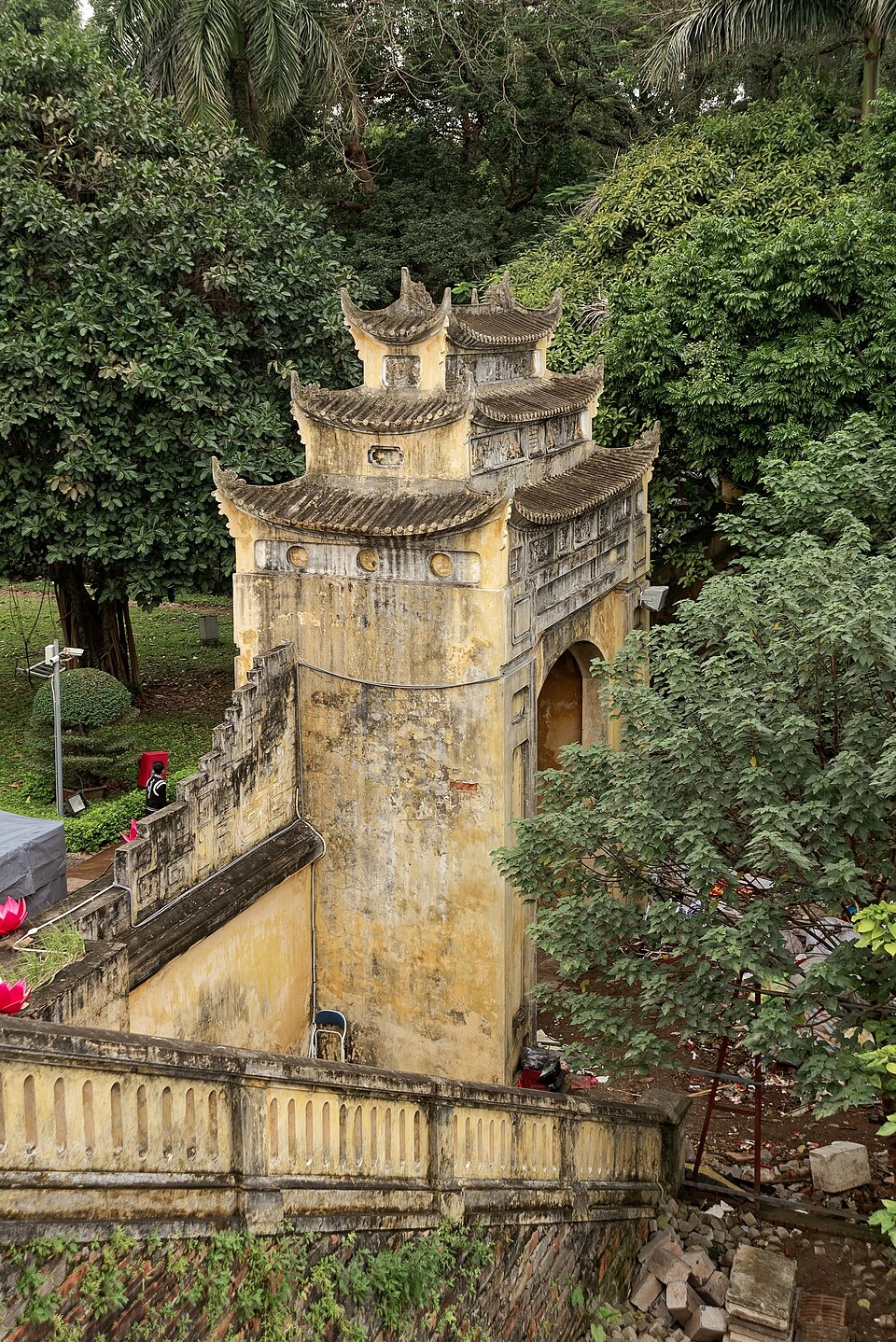
Seeing the roof and entrance of the older building is worthwhile if you’re already passing. The photograph gives you a way to recognise it. It is the building associated with collections from prehistory through the Nguyễn dynasty and is a common image for the museum as a whole. A listing showing that façade, a bronze drum or an ancient artefact may still refer to the institution rather than to what you can see at the open building. If you have limited time, use the facility and exhibition names to make the choice.
Inside the open building: Follow a thread through modern Vietnam
Give the visit about an hour if you want one main museum stop before lunch. Allow longer if you want to read closely, particularly if this is your first museum in Vietnam. Look for a case or introductory panel that sets out the chronology. Ask at the desk which sections are open and whether there is a current gallery plan. Museum collections and the objects on display change, so it’s better to anchor your visit to a period than to one object you saw on a website.
Begin with colonial rule and organised resistance
The museum describes the open exhibition as covering Vietnamese history from the mid-19th century onward. Start with the context of French expansion and the movements that opposed colonial rule. Look for dates and places attached to photographs and documents. If a caption names an event you recognise, place it against the preceding display before moving forward. Doing that with two or three exhibits gives the visit a shape and can make a longer gallery easier to follow.
A useful way through is to choose a type of object and see how it changes across the period. Newspapers and public notices can show what people were being asked to read or do. A photograph allows you to look more closely at who was present and where they were. A personal item or document can bring the account down to an individual scale. Read its date and the reason the museum has chosen it before going on to the next case. Museum permanent exhibitions.
Pause around 1945 before going forward
Give yourself a pause at the transition around 1945. The end of one period and the beginning of another can go by in a couple of labels if you’re walking quickly. Look back at what you’ve just read about colonial rule and resistance, then follow how the museum presents independence and the conflict that followed. If you’ve already visited Hỏa Lò, this is a way to put some of the events and names from that visit into a wider timeline. Hỏa Lò Prison Memorial guide.
The later galleries are worth choosing deliberately. If you came to understand the war years, leave enough time for that part and the following displays. If your interest is political or social change since the nineteenth century, concentrate on the jumps between periods and on what the labels say about change after conflict. A shorter visit can end once you’ve followed the thread you came for. If a temporary exhibition catches your eye, ask where it is and make it part of the same visit only if you have time before the midday break or closing.
Choose the history visit that fits the rest of your trip
If you have time for only one museum, think about how broad a story you want. The National Museum’s open site gives you a sweep across several periods. Hỏa Lò narrows the focus to one institution and the people held there. The Women’s Museum follows themes that cut across periods and lets you spend time with a narrower subject such as dress or family life. On a short visit to Hanoi, put the subject that matters most in the first slot of the morning, when you have enough time to pay attention to it.
If you want to see both Hỏa Lò and the open History Museum, use the hours to set the order. Give the History Museum the earlier slot if you want to see it before the noon closure, then eat and choose how long to spend at Hỏa Lò after lunch. If you start at Hỏa Lò, allow a full lunch between visits and aim for the History Museum after 13:30. The two museums share some historical context, so choose a specific question to carry from one to the other. A useful starting point is how an individual account at the prison fits into the wider chronology you read at Trần Quang Khải.
For a mixed group, agree on a meeting place outside before splitting up. One person can spend the afternoon in the modern galleries while someone else walks Tràng Tiền or has coffee near the lake. Meet where the two routes come back together, rather than asking everyone to be ready at the same time inside the museum.
Make the museum part of a French Quarter walk

Go before lunch if the galleries matter most
For a morning visit, head first to Trần Quang Khải and choose what you want to see while you still have plenty of time before noon. Afterwards, walk toward the Opera House area. Give yourself a moment to look at the façade from a clear pavement before setting off west along Tràng Tiền. That takes you toward Hoàn Kiếm Lake and gives the morning a natural finish around lunch. A venue tour or performance at the Opera House is a separate booking, so treat this as an exterior stop unless you’ve made arrangements.
Use the French Quarter walking guide for more architectural detail on Tràng Tiền. If a visit to the museum took longer than you thought, shorten the walk. You can still go to lunch near the Opera House or take a ride straight back to your accommodation. There is no need to add another attraction just because you have crossed the French Quarter.
Use the midday closure as a lunch break
If you arrive close to noon, start with lunch or the outdoor walk and aim for the afternoon session. A sign at the door during the break can make a visitor think the museum is shut for the entire day. Compare the time with the museum’s dated notices and the regular hours before changing plans. Arriving near the beginning of the afternoon window gives you time to find the entrance, check the ticket, and spend a while in the galleries.

If you have a few hours before the museum reopens, spend some of the gap by Hoàn Kiếm Lake or take a long lunch. Stay on one part of the shore rather than setting off on another long loop. Once you’ve seen the building you’re going to on the map, decide where to stop for a coffee and how long you want between paying the bill and reaching the door. The lake has its own pace and is an easy stop to shorten. Hoàn Kiếm Lake walking guide.
If your plans change at the door
If it’s the first Monday of the month, use the ordinary timetable as a reason to make another plan. If it’s a public holiday, look for the museum’s notice for that date. A change announced for one holiday tells you how the museum handled that occasion. A general schedule may still show the usual Monday exception. Check when you can visit next and whether you need to keep the same accommodation or transport arrangements around it. The Hanoi Monday guide gives a list of nearby options to build around.

The Vietnamese Women’s Museum at 36 Lý Thường Kiệt is another way into modern Vietnamese history if you want to stay south of the lake. Its galleries use personal stories, photographs and material objects to explore family life, clothing and women’s roles in modern society. If the National Museum of History visit was meant to give you historical context before lunch, this gives you a different focus and keeps the rest of the neighbourhood plan workable. Check the ticket desk and how much time you have before closing. Vietnam Tourism’s Women’s Museum information.
If your priority was ancient objects, check the National Museum’s temporary exhibition listings for a specific one before settling on an alternative. Its ancient collections should not be inferred from the modern facility’s schedule. If you’re interested in an older setting and architecture, you could plan a separate visit to the Temple of Literature and use its courtyards and doctoral stelae to explore a different period. That takes you west of the centre, so decide before booking a ride whether you want to move neighbourhoods at all.
Save the address, check the day, and decide which period you’re going to see. Those three details are enough to give this visit a clear place in your Hanoi day. If the morning belongs to history, lunch and a walk down Tràng Tiền will round it out. If the doors are closed when you arrive, you already have a plan for the rest of the neighbourhood.
Photo credits
Photographs from Wikimedia Commons, displayed at reduced resolution. The archival featured photograph, converted to WebP, shows the exterior of the former Museum of the Vietnamese Revolution.
- The former Museum of the Vietnamese Revolution building at the Trần Quang Khải site by Rungbachduong. Public domain, as released by the photographer.
- The historic museum building at 1 Tràng Tiền with its layered roof and arched entrance by Lionel Ng. CC BY-SA 2.0.
- Columns and balconies on the front of Hanoi Opera House by Benjamin Smith. CC BY-SA 4.0.
- Turtle Tower on its small island in Hoàn Kiếm Lake by Holiday Point. CC BY 2.0.
- Gallery inside the Vietnamese Women’s Museum on Lý Thường Kiệt by Daderot. CC0 1.0.